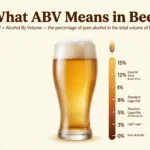
Definition:
ABV stands for “Alcohol by Volume,” a standard measurement showing the percentage of pure alcohol in a beverage.
For example, a drink labeled 12% ABV contains 12% alcohol and 88% other ingredients (water, flavor compounds, etc.).
Ever noticed a percentage on a beer can or wine bottle and wondered what it really tells you? That little number ABV quietly reveals how strong your drink actually is. Whether you’re choosing a light beer, a bold wine, or a strong spirit, understanding ABV helps you know what you’re getting before the first sip.
Why ABV Matters
ABV is more than a number it directly affects:
- Strength of the drink
- Flavor intensity
- Serving size recommendations
- Legal classification of beverages
- Effects on the body
Two drinks may look similar, but their ABV can make one much stronger than the other.
Quick reality check:
A 5% ABV beer and a 40% ABV whiskey are not remotely equivalent in strength even in small amounts.
Origin and Development of ABV Measurement
The concept of measuring alcohol concentration dates back centuries, but standardized labeling developed alongside modern chemistry and consumer protection laws.
Early Methods
Historically, brewers estimated alcohol strength using fermentation results and density measurements. Over time, scientific methods allowed precise alcohol calculations.
Standardization and Regulation
Governments began requiring alcohol content labeling to protect consumers and regulate taxation. Today, ABV labeling is mandated in many countries for packaged alcoholic beverages.
For example, regulatory bodies such as the Alcohol and Tobacco Tax and Trade Bureau oversee alcohol labeling requirements in the United States, ensuring ABV is accurately reported.
Public health guidance from organizations like the World Health Organization also uses ABV to define standard drink sizes worldwide.
How ABV Is Calculated
ABV is determined by measuring how much sugar converts into alcohol during fermentation.
Basic Formula Concept
When yeast consumes sugar, it produces alcohol and carbon dioxide. The difference in liquid density before and after fermentation reveals alcohol content.
Simplified Explanation
- More fermented sugar → higher alcohol content
- Less fermented sugar → lower alcohol content
Modern laboratories use precision instruments to calculate exact percentages.
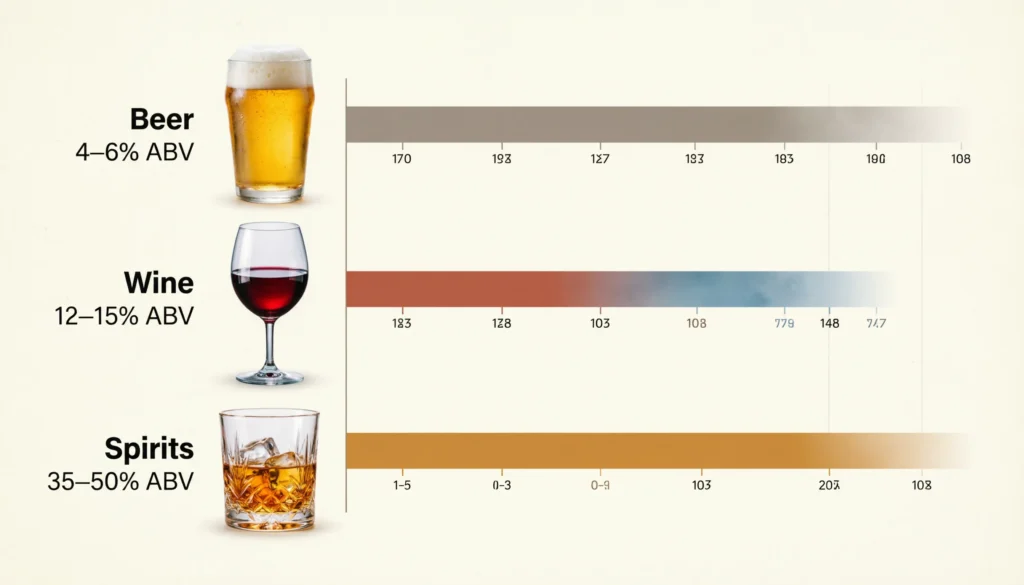
Typical ABV Ranges by Beverage Type
Here’s how common drinks compare in strength.
Alcohol Content Comparison Table
| Beverage Type | Typical ABV Range | Strength Level | Example Description |
|---|---|---|---|
| Light beer | 3%–4% | Low | Mild, refreshing |
| Regular beer | 4%–6% | Moderate | Standard strength |
| Craft beer | 6%–10%+ | Medium–High | Bold flavor |
| Wine | 11%–15% | Medium | Balanced alcohol |
| Fortified wine | 16%–20% | High | Rich, strong |
| Spirits (vodka, whiskey, rum) | 35%–50% | Very high | Concentrated alcohol |
| Liqueurs | 15%–30% | Medium–High | Sweetened spirits |
Quick Insight
Higher ABV does NOT automatically mean better quality just stronger alcohol concentration.
Real-World Usage of ABV
ABV appears everywhere alcohol is discussed.
Common Situations Where You’ll See ABV
- Beverage labels
- Restaurant menus
- Brewery descriptions
- Online product listings
- Health guidelines
- Cocktail recipes
Everyday Examples
Friendly Explanation 🙂
“This cider is 4.5% ABV, so it’s pretty light.”
Neutral Informational Tone
“The wine contains 13% alcohol by volume.”
Cautionary Tone ⚠️
“That drink is 18% ABV pace yourself.”
Casual Conversation
“That one’s strong check the ABV first.”
What ABV Tells You About Strength
Many people assume taste reveals alcohol strength. That’s not reliable.
What ABV Actually Indicates
✔ Alcohol concentration
✔ Potential intoxicating effect
✔ Relative strength compared to other drinks
What ABV Does NOT Indicate
✘ Flavor quality
✘ Sweetness
✘ Healthiness
✘ Hangover severity
A sweet drink can still have high ABV and a bitter drink can have low ABV.
ABV vs Proof: What’s the Difference?
In some countries, alcohol strength is also expressed as “proof.”
Conversion Rule
Proof = ABV × 2 (in the United States)
Comparison Table
| Measurement | Meaning | Example |
|---|---|---|
| ABV | Percentage of alcohol | 40% ABV |
| Proof | Double ABV value | 80 proof |
Key Tip
ABV is the global standard. Proof is mostly used for spirits and mainly in the U.S.
ABV and Drinking Effects
ABV directly influences how quickly alcohol enters the bloodstream.
General Impact Pattern
Higher ABV → faster intoxication → stronger effects
However, impact also depends on:
- Serving size
- Body weight
- Food intake
- Drinking pace
- Individual tolerance
Practical Comparison
- One shot of 40% ABV spirit ≈ stronger than one beer at 5% ABV
- But multiple beers can equal or exceed the same alcohol intake
Understanding ABV helps you make informed choices.
Tone and Context of “ABV” in Conversation
The abbreviation itself is neutral, but tone changes meaning.
Informational Tone
Used in education, labeling, or product descriptions.
Enthusiast Tone 🍻
Used by craft beverage fans comparing strength and flavor profiles.
Warning or Responsible Drinking Tone
Used when emphasizing safety or moderation.
Alternate Meanings of ABV
While “Alcohol by Volume” is the dominant meaning, ABV can have other interpretations in non-alcohol contexts.
Less Common Meanings
- Asset-Based Valuation (finance)
- Average Basket Value (retail analytics)
However, in beverage contexts, ABV almost always refers to alcohol concentration.
Professional and Consumer-Friendly Alternatives
Depending on context, people may say:
- Alcohol content
- Percentage of alcohol
- Strength of the drink
- Alcohol concentration
- Volume percentage of alcohol
For general audiences, “alcohol content” is the clearest alternative.
Understanding Standard Drinks Using ABV
Health organizations define a “standard drink” based partly on ABV.
Approximate Standard Drink Examples
| Beverage | Typical Serving | ABV | Alcohol Amount |
|---|---|---|---|
| Beer | 12 oz | 5% | ~14 grams alcohol |
| Wine | 5 oz | 12% | ~14 grams alcohol |
| Spirit | 1.5 oz | 40% | ~14 grams alcohol |
This comparison shows how different beverages can deliver similar alcohol amounts despite different volumes.
How ABV Affects Flavor and Style
Alcohol influences taste, mouthfeel, and aroma.
Higher ABV Often Means:
- Warmer sensation
- Fuller body
- Stronger aroma
- More intense flavor
Lower ABV Often Means:
- Lighter taste
- More refreshing profile
- Easier drinkability
But style and ingredients still matter ABV is just one factor.
Practical Tips for Using ABV Information
Smart Consumer Tips
✔ Check ABV before trying a new drink
✔ Compare beverages by percentage, not size
✔ Remember stronger drinks require smaller servings
✔ Use ABV to pace consumption responsibly
Reading Labels Like a Pro
Look for:
- % ABV near product name
- Serving size guidance
- Volume of container
FAQs
1. What does ABV mean on alcohol labels?
It shows the percentage of pure alcohol in the beverage.
2. Is higher ABV stronger alcohol?
Yes. Higher ABV means a higher concentration of alcohol.
3. What is considered high ABV?
Generally, anything above 15% is considered high for beverages.
4. Is ABV the same as proof?
No. Proof is typically double the ABV value in the U.S.
5. Does ABV affect intoxication speed?
Yes. Higher ABV drinks usually lead to faster intoxication.
6. What is a normal beer ABV?
Most standard beers range from 4% to 6% ABV.
7. Can two drinks with different ABV have the same alcohol amount?
Yes if serving sizes differ appropriately.
8. Why is ABV required on labels?
To inform consumers and regulate alcohol sales and taxation.
Practical Understanding
Let’s simplify the concept:
✔ ABV = percentage of alcohol in a drink
✔ Higher ABV means stronger concentration
✔ It helps compare beverage strength accurately
✔ It influences effects, serving size, and safety
✔ It’s the global standard for alcohol measurement
Easy Memory Trick
ABV = Alcohol By Volume = How much alcohol is inside
Conclusion
ABV is one of the most important numbers on any alcoholic beverage label. It tells you exactly how strong a drink is, helps you compare options, and supports informed, responsible consumption. Whether you’re choosing a casual drink or exploring craft beverages, understanding ABV gives you clarity before the first sip.
In simple terms:
👉 ABV reveals the true strength of what you’re drinking.
Once you know how to read it, every label becomes easier to understand and every choice more informed.
Discover More Related Articles:

Sarah Williams is the passionate author behind WordNexy.com, dedicated to creating content that informs, inspires, and sparks curiosity. With a love for words and storytelling, she transforms ideas into meaningful articles that educate, entertain, and leave a lasting impression on every reader.