Definition:
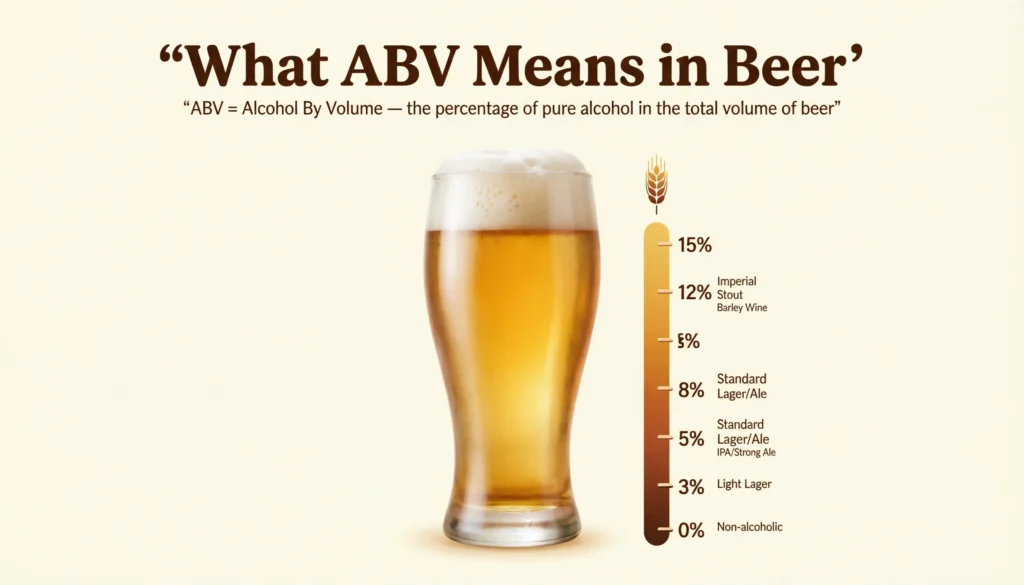
ABV in beer stands for Alcohol by Volume, a measurement that shows what percentage of a beverage’s total liquid content is pure alcohol.
If you’ve ever picked up a craft brew and noticed a number like 4.5% or 8.2% next to “ABV,” you’ve already encountered one of the most important details on a beer label. That tiny percentage tells you how strong the beer is, how it might taste, and even how quickly you may feel its effects.
This complete guide explains what ABV means in beer, how it’s calculated, why it matters, how it compares to similar terms, and how to use it when choosing what to drink.
What ABV Means in Plain English
Alcohol by Volume is the percentage of alcohol in a beverage compared to the total volume of liquid.
If a beer has:
- 5% ABV → 5% of the liquid is pure alcohol
- 10% ABV → twice as much alcohol per volume as a 5% beer
It is a standardized global measurement used across beer, wine, and spirits.
Think of ABV as a strength meter for your drink.
Why ABV Matters When Choosing Beer
ABV affects more than just intoxication. It influences:
- Flavor intensity
- Body and mouthfeel
- Sweetness level
- Brewing style
- Price and serving size
Higher ABV beers often taste richer and heavier. Lower ABV beers tend to be lighter and more refreshing.
For example:
- A light lager around 4% ABV is easy-drinking
- A strong imperial stout around 10% ABV is bold and intense
Origin of the Term “Alcohol by Volume”
ABV became the standard measurement because it provides a consistent, scientific way to compare alcoholic beverages. Before standardized labeling, alcohol strength was often estimated using vague terms like “proof” or “strong ale.”
As brewing industrialized and consumer labeling laws developed, governments required clear alcohol measurement. ABV emerged as the most accurate and universally understandable system.
Today, it is the global labeling standard used in brewing and beverage regulation.
How ABV Is Calculated
Brewers determine ABV by measuring sugar conversion during fermentation.
The Basic Process
- Yeast consumes sugars in the wort (unfermented beer)
- Sugar converts into alcohol and carbon dioxide
- Brewers measure density before and after fermentation
- The difference reveals alcohol content
The more sugar that ferments, the higher the ABV.
This is why strong beers often start with more fermentable sugars.
Typical ABV Ranges by Beer Style
| Beer Style | Typical ABV Range | Drinking Experience |
|---|---|---|
| Light Lager | 3% to 4.5% | Crisp, refreshing, low strength |
| Pilsner | 4.5% to 5.5% | Balanced and clean |
| Pale Ale | 4.5% to 6.5% | Moderate strength, hoppy |
| IPA | 5.5% to 7.5% | Stronger flavor and alcohol |
| Double IPA | 7.5% to 10% | Bold, intense |
| Stout | 5% to 8% | Rich and heavy |
| Imperial Stout | 8% to 12% | Very strong and full-bodied |
These ranges vary by brewer but provide a general guide.
Real-World Usage and Label Context
You’ll find ABV listed on:
- Beer cans and bottles
- Tap lists at breweries
- Restaurant menus
- Online beer descriptions
It typically appears as:
“ABV: 6.2%”
Some breweries highlight it prominently because it helps consumers compare strength quickly.
Tone and Context Examples
Although ABV is a technical term, people talk about it in different ways depending on context.
Friendly Tone
“This one’s only 4% ABV, super easy to sip!”
Neutral Informational Tone
“The beer contains 7.2% alcohol by volume.”
Playful or Dramatic Tone
“Careful, that stout is 11% ABV. It sneaks up on you.”
ABV vs Related Alcohol Measurements
Many people confuse ABV with similar terms. Here’s how they differ.
Comparison Table
| Term | What It Measures | Where Used | Key Difference |
|---|---|---|---|
| ABV | Alcohol percentage by volume | Global standard | Most accurate consumer measure |
| Proof | Alcohol strength scale | Mainly U.S. spirits | Typically double the ABV |
| ABW | Alcohol by weight | Rare labeling | Lower number than ABV |
| OG (Original Gravity) | Sugar content before fermentation | Brewing process | Used to calculate ABV |
Example comparison:
- 5% ABV beer ≈ 10 proof
- Proof is mainly used for liquor, not beer
Does Higher ABV Mean Stronger Effects
Yes, but with context.
Higher ABV means more alcohol per sip, which can lead to:
- Faster intoxication
- More intense warmth sensation
- Heavier body and flavor
However, serving size also matters.
A 12 oz beer at 5% ABV contains less alcohol than a 16 oz beer at the same percentage.
ABV and Flavor Relationship
Alcohol contributes to taste and mouthfeel.
Low ABV Beers
- Crisp and light
- Less warming sensation
- Refreshing and session-friendly
Medium ABV Beers
- Balanced flavor and strength
- Most common range
High ABV Beers
- Fuller body
- Sweeter or richer taste
- Noticeable warming effect
Alcohol can enhance aroma and depth but may overpower subtle flavors if too high.
Professional Ways to Refer to ABV
In formal or technical settings, ABV may be described as:
- Alcohol concentration by volume
- Ethanol percentage
- Beverage alcohol strength
- Volumetric alcohol content
These are common in brewing science and labeling regulations.
Alternate Meanings of ABV
Outside beverages, ABV can occasionally stand for:
- Asset-Based Valuation in finance
- American Board of Venous & Lymphatic Medicine (medical context)
However, in food and drink contexts, ABV almost always refers to Alcohol by Volume.
Practical Tips for Using ABV When Choosing Beer
- Use ABV to compare strength across brands
- Choose lower ABV for longer drinking sessions
- Expect stronger flavor with higher ABV
- Pay attention to serving size, not just percentage
- Consider food pairings for high-ABV beers
ABV helps you drink intentionally rather than guessing.
Example Comparison Table for Everyday Situations
| Situation | Recommended ABV Range | Why |
|---|---|---|
| Casual social gathering | 3% to 5% | Easy drinking and balanced |
| Craft beer tasting | 5% to 8% | Flavor variety |
| Slow sipping experience | 8% to 12% | Rich and complex |
| Hot weather refreshment | 3% to 4.5% | Light and crisp |
FAQs:
1. What does ABV stand for in beer?
Alcohol by Volume, the percentage of alcohol in the beverage.
2. Is higher ABV always better?
Not necessarily. It depends on taste preference and drinking context.
3. What is a normal ABV for beer?
Most beers fall between 4% and 6% ABV.
4. Does ABV affect taste?
Yes. Higher ABV often creates fuller body and stronger flavor.
5. How much alcohol is in a 5% ABV beer?
Five percent of the total liquid volume is alcohol.
6. Is ABV the same as proof?
No. Proof is typically double the ABV and used mainly for spirits.
7. Can you taste alcohol in high-ABV beer?
Often yes, especially in strong ales and stouts.
8. Does low ABV mean fewer calories?
Generally yes, though ingredients also influence calorie content.
Conclusion
ABV in beer is a simple but powerful measurement that tells you how strong your drink is and hints at how it will taste and feel. It represents the percentage of alcohol within the total liquid volume and serves as the universal standard for comparing beverages.
Understanding ABV helps you:
- Choose beer that matches your preferences
- Manage alcohol intake responsibly
- Interpret labels with confidence
- Explore different beer styles intelligently
Next time you scan a beer menu, that small ABV number will tell you a big story about what’s in your glass.
Discover More Related Articles:
- PFP Mean in Text: Complete Guide for Social Media Users (2026)
- Shabbat Shalom Mean in English: Usage, and Significance in 2026

James Anderson is an experienced content writer and language researcher who focuses on explaining word meanings, definitions, slang terms, and modern expressions. He writes for WordNexy.com, where his articles are designed to provide accurate meanings, practical usage examples, and easy-to-understand explanations for readers worldwide.