Definition
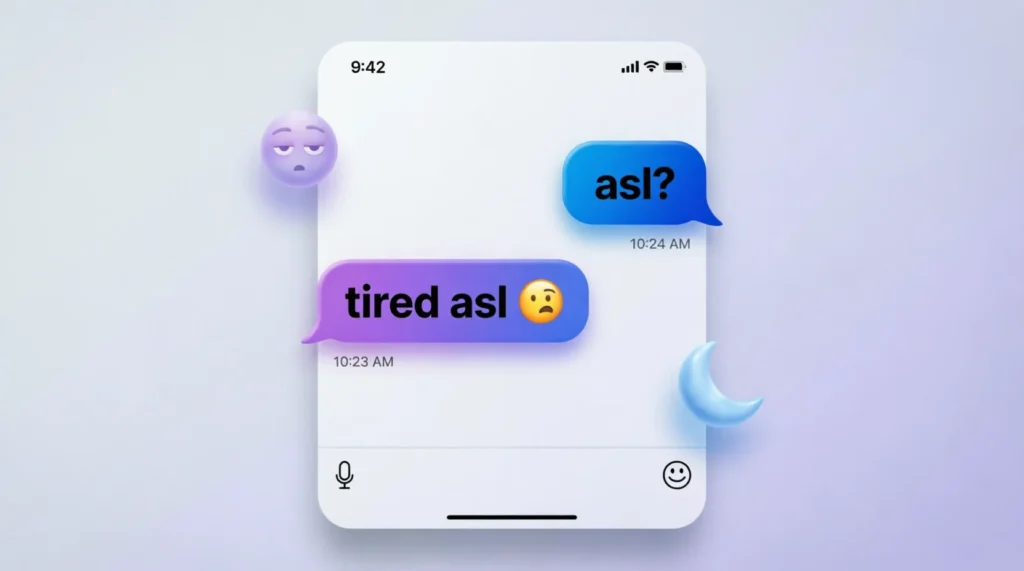
ASL in text most commonly stands for “Age, Sex, Location?” It is a quick question used in online chats, social media, and messaging apps to ask someone basic personal information. In modern texting, ASL can also mean “As Hell” as an intensifier (e.g., “tired asl”).
If you’ve ever chatted online, played games, or scrolled through social media, you may have come across the abbreviation “ASL” and wondered what it actually means. Is it a question? A statement? Or something else entirely?
The answer depends on the context—and that’s what makes ASL interesting.
In this guide, we’ll break down everything you need to know about what ASL means in text, including its origins, modern meanings, examples, tone variations, and even polite alternatives. Whether you’re a beginner or just want to stay updated with internet slang, this article has you covered.
What Does ASL Mean in Text?
Primary Meaning: Age, Sex, Location
Traditionally, ASL stands for:
- A = Age
- S = Sex
- L = Location
It’s often used as a quick way to get basic information about someone in online chats.
Example:
- “Hey 👋 asl?”
- Meaning: “What’s your age, gender, and where are you from?”
Modern Meaning: “As Hell”
In newer texting culture (especially among younger users), ASL is often used as slang for:
👉 “As Hell” (emphasis or exaggeration)
Example:
- “I’m tired asl 😴”
- Meaning: “I’m very tired”
Origin and Popularity of ASL
Early Internet Days (1990s–2000s)
ASL became popular during the early days of the internet, especially on platforms like:
- Chat rooms (AOL, Yahoo Messenger)
- Online forums
- Early social networks
Back then, people didn’t have profiles or bios like today, so ASL was a fast way to introduce yourself.
Evolution Over Time
As social media evolved, profiles started including personal details, so the original ASL (Age, Sex, Location) became less necessary.
However, the abbreviation didn’t disappear—it adapted into modern slang, especially:
- TikTok
- Snapchat
- Gaming chats
Now, “ASL” is often used for emphasis instead of personal questions.
How ASL Is Used in Real Life
1. As a Question (Old-School Usage)
- “asl?”
- “Hey, asl please”
👉 Used to ask for basic identity details.
⚠️ Note: This usage can feel outdated or even uncomfortable today, especially with strangers.
2. As Slang (Modern Usage)
- “This weather is hot asl 🔥”
- “That movie was boring asl 😑”
👉 Used to intensify a feeling or opinion.
Examples of ASL in Different Contexts
Friendly Tone
- “I’m hungry asl 😂”
- “That game was fun asl!”
👉 Casual, relaxed, and expressive
Neutral Tone
- “It’s cold asl today.”
- “Work was busy asl.”
👉 Straightforward, no strong emotion
Negative or Dismissive Tone
- “That was annoying asl 🙄”
- “He’s weird asl”
👉 Can sound rude depending on context
Example Table: ASL Meanings in Text
| Context Type | Example Text | Meaning | Tone |
|---|---|---|---|
| Question | “asl?” | Age, Sex, Location | Neutral |
| Friendly Slang | “I’m tired asl 😴” | Very tired | Casual/Friendly |
| Complaint | “This is boring asl” | Extremely boring | Negative |
| Excitement | “That was fun asl!” | Very fun | Positive |
| Emphasis | “Hot asl today 🔥” | Extremely hot | Neutral/Casual |
Tone and Usage Tips
When to Use ASL
✅ Casual conversations
✅ With friends or peers
✅ On social media or gaming chats
When to Avoid ASL
❌ Professional emails
❌ Workplace communication
❌ Talking to strangers (especially “Age, Sex, Location” usage)
Tone Awareness
- “ASL” (as hell) can sometimes sound informal or slightly aggressive
- Emojis can soften the tone:
- “tired asl 😴” (friendly)
- “tired asl.” (more serious)
Comparison with Similar Slang Terms
| Term | Meaning | Example | Difference from ASL |
|---|---|---|---|
| AF | As F*** | “tired af” | Stronger, more explicit |
| FR | For Real | “I’m tired fr” | Emphasis on truth |
| TBH | To Be Honest | “tbh, I’m tired” | Expresses honesty |
| IMO | In My Opinion | “imo it’s boring” | Opinion-based |
| RN | Right Now | “I’m tired rn” | Time-focused |
👉 ASL (as hell) is similar to AF, but slightly more toned down.
Alternate Meanings of ASL
While “Age, Sex, Location” and “As Hell” are the most common meanings, ASL can also stand for:
- American Sign Language (formal meaning)
- Above Sea Level (used in geography)
- Asynchronous Logic (technical context)
👉 Always check context to understand the correct meaning.
Polite or Professional Alternatives
If you want to avoid slang like ASL in formal situations, try:
Instead of “tired asl”
- “I’m very tired.”
- “I’m extremely tired.”
Instead of “hot asl”
- “It’s very hot today.”
- “The temperature is quite high.”
Instead of “asl?” (question)
- “Can I ask your age and where you’re from?” (more polite)
- “Tell me a bit about yourself 😊”
Practical Usage Tips
- ✔ Use ASL (slang) in casual chats only
- ✔ Add emojis to keep tone friendly
- ✔ Avoid asking “asl?” unless appropriate
- ✔ Know your audience—slang isn’t always suitable
FAQs
1. What does ASL mean in texting?
ASL usually means “Age, Sex, Location” or “As Hell”, depending on the context.
2. Is ASL still used today?
Yes, but it’s more commonly used as “As Hell” in modern texting rather than its original meaning.
3. Is “asl” rude?
It can feel intrusive if used to ask personal information. As slang, it’s casual but may sound harsh depending on tone.
4. What does “tired asl” mean?
It means “very tired” or “extremely tired.”
5. Is ASL the same as AF?
They are similar, but AF (as f*) is stronger and more explicit than ASL.
6. What does ASL mean on Snapchat or TikTok?
On platforms like Snapchat or TikTok, it usually means “As Hell.”
7. Can ASL mean American Sign Language?
Yes, in formal or educational contexts, ASL stands for American Sign Language.
8. Should I use ASL in professional messages?
No, it’s best to avoid slang like ASL in professional communication.
Conclusion
Understanding what ASL means in text is all about context. It can either refer to the classic “Age, Sex, Location” or the modern slang “As Hell” used to emphasize feelings or situations.
In today’s digital conversations, ASL is mostly used casually to add intensity like saying “tired asl” or “fun asl.” However, it’s important to be mindful of where and how you use it. While it works well in friendly chats and social media, it’s best avoided in professional or formal communication.
By mastering small slang terms like ASL, you can better understand conversations and sound more natural in digital communication.
Discover More Related Articles:
- A Spread Mean in Sports Betting: How to Read and Use the Spread in 2026
- Exhortation Mean in the Bible: Encouragement Through Scripture in 2026

Sarah Williams is the passionate author behind WordNexy.com, dedicated to creating content that informs, inspires, and sparks curiosity. With a love for words and storytelling, she transforms ideas into meaningful articles that educate, entertain, and leave a lasting impression on every reader.