
Elohim is a Hebrew word used in the Bible to refer to God as the supreme Creator and all-powerful ruler. Although the word is grammatically plural, it is most often used with singular verbs to describe one true God, emphasizing His power, majesty, and authority.
The word Elohim is one of the most powerful and meaningful terms found in the Bible. It appears in the opening verse of Scripture and plays a central role in how God is described throughout the Old Testament.
Many readers notice that Elohim looks plural and wonder what it truly means and why it is used for God.
If you have ever asked what does Elohim mean in the Bible, this guide explains the meaning clearly, respectfully, and in an easy-to-understand way.
Why the Word Elohim Is Important
Elohim is not just a name. It is a title that communicates:
- God’s creative power
- God’s authority over all creation
- God’s role as judge and ruler
- God’s divine greatness
Understanding Elohim helps readers better understand the Bible’s message about who God is.
Origin of the Word Elohim
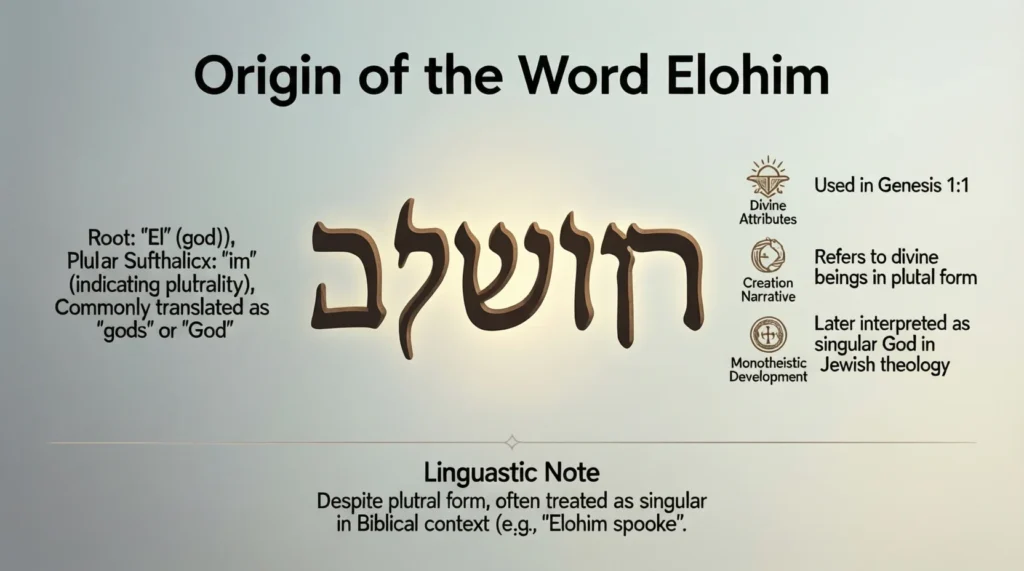
Hebrew Background
- Language: Biblical Hebrew
- Root word: El, meaning strong or mighty
- Related forms:
Even though Elohim looks plural, context determines how it is used.
Why Is Elohim Plural but Refers to One God?
This question comes up often, and the answer lies in Hebrew grammar and biblical context.
Scholars generally explain this in three ways:
- Plural of majesty, used to express greatness and honor
- Plural of power, showing God’s unlimited strength
- Complete fullness, describing all divine qualities together
In passages where Elohim refers to the God of Israel, the verbs are singular, clearly showing that the Bible teaches one God.
First Use of Elohim in the Bible
Elohim appears in the very first verse of Scripture.
“In the beginning, God created the heavens and the earth.”
Key observations:
- Elohim is the creator
- The verb “created” is singular
- God is presented as powerful and sovereign
This introduction establishes Elohim as the supreme Creator.
What Elohim Emphasizes About God
When the Bible uses Elohim, it often highlights:
- God’s power
- God’s authority
- God’s role as creator
- God’s rule over nations and nature
Elohim focuses more on God’s strength and authority than personal closeness.
How Elohim Is Used Throughout the Bible
Common Biblical Contexts
- Creation stories
- God’s authority over the world
- Moral judgment
- Worship and praise
Tone of Usage
| Context | Tone |
|---|---|
| Creation | Powerful and majestic |
| Judgment | Serious and authoritative |
| Worship | Reverent and respectful |
| Moral teaching | Formal and commanding |
Examples of Elohim in Context
Neutral or Teaching Tone
“Elohim created the world and everything in it.”
Worship or Reverent Tone
“Praise Elohim, the ruler of heaven and earth.”
Formal or Authoritative Tone
“Elohim judges the nations with justice.”
Incorrect or Dismissive Use
“Elohim is just a myth.”
This reflects personal opinion, not biblical meaning.
Elohim Compared With Other Names of God
Understanding Elohim becomes clearer when compared to other biblical names.
Comparison Table
| Name | Meaning | Emphasis | Common Use |
|---|---|---|---|
| Elohim | God, Mighty One | Power and authority | Creation and judgment |
| Yahweh | LORD | Covenant and relationship | Promises and faithfulness |
| Adonai | Lord or Master | Authority | Worship and prayer |
| El Shaddai | God Almighty | Strength and provision | Blessings |
| El Elyon | Most High God | Supremacy | Praise |
Elohim highlights God’s power, while Yahweh emphasizes closeness and faithfulness.
Does Elohim Ever Mean Something Else?
In a few passages, the word elohim can refer to:
- Angels
- Heavenly beings
- Human judges or rulers
- False gods
Context always makes the meaning clear. When referring to the God of Israel, Elohim always means one God.
Does Elohim Suggest More Than One God?
No. The Bible consistently teaches monotheism.
Reasons include:
- Singular verbs used with Elohim
- Clear statements about one God
- Context that supports unity
The plural form does not contradict belief in one God.
Modern Relevance of Elohim
Today, Elohim is still used in:
- Bible studies
- Sermons
- Worship songs
- Theological writing
- Religious education
Knowing its meaning helps modern readers understand Scripture more accurately.
Polite or Professional Alternatives
Depending on the audience, writers may use:
- God
- The Creator
- The Almighty
- The Divine
Elohim is best used when discussing biblical Hebrew or Old Testament theology.
FAQs
1. What does Elohim literally mean?
It comes from a Hebrew root meaning strength or power.
2. Why is Elohim plural in form?
It expresses greatness and authority, not multiple gods.
3. Is Elohim the same as Yahweh?
They refer to the same God, but highlight different aspects.
4. How often does Elohim appear in the Bible?
More than two thousand times in the Old Testament.
5. Can Elohim mean angels or judges?
Yes, in limited contexts determined by surrounding text.
6. Why is Elohim used in Genesis?
Genesis focuses on God as Creator, which fits Elohim perfectly.
7. Do Jews and Christians agree on its meaning?
Yes, both understand Elohim as referring to one God.
8. Can Elohim be used in prayer today?
Yes, especially in reverent or educational settings.
Conclusion:
Elohim is more than just a name it is a powerful biblical title that conveys God’s majesty, authority, and creative power. While the word is plural in form, the Bible consistently uses it to describe one true God, highlighting His strength and sovereignty.
Understanding Elohim helps readers appreciate the depth of Scripture, the significance of God’s actions, and the richness of biblical language.
Helpful tip:
When you see Elohim in the Bible, think of God’s power and sovereignty.
Search More Related Articles :
- RSVP Meaning in English: Complete Guide with Origin and Examples (2026)
- What Does LOI Stand For in Business Transactions? (2026)

James Anderson is an experienced content writer and language researcher who focuses on explaining word meanings, definitions, slang terms, and modern expressions. He writes for WordNexy.com, where his articles are designed to provide accurate meanings, practical usage examples, and easy-to-understand explanations for readers worldwide.