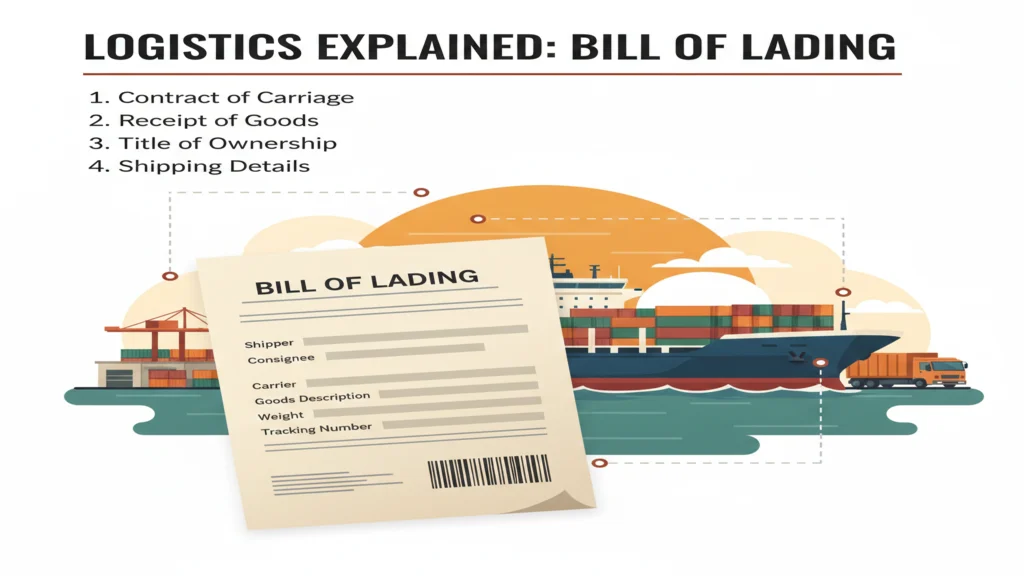
Definition:
A BOL (Bill of Lading) in shipping is a legal document issued by a carrier that confirms receipt of goods, outlines shipment details, and serves as a contract for transportation and delivery.
If you’ve ever tracked a shipment, managed logistics, or handled freight paperwork, you’ve probably seen the term BOL. It’s one of the most important documents in shipping and freight transport. Without it, goods can’t move legally or be released properly. Understanding what a BOL means helps you track cargo, verify ownership, and avoid costly delivery issues.
This guide explains the meaning of BOL in shipping in clear, simple language, with examples, comparisons, and practical usage tips.
What Is a BOL in Shipping?
A Bill of Lading (BOL) is a formal shipping document that performs three essential functions:
• Receipt of goods shipped
• Contract between shipper and carrier
• Document of title for the cargo
In simple terms, it proves what was shipped, where it’s going, and who receives it.
Origin and Background of the Term
The term Bill of Lading dates back centuries to maritime trade. Merchants needed written proof that cargo was loaded onto ships. Over time, the document became legally recognized as proof of shipment and ownership rights.
Today, BOLs are used across:
• Ocean freight
• Air cargo
• Rail transport
• Trucking and ground freight
Because global trade depends on accurate documentation, the BOL remains a cornerstone of modern logistics.
Why the BOL Is Important in Shipping
The Bill of Lading is not just paperwork. It protects all parties involved in a shipment.
Key Purposes
• Confirms goods were received by the carrier
• Lists cargo type, quantity, and destination
• Establishes delivery terms
• Enables tracking and verification
• Serves as proof in disputes
Without a BOL, shipments may be delayed, rejected, or disputed.
Real-World Usage in Logistics
Here’s how the term appears in everyday shipping language.
Professional Usage
“The BOL must be signed upon delivery.”
“Please provide the BOL number for tracking.”
“The carrier issued the BOL after loading.”
Friendly Explanation
“A BOL is basically the shipment’s official receipt and contract.”
Urgent or Problem Context
“The shipment cannot be released without the BOL.”
“The BOL details do not match the cargo.”
Types of Bills of Lading
Different shipping situations require different types of BOLs.
Common Types
Straight Bill of Lading
• Non-transferable
• Delivered only to named recipient
Order Bill of Lading
• Transferable ownership
• Used in international trade
Negotiable Bill of Lading
• Can be transferred to another party
• Often used in finance-backed shipments
Electronic Bill of Lading (eBOL)
• Digital version
• Used for faster processing
BOL vs Related Shipping Terms
Many shipping documents sound similar but serve different roles.
Shipping Document Comparison Table
| Term | Meaning | Main Purpose | Used By |
|---|---|---|---|
| Bill of Lading (BOL) | Shipment contract and receipt | Confirms transport agreement | Carrier and shipper |
| Packing List | Itemized cargo contents | Verifies goods inside shipment | Shipper |
| Freight Invoice | Shipping charges statement | Billing and payment | Carrier |
| Delivery Receipt | Proof of delivery | Confirms arrival | Receiver |
Key Difference
A BOL is both a legal contract and shipment receipt, while most other documents serve informational or billing purposes.
Example of BOL in Context
Example Scenario
A company ships furniture to a retailer.
What the BOL Includes
• Shipper and receiver names
• Description of goods
• Quantity and weight
• Shipping route
• Carrier details
• Delivery instructions
Outcome
The carrier signs when receiving the goods, and the receiver signs upon delivery.
Tone and Meaning in Usage
The term BOL itself is neutral and technical. Tone depends on context.
Neutral Operational Tone
“Attach the BOL to the shipment.”
Instructional Tone
“Review the BOL before signing.”
Problem-Solving Context
“The BOL information is incorrect.”
Practical Tips for Understanding a BOL
If you encounter a Bill of Lading, focus on these elements:
Quick Reading Checklist
- Verify shipper and receiver
- Check cargo description
- Confirm quantities and weight
- Review delivery terms
- Match BOL number with shipment
These steps help prevent disputes and delivery errors.
Alternate Meanings of BOL
Outside shipping, “BOL” can mean different things depending on context, but in logistics and freight, it almost always refers to Bill of Lading.
Professional or Plain Language Alternatives
Depending on context, people may say:
• Shipping contract
• Freight receipt
• Cargo document
• Transport agreement
However, “Bill of Lading” remains the official legal term.
FAQs
1. What does BOL mean in shipping?
It stands for Bill of Lading, a legal document that confirms shipment details and transportation terms.
2. Who issues the Bill of Lading?
The carrier issues it after receiving the goods for shipment.
3. Is a BOL legally binding?
Yes. It acts as a contract between shipper and carrier.
4. What information is included in a BOL?
Shipment details, cargo description, parties involved, and delivery terms.
5. Is a BOL required for all shipments?
Most freight shipments require one, especially commercial transport.
6. Can a Bill of Lading be electronic?
Yes. Many companies now use electronic BOLs.
7. Who signs the BOL?
The carrier signs at pickup, and the receiver signs at delivery.
8. What happens if the BOL is incorrect?
Delivery delays or disputes may occur until corrected.
Conclusion
A BOL, or Bill of Lading, is one of the most essential documents in shipping. It confirms that goods were received, establishes the shipping contract, and provides critical delivery information. Understanding how a BOL works helps businesses track shipments, verify cargo, and prevent costly errors.
When reviewing shipping documents, always check the BOL carefully. It tells you what was shipped, who is responsible, and how delivery must occur. Knowing this single document can make navigating logistics far simpler and more efficient.
Discover More Related Articles:
- Understanding FIP in Baseball: Definition, Formula, and Uses (2026)
- TW in Jewelry Meaning: What It Really Stands For (2026)

Amanda Lewis is a professional content writer and word-meaning researcher who specializes in explaining definitions, slang, abbreviations, and modern language terms. She writes for WordNexy.com, where she creates clear, accurate, and reader-friendly articles to help users understand word meanings and proper usage. Her work is especially useful for students, writers, and online readers seeking quick and reliable explanations.