
A bolus in medical terms refers to a single, concentrated dose of medication, nutrient, or fluid administered rapidly into the bloodstream or digestive system.
It is often used to achieve a quick therapeutic effect, such as correcting low blood sugar, delivering anesthesia, or providing a rapid infusion of fluids.
Whether you’re a medical student, healthcare professional, or simply curious about medical terminology, understanding what a bolus is and when and why it’s used can help you grasp important concepts in patient care and treatment protocols.
Origin and Popularity of the Term “Bolus”
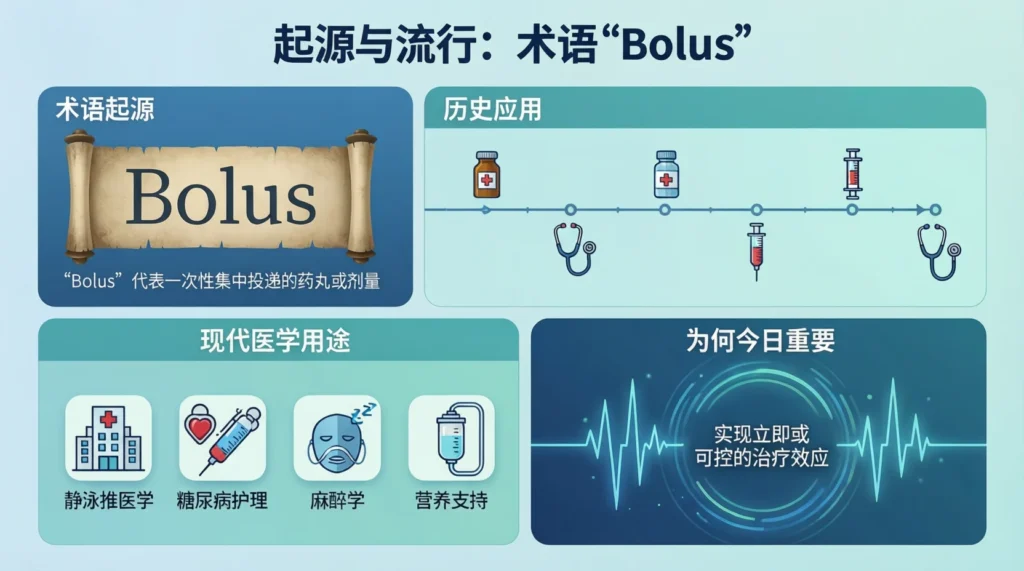
The word “bolus” comes from the Latin term bolus, meaning “ball” or “lump.” This origin makes sense because a bolus is essentially a concentrated “lump” of medicine or substance delivered at once.
Over time, it became standard terminology in pharmacology, nursing, and clinical care.
Today, the term is popular in contexts such as:
- Hospital medicine: IV bolus injections of drugs or fluids
- Diabetes care: Rapid insulin doses before meals
- Anesthesia: Quick doses to induce sedation or maintain anesthesia
- Nutrition: Administering concentrated liquid nutrients via feeding tubes
Its prevalence in clinical practice reflects its effectiveness in delivering immediate or controlled therapeutic effects.
How “Bolus” Is Used in Medicine
A bolus is used whenever a rapid, concentrated administration of a substance is necessary. It differs from continuous infusions, which deliver a substance slowly over time.
Common Medical Applications:
- Intravenous (IV) Bolus:
Administered directly into a vein over minutes. Example: 500 mL saline given rapidly to a patient with dehydration. - Insulin Bolus:
Used in diabetes management to cover carbohydrate intake during meals. Administered via injection or insulin pump. - Enteral Nutrition Bolus:
Liquid nutrition delivered directly into the stomach or intestines via a feeding tube in concentrated amounts.
Key Characteristics of a Bolus:
| Feature | Description |
|---|---|
| Speed | Rapid administration, usually minutes |
| Purpose | Achieve quick therapeutic or physiological effect |
| Form | Liquid solution or concentrated nutrient/medication |
| Route | IV, oral (via feeding tube), or subcutaneous (insulin) |
| Frequency | Can be a one-time dose or repeated at intervals |
Examples of Bolus Use in Context
Understanding bolus in real-life scenarios helps clarify its importance:
Friendly Context:
- A nurse administers a saline bolus to a patient feeling dizzy from dehydration. 💧
- A diabetic uses an insulin bolus before lunch to prevent blood sugar spikes. 🍽️
Neutral Context:
- During surgery, an anesthesiologist may give a propofol bolus to maintain sedation.
Negative/Dismissive Context:
- “He got a bolus of caffeine thinking it would help him study, but it just made him jittery.” 😅 (Non-medical humorous use)
Bolus vs. Related Terms
It’s common to confuse bolus with other medical administration terms. Here’s a comparison:
| Term | Meaning | Key Difference from Bolus |
|---|---|---|
| Infusion | Slow administration of fluids/medication | Bolus is rapid; infusion is gradual |
| Push | Quick injection directly into vein | Often used interchangeably with bolus, but push is usually smaller volume |
| Loading Dose | Initial higher dose of medication to quickly reach therapeutic levels | Bolus can be a loading dose, but also refers to nutrients/fluids |
| Continuous Drip | Slow, constant IV delivery | Opposite of rapid bolus administration |
Alternate Meanings of “Bolus”
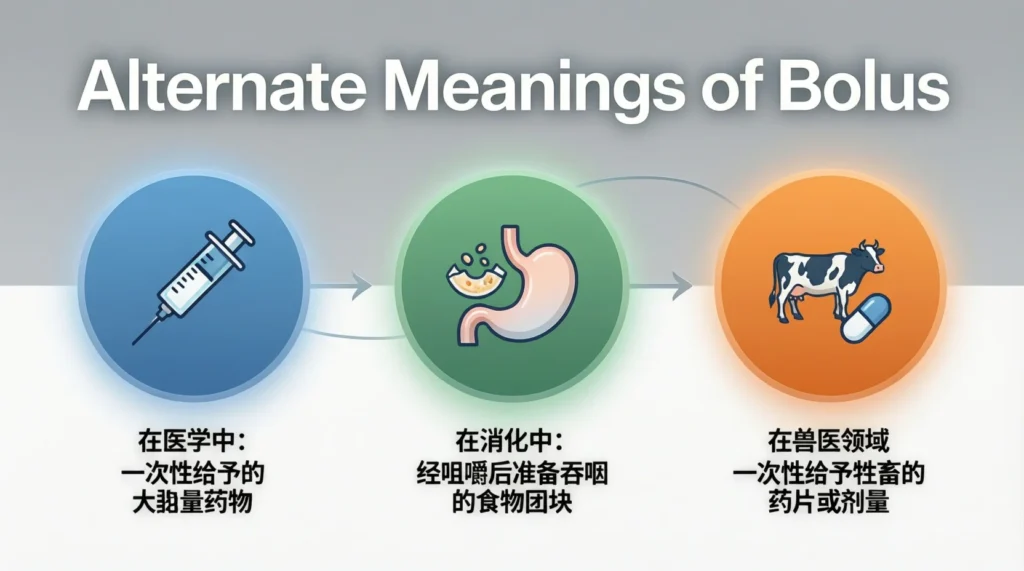
While primarily used in medicine, bolus can also mean:
- Digestive context: A chewed lump of food ready to be swallowed.
- Veterinary medicine: Similar to human medicine, a bolus can be a pill or dose given to livestock in one go.
Knowing these alternatives helps avoid confusion, especially in veterinary or nutritional contexts.
Professional Alternatives and Clarifications
If you want to use bolus in a medical or professional setting but make it more patient-friendly, you might say:
- “A rapid dose of medicine”
- “A quick infusion”
- “A single concentrated dose”
These alternatives convey the same meaning without relying on technical jargon, which is helpful when communicating with patients or families.
Example
| Scenario | Type of Bolus | Purpose | Notes |
|---|---|---|---|
| Dehydrated patient | IV saline bolus | Rapid fluid replacement | 500 mL over 15–30 min |
| Diabetic meal | Insulin bolus | Prevent post-meal hyperglycemia | Dose based on carbs |
| Surgery | Propofol bolus | Maintain anesthesia | Given before continuous infusion |
| Infection | Antibiotic bolus | Rapid therapeutic effect | Typically IV push |
| Tube-fed patient | Nutrient bolus | Deliver concentrated nutrition | Over 5–10 min |
Practical Tips for Understanding and Using Bolus
- Always check dosage and timing – Boluses are potent, and incorrect administration can have serious consequences.
- Understand the route – IV, subcutaneous, or enteral boluses have different absorption rates.
- Use patient-friendly language – When explaining to non-medical individuals, terms like “quick dose” are clearer.
- Monitor patient response – Rapid administration requires vigilance to avoid side effects.
FAQs
1. What is the difference between a bolus and an infusion?
A bolus is a rapid, concentrated dose administered quickly, while an infusion is slow and continuous over time.
2. How fast is a bolus given?
It depends on the substance, but usually within a few minutes for IV administration or as directed in an insulin pump for diabetics.
3. Can a bolus be dangerous?
Yes, if given too quickly or in excess, it can cause overload, adverse reactions, or rapid blood sugar changes. Always follow medical guidance.
4. What is a bolus in diabetes care?
A bolus is an insulin dose given at mealtime to cover the carbohydrates eaten and prevent spikes in blood sugar.
5. Can fluids be given as a bolus?
Yes, IV fluids like saline or Ringer’s lactate are often given as boluses to treat dehydration or low blood pressure.
6. Is bolus used in nutrition?
Yes, enteral nutrition can be administered as a bolus via feeding tubes for patients who cannot eat normally.
7. How is a medication bolus different from a loading dose?
A bolus refers to any rapid dose, whereas a loading dose is specifically intended to quickly reach therapeutic levels in the bloodstream.
8. Can bolus administration be repeated?
Yes, depending on the patient’s needs, boluses can be given at intervals to maintain therapeutic effects.
Conclusion
In summary, a bolus in medical terms is a rapid, concentrated administration of fluids, medication, or nutrients designed for immediate or fast therapeutic effect.
By understanding its uses, comparisons with related terms, and professional alternatives, healthcare providers can ensure safe and effective patient care, while patients can better comprehend their treatment. Boluses, when used correctly, are a powerful tool in medicine for rapid intervention and precise management.
Search More Related Articles:

Amanda Lewis is a professional content writer and word-meaning researcher who specializes in explaining definitions, slang, abbreviations, and modern language terms. She writes for WordNexy.com, where she creates clear, accurate, and reader-friendly articles to help users understand word meanings and proper usage. Her work is especially useful for students, writers, and online readers seeking quick and reliable explanations.