Definition
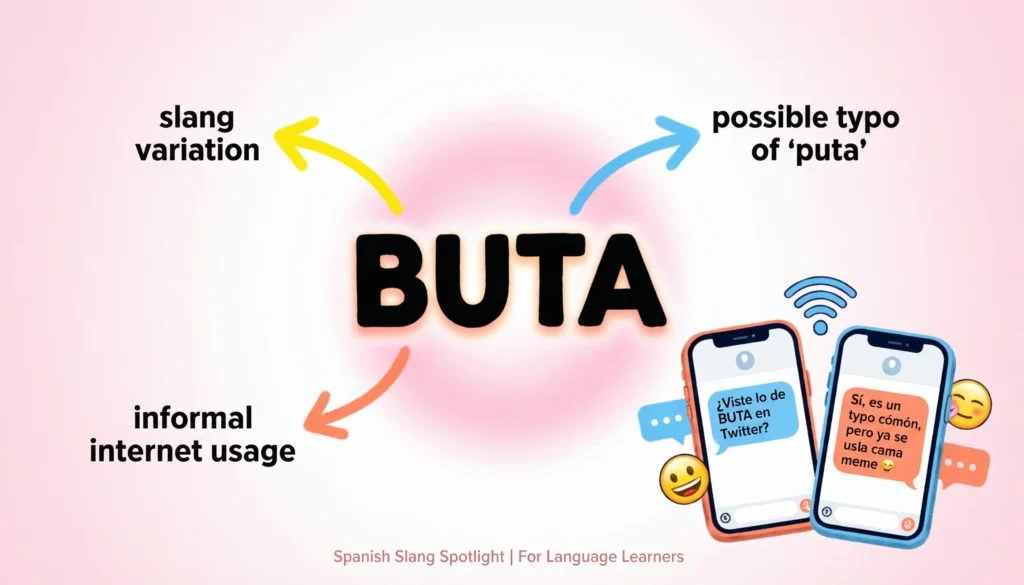
“Buta” in Spanish does not have a widely recognized standard meaning. It is usually:
A misspelling or shortened form of another word such as “puta.”
regional slang variation used informally online or in text messages.
Occasionally a phonetic spelling or typo in casual writing.
Because of this, the meaning of “buta” depends heavily on the context in which it appears.
If you’ve recently come across the word “buta” in Spanish conversations, memes, or social media, you might be wondering what it actually means. Unlike many common Spanish words, “buta” can be confusing because it isn’t a standard dictionary word in most Spanish-speaking regions. Instead, it often appears as slang, a typo, or part of another phrase.
Understanding what “buta” means in Spanish requires looking at context, regional usage, and similar words that people may actually intend to use.
Below is a clear explanation, real examples, and practical tips so you can easily recognize and use the term correctly.
Understanding the Word “Buta” in Spanish
Spanish is spoken in more than 20 countries, and slang often changes from region to region. Words may also evolve online, where spelling variations become common.
The term “buta” is not typically listed in formal Spanish dictionaries like those used in academic writing. However, it appears in casual speech or online messages for several reasons:
- Typographical error
- Intentional spelling change
- Slang variation
- Part of a longer word
Because of these possibilities, interpreting the word requires examining the sentence where it appears.
Possible Origins of “Buta”
There are a few explanations for how the term “buta” appears in Spanish-language contexts.
1. Typo or Variation of “Puta”
One of the most common explanations is that “buta” is simply a misspelling of “puta.”
The Spanish word “puta” can mean:
- prostitute (literal meaning)
- a strong slang intensifier similar to “damn” or “very”
Example:
- ¡Hace un calor de puta madre!
“It’s incredibly hot!”
Sometimes people type “buta” instead of “puta” accidentally or to soften the spelling.
2. Internet or Texting Slang
On social media, users often modify words to:
- avoid censorship
- sound humorous
- create unique slang
For example:
- buta madre may appear online instead of puta madre.
This style is especially common in memes and informal chats.
3. Regional Dialect or Phonetic Variation
In some cases, regional pronunciation differences may influence spelling.
Spanish speakers sometimes spell words the way they sound in their dialects, which can create forms like:
- buta
- bota
- puta
- puta’a (informal variation)
However, these are not standard spellings.
Real-World Usage of “Buta”
Since “buta” does not have a fixed meaning, its interpretation depends on context.
Here are some common situations where it may appear.
1. Casual Online Conversation
People might write “buta” jokingly or intentionally.
Example:
- Esta comida está buta buena.
“This food is really good.”
In this example, “buta” acts as an intensifier similar to “very” or “extremely.”
2. Slang Emphasis
It may be used to exaggerate a statement.
Example:
- Ese examen estuvo buta difícil.
“That exam was extremely difficult.”
Tone: casual or expressive.
3. Meme Culture
Memes sometimes modify offensive words slightly to make them funny or acceptable for platforms.
Example:
- La buta vida.
A humorous variation of “la puta vida.”
Tone: sarcastic or humorous.
Example Sentences With Context
Below is a table showing possible uses of “buta” and how the tone may change.
| Spanish Sentence | Possible Meaning | Tone |
|---|---|---|
| Esta película está buta buena. | This movie is really good. | Friendly / enthusiastic |
| Ese trabajo estuvo buta difícil. | That work was extremely difficult. | Neutral emphasis |
| La buta vida… | Damn life… | Frustrated |
| Hace un calor buta fuerte hoy. | It’s extremely hot today. | Casual |
These examples illustrate how the word may function as an intensifier rather than a literal meaning.
Tone and Context: Why It Matters
Because “buta” often originates from “puta,” the tone can sometimes carry a slightly informal or edgy feel.
Friendly Tone
Used jokingly among friends.
Example:
Ese restaurante está buta bueno.
Meaning: “That restaurant is really good.”
Neutral Tone
Used simply for emphasis.
Example:
El tráfico está buta pesado hoy.
Meaning: “Traffic is extremely heavy today.”
Negative or Frustrated Tone
Sometimes used when complaining.
Example:
Este día está buta complicado.
Meaning: “This day is really complicated.”
Comparison With Similar Spanish Words
To better understand “buta,” it helps to compare it with similar terms.
| Word | Meaning | Formality | Notes |
|---|---|---|---|
| Puta | literal meaning “prostitute,” also slang intensifier | Informal / vulgar | Common in many Spanish dialects |
| Muy | very | Formal | Safe for professional speech |
| Súper | super / extremely | Informal | Popular in conversation |
| Bastante | quite / fairly | Neutral | Polite and professional |
| Buta | slang/variant spelling | Informal | Context-dependent |
This comparison shows that “buta” is far less standard than other intensifiers.
Alternate Meanings of “Buta”
Although rare, the word may also appear in other contexts unrelated to Spanish slang.
1. Name or Cultural Reference
“Buta” can appear as a name or term in other languages.
For example:
- Japanese place names
- fictional characters
- online usernames
However, these meanings are not related to Spanish vocabulary.
2. Misspelling of Other Spanish Words
Sometimes “buta” is simply a typing mistake for:
- bota – boot
- puta – vulgar slang
- ruta – route
Because these words are very different, context is essential.
When You Should Avoid Using “Buta”
If you are learning Spanish or writing professionally, it’s better to avoid the word entirely.
Reasons include:
- It is not standard Spanish
- It may be misinterpreted as vulgar
- It can sound unprofessional
Instead, choose clearer alternatives.
Polite or Professional Alternatives
Here are better words you can use in formal or everyday Spanish.
For Emphasis
Use:
- muy – very
- realmente – really
- extremadamente – extremely
Example:
- La comida está muy buena.
“The food is very good.”
For Complaints
Use:
- demasiado – too much
- bastante – quite
Example:
- El examen fue bastante difícil.
“The exam was quite difficult.”
For Casual Enthusiasm
Use:
- súper
- muy bueno
Example:
- Ese concierto estuvo súper bueno.
Why Words Like “Buta” Spread Online
Internet culture often changes language quickly.
Words spread through:
- memes
- social media posts
- gaming communities
- texting slang
These platforms encourage:
- creative spelling
- humor
- exaggeration
Because of this, nonstandard forms like “buta” sometimes appear even though they are not traditional Spanish words.
Tips for Spanish Learners
If you’re learning Spanish and encounter unfamiliar slang, keep these tips in mind:
1. Always Check Context
A word may mean something different depending on tone.
2. Look for Standard Alternatives
Formal Spanish is easier to understand and safer to use.
3. Avoid Slang Until You Understand It
Using slang incorrectly can sound awkward or rude.
4. Observe Native Speakers
Watching movies, shows, and conversations helps you understand natural usage.
FAQs
1. What does “buta” mean in Spanish?
“Buta” does not have a standard meaning in Spanish. It is usually a slang spelling, typo, or variation of another word most commonly “puta.” The meaning depends heavily on the context in which it appears.
2. Is “buta” an official Spanish word?
No, “buta” is not recognized as a formal Spanish word in most dictionaries. It is typically seen in informal online conversations or as a spelling variation.
3. Why do people use “buta” instead of “puta”?
People may write “buta” to avoid censorship, soften the spelling of a vulgar word, make a joke, or simply because of a typing mistake.
4. Is the word “buta” offensive?
It can sometimes be considered informal or slightly offensive if it is used as a variation of “puta,” which is a vulgar term in Spanish. However, the tone depends on context.
5. Can “buta” be used in formal Spanish writing?
No, it should not be used in formal, academic, or professional Spanish. It is mainly found in casual conversations or social media.
6. What are better alternatives to “buta” for emphasis in Spanish?
More appropriate words include muy (very), súper (super), bastante (quite), and extremadamente (extremely). These are widely accepted and safe to use.
7. Is “buta” common in everyday Spanish conversations?
No, it is not common in standard spoken Spanish. It appears more frequently in online slang, memes, or casual texting.
8. Could “buta” be a typo for another Spanish word?
Yes. In many cases, “buta” may simply be a typing mistake for words such as puta, bota (boot), or ruta (route). Context helps determine the intended meaning.
Conclusion
The phrase “what does buta mean in Spanish” often confuses learners because “buta” isn’t a standard Spanish word. In most cases, it appears as a typo, slang variation, or playful spelling of another word usually “puta.”
Understanding the word requires looking at the context, tone, and intent of the speaker. In casual online conversations, it may act as an intensifier or humorous expression. However, because it is informal and potentially offensive, it’s best avoided in professional or formal communication.
If you’re learning Spanish, focusing on clear alternatives like muy, bastante, or súper will help you communicate more naturally and appropriately.
In short:
- “Buta” is not standard Spanish
- It often comes from slang or spelling variation
- Context determines the meaning
- Formal alternatives are usually better
By recognizing how words like this appear in conversation, you’ll develop a deeper understanding of real-world Spanish usage and online language trends.
Discover More Related Articles:
- Understanding FIP in Baseball: Definition, Formula, and Uses (2026)
- TW in Jewelry Meaning: What It Really Stands For (2026)

Sarah Williams is the passionate author behind WordNexy.com, dedicated to creating content that informs, inspires, and sparks curiosity. With a love for words and storytelling, she transforms ideas into meaningful articles that educate, entertain, and leave a lasting impression on every reader.