Definition
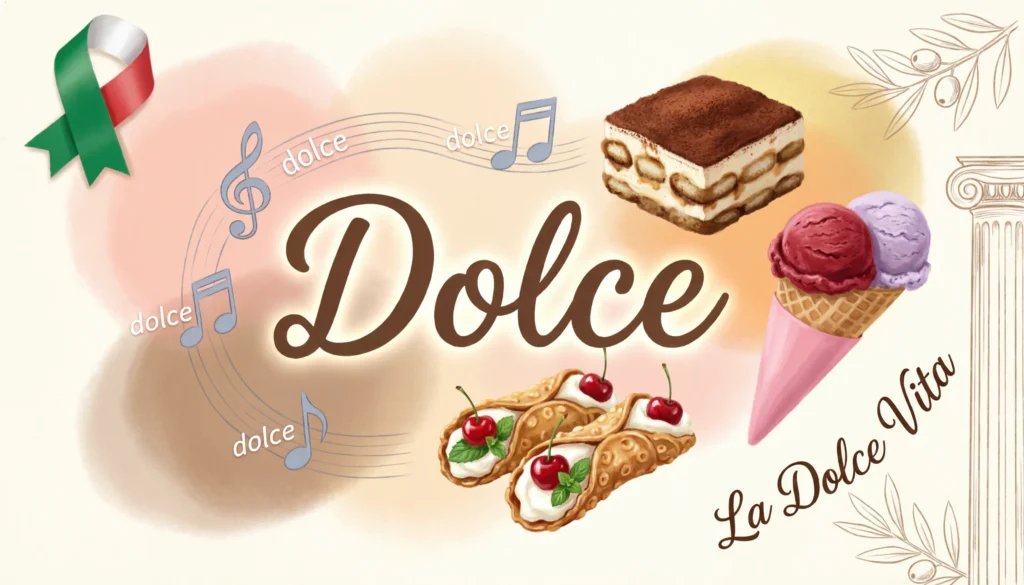
“Dolce” is an Italian word that means “sweet,” “soft,” or “gentle.” It can describe the taste of food, a pleasant personality, music played softly, or anything that feels smooth, tender, and delightful.
In Italian culture, dolce is commonly used for desserts, affectionate descriptions of people, and musical instructions meaning “play sweetly or gently.”
Italian is known as one of the most beautiful and expressive languages in the world. Many Italian words have found their way into everyday conversations, fashion, music, and food culture worldwide. One of those charming words is “dolce.”
If you’ve ever ordered dolce desserts at an Italian restaurant, heard a musical term like dolce, or seen the famous fashion brand Dolce & Gabbana, you might have wondered:
What exactly does “dolce” mean in Italian?
The answer is simple—but the word carries a surprisingly rich meaning. Depending on the context, dolce can refer to sweetness, kindness, softness, pleasure, and even artistic expression.
In this complete guide, you’ll learn:
- The exact definition of dolce
- Its origin and cultural meaning
- How it’s used in food, music, and everyday language
- Real examples in conversation
- Differences between dolce and similar Italian words
- Common phrases and expressions
- Answers to the most searched FAQs
Let’s explore why this small Italian word carries such a sweet and powerful meaning.
Origin of the Word “Dolce”
The word dolce comes from Latin, specifically the word “dulcis,” which also means sweet or pleasant.
Language Evolution
| Language | Word | Meaning |
|---|---|---|
| Latin | Dulcis | Sweet |
| Italian | Dolce | Sweet / Gentle |
| Spanish | Dulce | Sweet |
| French | Doux | Soft / Sweet |
Over centuries, the word evolved into “dolce” in Italian, maintaining the same core meaning while gaining additional cultural uses.
Today, the word appears in multiple areas of Italian life:
- Cuisine 🍰
- Music 🎵
- Literature 📖
- Fashion 👗
- Everyday conversation
Because of this versatility, dolce is one of the most recognizable Italian words worldwide.
Main Meaning of Dolce in Italian
The primary meaning of dolce is sweet.
However, the word can describe several types of sweetness.
1. Sweet Taste (Food)
This is the most literal meaning.
Examples include desserts, pastries, and sugary foods.
Example:
- Questo dolce è delizioso.
→ “This dessert is delicious.”
In Italian restaurants, “dolce” often means dessert.
2. Gentle or Kind Personality
The word can also describe a kind, gentle, or affectionate person.
Example:
- Lei è una persona molto dolce.
→ “She is a very sweet person.”
Tone: Friendly ❤️
3. Soft or Smooth (Music)
In music, dolce is a performance instruction.
It means:
Play softly, sweetly, and expressively.
Example in sheet music:
- Dolce e cantabile
Meaning:
- “Sweetly and singing-like.”
4. Pleasant or Delightful
Dolce can describe experiences, feelings, or atmospheres.
Example:
- Una dolce serata.
→ “A sweet evening.”
Tone: Romantic 🌙
Dolce in Italian Food Culture
One of the most common uses of dolce appears in Italian cuisine.
In restaurants, the dessert menu is often called “Il Dolce.”
Popular Italian Dolci (Desserts)
| Dessert | Description |
|---|---|
| Tiramisu | Coffee-flavored layered dessert |
| Panna Cotta | Sweet cream pudding |
| Cannoli | Fried pastry filled with sweet ricotta |
| Gelato | Italian-style ice cream |
| Sfogliatella | Shell-shaped pastry |
In Italian dining tradition:
Dolce comes after the main meal.
Typical meal order:
- Antipasto (starter)
- Primo (first course)
- Secondo (main dish)
- Contorno (side dish)
- Dolce (dessert)
Dolce in Music
In classical music notation, dolce is an instruction to musicians.
It tells performers to play:
- Sweetly
- Smoothly
- Expressively
- Softly
Example notation:
Dolce
Meaning:
Play the passage gently and emotionally.
This instruction appears frequently in piano, violin, and orchestral music.
Famous Phrase: La Dolce Vita
One of the most famous Italian expressions is:
“La Dolce Vita.”
Meaning:
“The Sweet Life.”
It refers to a life full of:
- Pleasure
- Luxury
- Beauty
- Enjoyment
The phrase became globally famous after the 1960 film La Dolce Vita.
Today it symbolizes Italian lifestyle and elegance.
Examples of Dolce in Real Conversations
Here are some real-life examples showing how Italians use the word.
| Italian Sentence | English Meaning | Tone |
|---|---|---|
| Questo dolce è fantastico! | This dessert is fantastic! | Excited |
| Che bambina dolce! | What a sweet girl! | Friendly |
| La musica deve essere dolce | The music should be soft | Neutral |
| Hai una voce dolce | You have a sweet voice | Compliment |
Tone and Emotional Meaning
The word dolce almost always carries a positive tone.
Common Emotional Associations
- Kindness ❤️
- Affection 🤗
- Softness 🎵
- Romance 🌹
- Warmth ☀️
Because of these associations, the word appears frequently in poetry and romantic writing.
Comparison With Similar Italian Words
Some Italian words are similar to dolce but have slightly different meanings.
| Word | Meaning | Difference |
|---|---|---|
| Dolce | Sweet / gentle | Most common |
| Carino | Cute / nice | More casual |
| Gentile | Kind / polite | Formal kindness |
| Morbido | Soft | Physical softness |
Example:
- Persona dolce → Sweet person
- Persona gentile → Polite person
Dolce in Fashion and Branding
The word gained even more global popularity because of the luxury fashion brand:
Dolce & Gabbana
In branding, dolce suggests:
- Elegance
- Luxury
- Italian lifestyle
- Beauty
This association helps the word feel sophisticated and stylish worldwide.
Alternate Meanings of Dolce
Although “sweet” is the main definition, the word can sometimes mean:
1. Dessert
Example:
- Prendiamo il dolce?
→ “Shall we get dessert?”
2. Pleasant or Charming
Example:
- Un ricordo dolce.
→ “A sweet memory.”
3. Musical Expression
In music, it instructs performers to play softly and emotionally.
Professional or Polite Alternatives
In English conversations, people may use alternatives to express a similar meaning.
| Word | Usage |
|---|---|
| Sweet | Casual compliment |
| Kind | Formal compliment |
| Gentle | Emotional description |
| Soft | Musical or physical description |
| Charming | Polite compliment |
Common Expressions With Dolce
Italian uses several popular phrases containing dolce.
Dolce Far Niente
Meaning:
“The sweetness of doing nothing.”
It refers to relaxing and enjoying life.
Dolce Amore
Meaning:
Sweet love
Often used in poetry.
Dolce Sogni
Meaning:
Sweet dreams
Common bedtime phrase.
FAQs:
1. What does dolce literally mean in Italian?
Dolce literally means “sweet.” It can describe food, personalities, music, or pleasant experiences.
2. Does dolce mean dessert?
Yes. In Italian restaurants, dolce can refer to dessert, especially at the end of a meal.
3. What does dolce mean in music?
In music, dolce means to play sweetly, softly, and gently.
4. Is dolce used to describe people?
Yes. Italians use it to describe someone kind, gentle, or affectionate.
Example:
Lei è molto dolce. – “She is very sweet.”
5. What does La Dolce Vita mean?
La Dolce Vita means “The Sweet Life.” It represents a lifestyle of pleasure, beauty, and enjoyment.
6. Is dolce a compliment?
Yes. Calling someone dolce is a positive and affectionate compliment.
7. Is dolce masculine or feminine?
The word dolce stays the same for both masculine and feminine nouns.
Examples:
- Uomo dolce – “Sweet man”
- Donna dolce – “Sweet woman”
8. Is dolce used outside Italy?
Yes. The word is used globally in:
- Italian restaurants
- Classical music
- Fashion
- Popular culture
Conclusion
So, what does dolce mean in Italian?
At its core, it simply means “sweet.” But the word goes far beyond taste. It represents kindness, beauty, music, romance, and the joy of life.
From delicious Italian desserts to soft musical passages and expressions like La Dolce Vita, the word reflects the Italian love for pleasure, warmth, and elegance.
Whether you hear it in a restaurant, a song, or a conversation, dolce always carries a sense of gentle sweetness and charm.
And perhaps that’s why the word feels so perfectly Italian.
Discover More Related Articles:
- PFP Mean in Text: Complete Guide for Social Media Users (2026)
- Shabbat Shalom Mean in English: Usage, and Significance in 2026

Sarah Williams is the passionate author behind WordNexy.com, dedicated to creating content that informs, inspires, and sparks curiosity. With a love for words and storytelling, she transforms ideas into meaningful articles that educate, entertain, and leave a lasting impression on every reader.