Definition
In wine, “dry” means the wine contains little to no residual sugar, so it does not taste sweet.
The dryness level depends on how much sugar remains after fermentation, not on how “moist” the wine feels.
What Does “Dry” Really Mean in Wine?
If you’ve ever sipped a wine and heard someone say, “Oh, this is dry,” you might assume it feels rough or dehydrating. But in wine language, dry simply means “not sweet.”
During the winemaking process, yeast converts natural grape sugars into alcohol. When most (or all) of that sugar is fermented, the result is a dry wine.
Key Points:
- Dry = low sugar
- Sweet = higher sugar
- Dry wines can still taste fruity (important distinction!)
- Dry does not mean bitter or harsh
Origin of the Term “Dry” in Wine
The term “dry” comes from traditional European winemaking language, particularly from French and German wine culture, where sweetness levels were carefully categorized.
Historically:
- Winemakers noticed that wines without sugar didn’t feel “round” or “rich”
- Instead, they had a clean, crisp finish
- This sensation became associated with the term “dry”
Over time, the term became standard across global wine terminology and is now used in:
- Wine labels
- Restaurant menus
- Tasting notes
- Sommelier language
How Dryness Is Measured in Wine
Dryness is determined by residual sugar (RS) the amount of sugar left after fermentation.
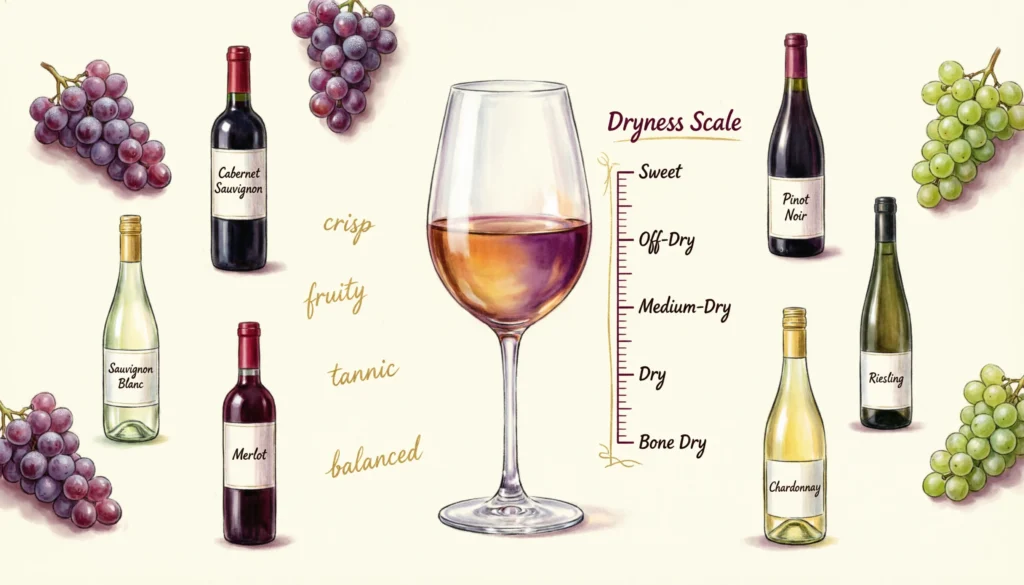
Wine Dryness Scale
| Wine Type | Residual Sugar (g/L) | Taste Profile |
|---|---|---|
| Bone Dry | 0–1 g/L | No sweetness at all |
| Dry | 1–10 g/L | Very little sweetness |
| Off-Dry | 10–30 g/L | Slightly sweet |
| Sweet | 30–100+ g/L | Noticeably sweet |
💡 Pro Tip: Most wines labeled “dry” fall under 1–10 g/L, which is barely noticeable to most drinkers.
What Makes a Wine Taste Dry?
Even though dryness is about sugar, your perception of dryness can be influenced by other factors:
1. Acidity
- High acidity can make wine feel crisper and drier
2. Tannins (especially in red wine)
- Create a drying sensation in your mouth
- Found in grape skins and seeds
3. Alcohol
- Higher alcohol can give a full-bodied feel, sometimes masking dryness
Examples of Dry Wines
Here are some popular dry wines and how they’re typically experienced:
Red Dry Wines
- Cabernet Sauvignon → Bold, structured, slightly bitter 🍷
- Pinot Noir → Light, smooth, fruity but still dry
- Merlot → Soft, approachable dryness
White Dry Wines
- Sauvignon Blanc → Crisp, citrusy, refreshing 🍋
- Chardonnay (unoaked) → Clean, subtle dryness
- Pinot Grigio → Light, fresh, easy to drink
Real-Life Usage of “Dry”
Here’s how people use the term in everyday conversation:
| Sentence | Tone | Meaning |
|---|---|---|
| “I prefer dry wine.” | Friendly | Likes non-sweet wines |
| “This is too dry for me 😅” | Casual | Doesn’t enjoy lack of sweetness |
| “A nice dry white, please.” | Polite | Ordering wine professionally |
| “It’s dry but fruity!” | Informative | Explaining taste nuance |
💡 Notice how “dry” is neutral it’s not positive or negative on its own.
Dry vs Sweet vs Off-Dry
| Feature | Dry Wine | Off-Dry Wine | Sweet Wine |
|---|---|---|---|
| Sugar Level | Very low | Medium | High |
| Taste | Crisp, clean | Slightly sweet | Rich, sugary |
| Popular With | Experienced drinkers | Beginners | Dessert lovers |
| Examples | Sauvignon Blanc | Riesling (off-dry) | Moscato |
Common Misconceptions About Dry Wine
Let’s clear up a few myths:
❌ Myth 1: Dry wine = bitter
✔️ Truth: Bitterness comes from tannins, not dryness
❌ Myth 2: Dry wine isn’t fruity
✔️ Truth: Dry wines can still have strong fruit flavors
❌ Myth 3: Dry means stronger alcohol
✔️ Truth: Alcohol level is separate from sugar content
Alternate Meanings of “Dry”
While “dry” in wine has a specific meaning, the word can mean different things in other contexts:
- Humor → “Dry humor” = subtle, sarcastic 😏
- Weather → No rain or humidity
- Food → Lacking moisture
But in wine, it always refers to low sweetness.
Polite or Professional Alternatives to “Dry”
If you want to sound more refined (especially in restaurants or writing), try these:
- “Not sweet”
- “Crisp”
- “Clean finish”
- “Low residual sugar”
- “Refreshing”
Example:
👉 Instead of “This wine is dry,” say:
👉 “This wine has a crisp, clean finish with minimal sweetness.”
Tips for Choosing a Dry Wine
If you’re shopping or ordering wine, here’s how to pick a dry one:
Look for:
- Labels like: “Dry,” “Brut,” “Sec”
- Lower alcohol sweetness descriptors
- Regions known for dry wines (e.g., France, Italy)
Avoid:
- Words like: “Sweet,” “Late Harvest,” “Dessert Wine”
💡 Bonus Tip: Ask for recommendations wine staff love helping!
FAQs:
1. Does dry wine mean no sugar at all?
Not exactly. It means very little sugar, usually under 10 g/L.
2. Is dry wine stronger than sweet wine?
Not necessarily. Alcohol content varies independently of sweetness.
3. Why does dry wine feel “dry” in the mouth?
Because of tannins and acidity, not just sugar levels.
4. Is dry wine healthier?
Dry wines often have less sugar, but moderation is key.
5. Can a wine be fruity and dry?
Yes! Many dry wines have strong fruit flavors without sweetness.
6. What is the driest type of wine?
“Bone dry” wines have almost zero residual sugar.
7. Is Chardonnay always dry?
Usually yes, but some styles can be slightly sweet.
8. How do I know if a wine is dry before buying?
Check the label, ask staff, or look up the wine type online.
Conclusion:
In the world of wine, the term “dry” simply means low in sugar not lacking flavor. While it might sound confusing at first, understanding this one concept can completely change how you choose and enjoy wine.
Dry wines are often crisp, clean, and balanced, and they can still deliver rich fruity notes without tasting sweet. Factors like acidity and tannins also shape the overall experience, giving dry wines their refreshing or slightly mouth-drying finish.
Whether you’re a beginner or a casual wine drinker, understanding this term will help you order confidently, taste smarter, and enjoy wine more 🍷
Discover More Related Articles:

Sarah Williams is the passionate author behind WordNexy.com, dedicated to creating content that informs, inspires, and sparks curiosity. With a love for words and storytelling, she transforms ideas into meaningful articles that educate, entertain, and leave a lasting impression on every reader.