Definition
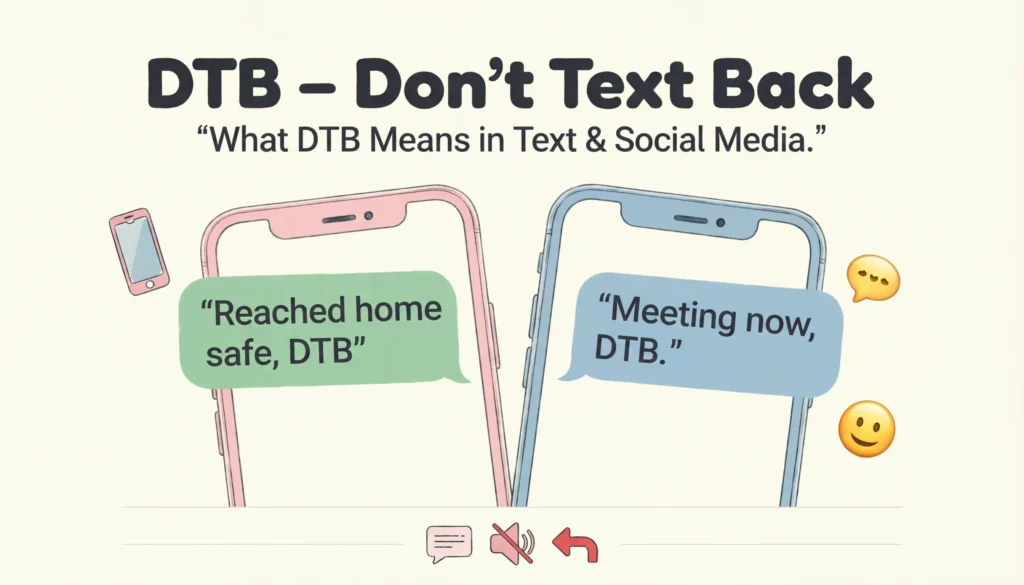
DTB in text messages and online slang usually means “Don’t Text Back.” It is commonly used on social media, texting apps, and online chats to tell someone not to reply to a message or to indicate that a response is not expected.
People often use DTB in casual conversations, group chats, or social media captions to avoid unnecessary replies or to emphasize a statement.
Example:
“Just letting you know I reached home safely, DTB.”
In this example, the sender simply shares information and does not expect a reply.
Origin of DTB in Texting Culture
The Rise of Abbreviations in Digital Communication
Like many internet slang terms, DTB developed as part of the broader trend of shortening phrases to make texting faster and more convenient. As messaging platforms such as:
- SMS texting
- Instagram DMs
- Snapchat
- TikTok comments
- WhatsApp chats
became popular, users began creating short acronyms for common phrases.
Examples include:
- LOL – Laugh Out Loud
- BRB – Be Right Back
- IDK – I Don’t Know
- TTYL – Talk To You Later
DTB followed the same pattern by shortening “Don’t Text Back” into just three letters.
Influence of Social Media
The abbreviation became more noticeable around the late 2010s and early 2020s when short slang phrases spread quickly through:
- TikTok captions
- Instagram stories
- Snapchat chats
- Online memes
Today, it is commonly used by teenagers, young adults, and frequent social media users who prefer quick and informal communication.
How DTB Is Used in Text Messages
Situations Where People Use DTB
People use DTB for several practical reasons in everyday texting.
1. To Avoid a Conversation
Sometimes someone just wants to send information without starting a discussion.
Example:
“I sent the assignment to your email. DTB.”
Meaning: The sender is informing you but doesn’t need a reply.
2. When Someone Is Busy
DTB can signal that the person cannot chat at the moment.
Example:
“Going into a meeting now, DTB.”
3. When Sharing Quick Updates
It can be used when sending updates like arrival notifications.
Example:
“Just landed at the airport, DTB.”
4. To End a Conversation Politely
Instead of ignoring messages, someone might write DTB to indicate closure.
Example:
“Heading to sleep now, DTB.”
Real-World Examples of DTB in Text Conversations
Example Conversation Table
| Situation | Example Message | Meaning | Tone |
|---|---|---|---|
| Informational | “I emailed the files. DTB.” | Just informing | Neutral |
| Busy schedule | “In class right now, DTB.” | Cannot reply | Neutral |
| Update message | “Reached home safe, DTB.” | Update only | Friendly |
| Ending chat | “Going offline for a while, DTB.” | Conversation closing | Neutral |
Examples With Emojis
People sometimes combine DTB with emojis to soften the tone.
Friendly tone
“Just got home safe 😊 DTB”
Neutral tone
“Meeting starting now. DTB.”
Slightly dismissive tone
“Already explained it earlier… DTB.”
In the last example, the tone may feel slightly blunt, so context matters.
Tone and Interpretation of DTB
Friendly vs. Dismissive Meanings
Like many internet abbreviations, DTB can sound different depending on the situation.
| Tone | Example | Interpretation |
|---|---|---|
| Friendly | “Just updating you, DTB 😊” | Informative |
| Neutral | “Sent the report. DTB.” | No response needed |
| Slightly dismissive | “I already answered. DTB.” | Ending discussion |
Tips to Avoid Misunderstanding
Because tone is hard to read in text, consider these tips:
- Use polite punctuation or emojis if the message might sound harsh
- Use DTB only with people who understand texting slang
- Avoid using it in formal or professional communication
DTB Meaning on Social Media
DTB in Captions and Posts
On platforms like Instagram or TikTok, DTB can appear in captions.
Examples:
“Just venting here… DTB.”
“Posting this for awareness. DTB.”
In these cases, the poster is sharing something but not inviting comments or replies.
Why People Use It Online
Reasons include:
- Avoiding debates in comments
- Posting announcements only
- Setting communication boundaries
Comparison With Similar Texting Abbreviations
DTB vs Other Messaging Slang
| Abbreviation | Meaning | How It Differs |
|---|---|---|
| DTB | Don’t Text Back | No reply expected |
| NVM | Never Mind | Cancels previous message |
| FYI | For Your Information | Informational message |
| TTYL | Talk To You Later | Ending conversation politely |
| BRB | Be Right Back | Temporary pause |
Key Difference
While FYI shares information, DTB specifically tells the reader not to respond.
Alternate Meanings of DTB
Although Don’t Text Back is the most common meaning in messaging, DTB can have other meanings depending on context.
Other Possible Meanings
| Context | Meaning |
|---|---|
| Music culture | “Don’t Trust B****” (slang phrase from songs or street slang) |
| Social media usernames | Personal abbreviation or brand |
| Technical contexts | Could represent company or project initials |
However, in everyday texting, the meaning “Don’t Text Back” is usually the intended interpretation.
Polite or Professional Alternatives to DTB
Because DTB is informal slang, it may not be appropriate in professional communication.
Better Alternatives
Instead of writing DTB, you could say:
- “No reply needed.”
- “Just sharing this update.”
- “For your information.”
- “No response required.”
- “Just keeping you informed.”
Example
Informal:
“Sent the document, DTB.”
Professional:
“I’ve sent the document for your reference. No reply needed.”
These alternatives sound more professional and courteous.
Tips for Using DTB Correctly
When It Works Best
Use DTB when:
- Messaging friends
- Sending quick updates
- Chatting in group texts
- Communicating casually online
When to Avoid It
Avoid DTB when:
- Writing emails
- Messaging teachers or bosses
- Talking to someone unfamiliar with slang
- Communicating about sensitive topics
FAQs
What does DTB mean in texting?
DTB usually means “Don’t Text Back.” It tells the receiver that a response is not required or expected.
Is DTB rude in messages?
Not necessarily. It depends on tone and context. In casual chats, it is usually neutral, but without context it can sometimes sound dismissive or abrupt.
What does DTB mean on Snapchat?
On Snapchat, DTB typically means “Don’t Text Back,” especially when someone sends a quick update or message without expecting a reply.
What does DTB mean on Instagram?
On Instagram, DTB may appear in captions or comments to indicate the user is sharing information without wanting replies or discussions.
Is DTB slang?
Yes. DTB is internet slang commonly used in informal digital communication such as texting and social media chats.
What is the difference between DTB and FYI?
- DTB: Don’t reply to this message
- FYI: Information for awareness
FYI doesn’t necessarily discourage a response, while DTB specifically tells someone not to reply.
Do people still use DTB?
Yes, although it is less common than some other texting acronyms, it still appears in casual chats, social media captions, and online conversations.
Should I use DTB in professional messages?
No. In professional communication, it’s better to use phrases like “No reply needed,” “Just sharing for your reference,” or “For your information.” These sound more polite and professional.
Conclusion
Digital communication has created countless abbreviations, and DTB is one of the many shorthand expressions used in texting culture.
Most commonly, DTB means “Don’t Text Back.” It allows people to share updates, information, or announcements without inviting a response. While it can be useful in casual chats, its tone can sometimes feel abrupt if used incorrectly.
The key to using DTB effectively is understanding context and audience. It works best among friends, social media interactions, or quick updates. In professional communication, more polite phrases such as “No reply needed” are usually better choices.
As texting language continues to evolve, abbreviations like DTB remain a small but interesting part of modern digital conversation.
Discover More Related Articles:

Sarah Williams is the passionate author behind WordNexy.com, dedicated to creating content that informs, inspires, and sparks curiosity. With a love for words and storytelling, she transforms ideas into meaningful articles that educate, entertain, and leave a lasting impression on every reader.