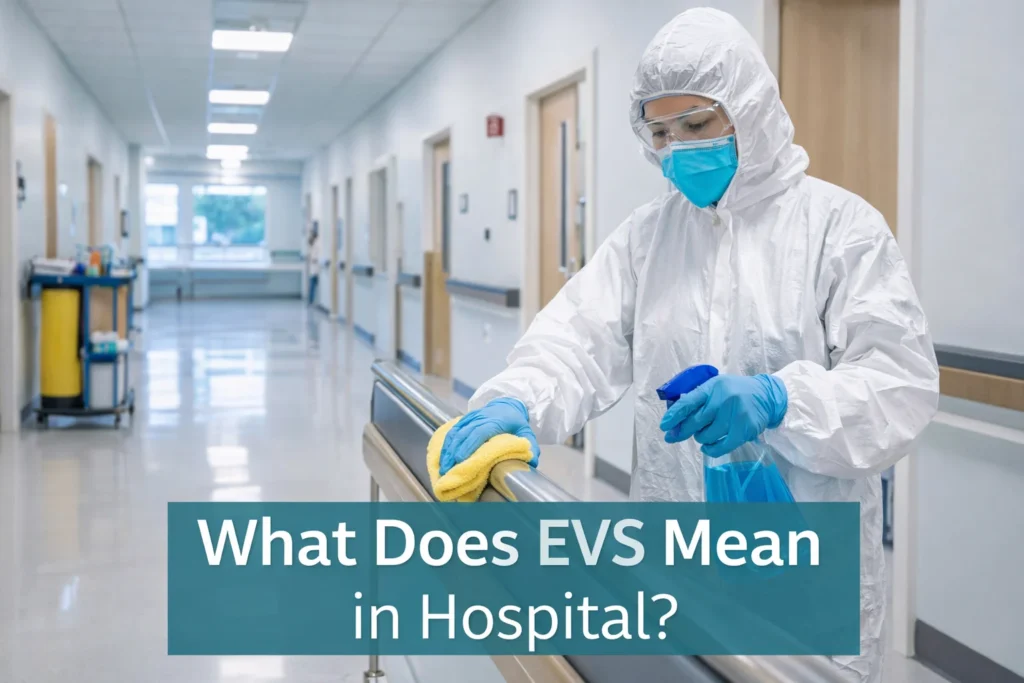
EVS in a hospital stands for Environmental Services. It refers to the department responsible for cleaning, disinfecting, sanitizing, and maintaining a safe, hygienic healthcare environment for patients, staff, and visitors.
Hospitals are full of advanced technology, specialized professionals, and life-saving treatments but none of it works safely without one critical foundation: cleanliness and infection control. That’s where EVS comes in.
If you’ve ever seen hospital staff cleaning patient rooms, disinfecting equipment, or preparing operating rooms between procedures, you’ve seen Environmental Services in action. Their work happens quietly, but its impact is massive from preventing infections to improving patient trust and safety.
Let’s break down what EVS really means in healthcare, why it matters, and how it compares to other hospital roles.
What Is EVS in Healthcare?
In healthcare settings, Environmental Services (EVS) is the department responsible for:
- Cleaning patient rooms and common areas
- Disinfecting medical equipment surfaces
- Managing hospital waste safely
- Preventing the spread of infections
- Maintaining sanitation standards required by healthcare regulations
- Supporting patient safety through hygiene control
Think of EVS as the frontline defense against hospital-acquired infections (HAIs).
Without EVS teams, hospitals would struggle to meet safety standards set by organizations like the Centers for Disease Control and Prevention and World Health Organization.
Why EVS Is So Important in Hospitals
Hospitals treat people who are often immunocompromised, recovering from surgery, or fighting serious illness. Even small contamination risks can become dangerous.
EVS helps prevent:
- Cross-contamination between patients
- Spread of bacteria and viruses
- Surgical site infections
- Healthcare-associated infections (HAIs)
- Environmental hazards like spills or biohazard exposure
Real-world impact:
Research consistently shows that proper environmental cleaning reduces infection rates and improves patient outcomes.
Beyond cleanliness — EVS supports:
✔ Patient confidence
✔ Staff safety
✔ Regulatory compliance
✔ Hospital reputation
✔ Operational efficiency
It’s not “just cleaning.” It’s infection prevention.
Origin and Evolution of the EVS Role
The concept of environmental hygiene in healthcare dates back to the 19th century when hospitals began recognizing links between sanitation and disease transmission.
Historical progression:
| Era | Development |
|---|---|
| 1800s | Early hospital sanitation practices emerge |
| Early 1900s | Dedicated cleaning staff introduced |
| Late 1900s | Infection control becomes standardized |
| Modern era | EVS recognized as a clinical safety partner |
Today, EVS professionals receive specialized training in:
- Pathogen control
- Chemical safety
- Biohazard handling
- Infection prevention protocols
- Healthcare-grade disinfection methods
Many hospitals now treat EVS as part of the patient care team, not just facility maintenance.
What EVS Staff Actually Do
Environmental Services teams perform a wide range of critical tasks.
Patient room turnover
When a patient is discharged, EVS staff:
- Remove waste and linens
- Disinfect surfaces thoroughly
- Sanitize bathrooms
- Prepare the room for the next patient
High-touch surface disinfection
These include:
- Bed rails
- IV poles
- Door handles
- Light switches
- Call buttons
Specialized cleaning
- Operating room sterilization support
- Isolation room sanitation
- Biohazard cleanup
- Spill response
Waste management
EVS ensures safe handling of:
- Medical waste
- Sharps containers
- Biohazard materials
EVS vs Other Hospital Departments
People often confuse EVS with housekeeping, janitorial services, or infection control. While related, they are not identical.
Comparison Table: EVS vs Related Roles
| Role | Primary Focus | Training Level | Healthcare-Specific Duties |
|---|---|---|---|
| EVS | Infection prevention through environmental hygiene | Specialized healthcare training | Yes |
| Housekeeping | General cleaning | Basic | Usually no |
| Infection Control | Policy and disease prevention strategy | Clinical expertise | Yes |
| Facilities Management | Building maintenance | Technical | No |
Key difference:
EVS cleaning is medically informed and protocol-driven.
Common Situations Where You’ll Hear “EVS”
You might hear hospital staff say:
- “EVS is preparing the room.”
- “Call EVS for terminal cleaning.”
- “EVS will handle the isolation area.”
Tone examples in context
Professional / Neutral:
“EVS will sanitize the patient room before admission.”
Friendly:
“EVS is getting everything clean and ready 😊”
Urgent / Serious:
“Contact EVS immediately for contamination cleanup.”
Example Use Cases of EVS in Healthcare
Scenario 1: Patient Discharge
A patient leaves → EVS performs full sanitation → room becomes safe for next patient.
Scenario 2: Infection Control
A patient with a contagious illness is treated → EVS performs enhanced disinfection.
Scenario 3: Emergency Spill Response
Hazardous material spills → EVS responds with protective equipment and specialized procedures.
Table: Common EVS Tasks by Hospital Area
| Hospital Area | EVS Responsibilities |
|---|---|
| Patient rooms | Cleaning, disinfection, waste removal |
| Operating rooms | Pre- and post-procedure sanitation |
| Emergency department | Rapid turnover cleaning |
| Waiting areas | Surface sanitation and hygiene |
| Isolation units | Enhanced infection control cleaning |
Professional Terms Related to EVS
Healthcare environments use many sanitation-related terms.
Common related terminology
- Terminal cleaning deep cleaning after discharge
- Disinfection killing microorganisms on surfaces
- Sanitization reducing microbial levels
- Sterilization eliminating all microorganisms
- Biohazard management handling infectious waste
Understanding EVS helps make sense of these terms.
Alternate Meanings of EVS
While “EVS” in hospitals almost always means Environmental Services, the abbreviation can have other meanings in different contexts.
| Field | Meaning |
|---|---|
| Automotive | Electric Vehicle System |
| Education | Education Verification System |
| Technology | Electronic Voting System |
| Business | Employee Value Statement |
Context matters in healthcare, it overwhelmingly refers to environmental services.
Professional Alternatives to Saying “EVS”
In formal writing or communication, you might see:
- Environmental Services Department
- Healthcare Environmental Hygiene Team
- Facility Sanitation Team
- Infection Prevention Support Services
However, “EVS” remains the most widely used shorthand.
Why Patients Should Care About EVS
Patients often notice:
- Clean rooms
- Fresh linens
- Sanitized equipment
- Safe, odor-free environments
These visible signs of care directly influence:
✔ Patient satisfaction
✔ Recovery confidence
✔ Perception of quality care
Clean environments also reduce anxiety a powerful but often overlooked benefit.
How EVS Supports Infection Prevention
Hospital-acquired infections affect millions globally each year. EVS plays a direct role in prevention through:
- Routine disinfection protocols
- Specialized cleaning agents
- Standardized cleaning sequences
- Compliance monitoring
- Cross-contamination prevention
Healthcare facilities often audit EVS procedures to maintain safety standards.
FAQs
1. What does EVS stand for in a hospital?
EVS stands for Environmental Services the department responsible for cleaning, sanitation, and infection prevention through environmental hygiene.
2. Is EVS the same as housekeeping?
Not exactly. EVS involves healthcare-specific cleaning protocols designed to prevent infections, while housekeeping typically refers to general cleaning.
3. Do EVS workers need special training?
Yes. EVS staff receive training in infection control, chemical safety, and healthcare sanitation standards.
4. Why is EVS important in hospitals?
EVS helps prevent infections, protects patients and staff, and ensures safe healthcare environments.
5. What is terminal cleaning?
Terminal cleaning is a thorough disinfection process performed after a patient leaves a room.
6. Are EVS workers part of the healthcare team?
Yes. Many hospitals consider EVS professionals essential members of the patient safety team.
7. What equipment do EVS staff use?
They use hospital-grade disinfectants, protective gear, specialized cleaning tools, and sanitation equipment.
8. How does EVS impact patient safety?
By reducing contamination risks and preventing infections, EVS directly improves patient outcomes.
Practical Tips for Understanding Hospital Roles
If you or a loved one is in a hospital, recognizing EVS responsibilities can help you:
- Understand room preparation timelines
- Appreciate infection prevention efforts
- Ask informed questions about hygiene
- Feel more confident in care standards
Conclusion
EVS in hospitals short for Environmental Services is far more than routine cleaning. It’s a structured, highly trained function that protects patients, supports medical staff, and helps healthcare facilities maintain strict safety and hygiene standards.
From disinfecting high-touch surfaces to managing biohazard waste and preparing patient rooms, EVS teams play a direct role in infection prevention and overall care quality.
Understanding what EVS means helps patients and families appreciate how hospitals keep environments safe behind the scenes. A clean healthcare setting isn’t just about appearance it’s a critical part of treatment, recovery, and trust in medical care.
Discover More Related Articles:
- Concubine Mean in the Bible: History and Insights for 2026
- The Color Yellow Mean in the Bible: Light, Glory, and Faith in 2026

Sarah Williams is the passionate author behind WordNexy.com, dedicated to creating content that informs, inspires, and sparks curiosity. With a love for words and storytelling, she transforms ideas into meaningful articles that educate, entertain, and leave a lasting impression on every reader.