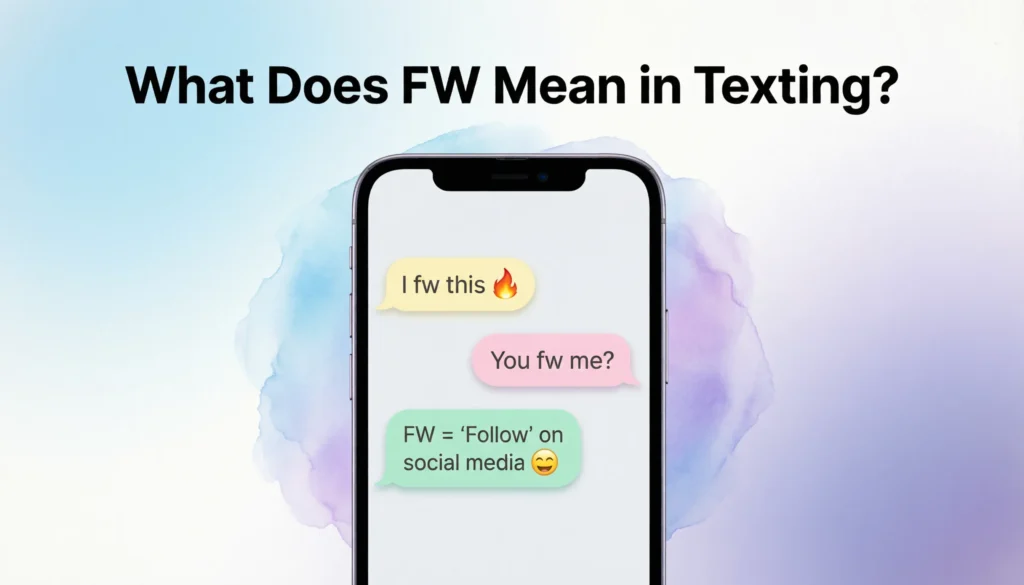
Definition:
FW in texting typically means “f*ck with.” It is commonly used in casual conversations to express liking, agreeing with, supporting, or being involved with someone or something. Depending on the context, it can carry a positive, neutral, or negative tone.
If you’ve ever received a message like “I fw this song 🔥” or “You fw me or not?”, you might have paused and wondered what “FW” actually means in texting. You’re not alone this short abbreviation has become incredibly popular in modern slang, especially across social media, chats, and texting apps.
The meaning of FW can shift depending on tone, context, and even punctuation. Sometimes it’s friendly and supportive, while other times it can sound confrontational or dismissive.
In this guide, you’ll learn everything you need to know about what FW means in texting, including its origin, real-world usage, tone variations, examples, comparisons, and polite alternatives.
Origin of FW in Texting
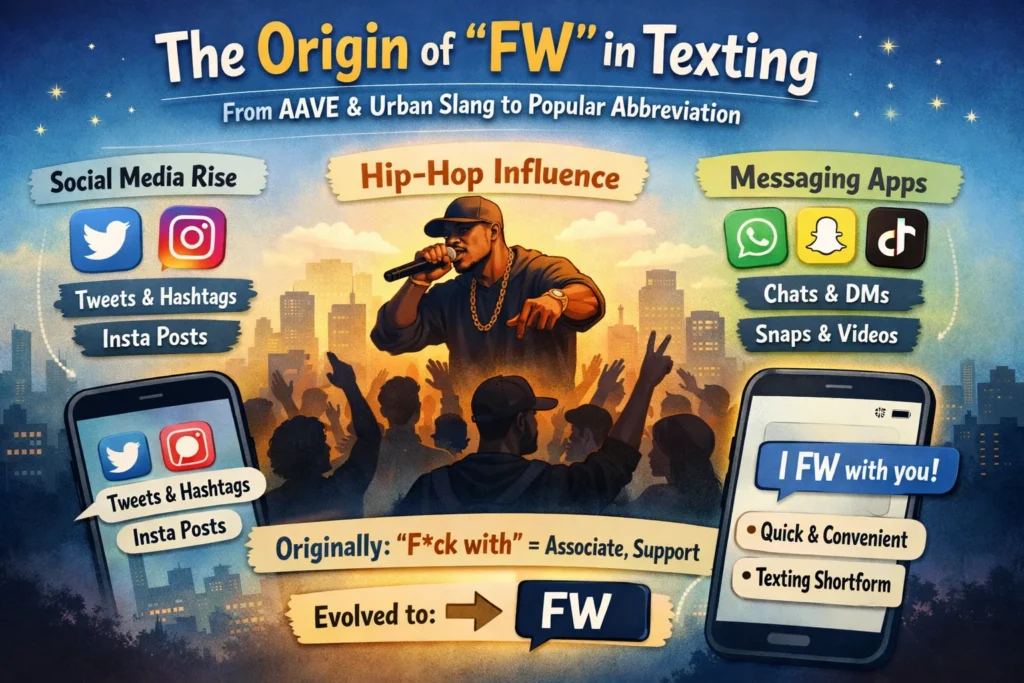
The abbreviation FW (f*ck with) comes from African American Vernacular English (AAVE) and urban slang. Over time, it gained traction through:
- Social media platforms like Twitter and Instagram
- Hip-hop culture and lyrics
- Messaging apps like WhatsApp, Snapchat, and TikTok
Originally, “f*ck with” meant to associate with, support, or engage with someone. As texting culture evolved, it was shortened to FW for convenience and speed.
Why It Became Popular
- Short and easy to type
- Expresses emotion quickly
- Widely used in music and pop culture
- Flexible meaning depending on context
Today, FW is a mainstream texting abbreviation, especially among younger users.
How FW Is Used in Texting
FW is versatile it can be used in multiple ways depending on the situation. Let’s break down the most common uses:
1. Showing Approval or Liking 👍
Used when you like something or agree with it.
- “I fw this outfit 🔥”
- “I fw your idea, let’s do it.”
2. Expressing Friendship or Loyalty 🤝
Indicates you like or trust someone.
- “I fw you, you’re real.”
- “He’s someone I fw.”
3. Asking for Validation ❓
Sometimes used to check someone’s feelings.
- “You fw me or nah?”
- “Do you fw this plan?”
4. Negative or Dismissive Tone 🚫
Can mean you don’t mess with something.
- “I don’t fw fake people.”
- “She don’t fw drama.”
Tone and Meaning Variations
The tone of FW depends heavily on context. Here’s how it can change:
| Tone Type | Meaning | Example |
|---|---|---|
| Friendly 😊 | Like or support | “I fw your style!” |
| Neutral 😐 | Casual agreement | “Yeah, I fw that.” |
| Questioning 🤔 | Seeking validation | “You fw me?” |
| Negative 😒 | Dislike or rejection | “I don’t fw that vibe.” |
| Assertive 💯 | Strong loyalty or approval | “I really fw him, he’s solid.” |
Real-Life Examples of FW in Texting
Casual Conversations
- “I fw this playlist 🎧” → I like this playlist
- “You fw anime?” → Do you like anime?
Social Media Captions
- “Only fw positive energy ✨”
- “I fw this fit heavy 🔥”
Relationship Context
- “I fw you but you gotta be honest.”
- “She doesn’t fw him anymore.”
Negative Usage
- “I don’t fw fake friends.”
- “He don’t fw drama.”
Example Table: FW in Different Contexts
| Text Message | Meaning | Tone |
|---|---|---|
| “I fw this song 🔥” | I like this song | Positive |
| “You fw me?” | Do you like/support me? | Curious |
| “I don’t fw that crowd” | I don’t associate with them | Negative |
| “She fw him heavy” | She really likes him | Positive |
| “We fw the same things” | We have similar interests | Neutral |
Comparison with Similar Texting Slang
FW is often confused with other abbreviations. Here’s how it compares:
| Term | Meaning | Difference from FW |
|---|---|---|
| SMH | Shaking my head | Expresses disappointment, not liking |
| FR | For real | Confirms truth, not preference |
| IMO | In my opinion | Shares opinion, less emotional |
| TBH | To be honest | Used for honesty, not approval |
| IDK | I don’t know | Expresses uncertainty |
👉 Key Difference:
FW specifically relates to liking, supporting, or associating with something or someone.
Alternate Meanings of FW
While “f*ck with” is the most common meaning in texting, FW can also stand for other things depending on context:
- Forward (in emails or formal messages)
- Firmware (in technology discussions)
- Feature Writer (in journalism)
⚠️ However, in casual texting, FW almost always means “f*ck with.”
Polite or Professional Alternatives
Since FW contains informal language, it may not be appropriate in professional or formal settings. Here are better alternatives:
Instead of “I fw this”
- I like this
- I really enjoy this
- This is great
Instead of “I don’t fw that”
- I don’t prefer that
- That’s not my style
- I’m not comfortable with that
Do You Support Me?
- Do you agree with me?
- Are you okay with this?
- Do you support this idea?
Usage Tips: When to Use FW
✅ Use FW When:
- Chatting with friends
- Posting on social media
- Having informal conversations
- Expressing emotions casually
❌ Avoid FW When:
- Writing emails
- Talking to clients or teachers
- Professional or academic settings
- Formal communication
FAQs:
1. What does FW mean in texting?
FW means “f*ck with”, used to express liking, agreement, or association with someone or something.
2. Is FW a bad word?
Yes, it contains profanity, so it’s considered informal and may be inappropriate in formal situations.
3. What does “I fw you” mean?
It means “I like you” or “I trust/support you.”
4. What does “I don’t fw that” mean?
It means “I don’t like that” or “I don’t associate with that.”
5. What does “You fw me?” mean?
It means “Do you like me?” or “Do you support me?”
6. Is FW used on social media?
Yes, it’s very common on platforms like Instagram, TikTok, and Snapchat.
7. Can FW have different meanings?
Yes, but in texting, it almost always means “f*ck with.”
8. Is FW appropriate for professional use?
No, it’s best to avoid FW in professional or formal communication.
Conclusion
Understanding what FW means in texting helps you stay in sync with modern slang and digital communication. While it may seem like just another abbreviation, FW carries a lot of emotional weight depending on how it’s used.
By using FW appropriately, you can communicate more naturally in casual conversations while avoiding misunderstandings.
Discover More Related Articles:

Amanda Lewis is a professional content writer and word-meaning researcher who specializes in explaining definitions, slang, abbreviations, and modern language terms. She writes for WordNexy.com, where she creates clear, accurate, and reader-friendly articles to help users understand word meanings and proper usage. Her work is especially useful for students, writers, and online readers seeking quick and reliable explanations.