Definition
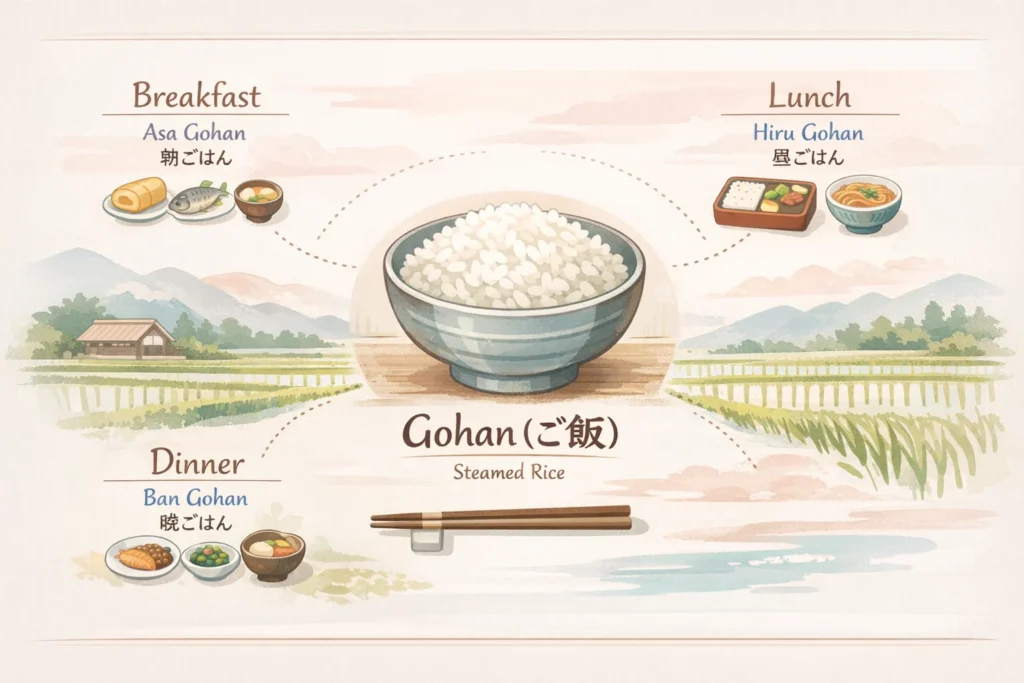
“Gohan (ご飯)” is a Japanese word that literally means “cooked rice,” but it is commonly used to refer to a meal in general.
In everyday Japanese conversation, gohan can mean both rice as food and a complete meal such as breakfast, lunch, or dinner, depending on the context.
Rice has been the foundation of Japanese cuisine for centuries, so the word naturally evolved to represent the concept of eating or having a meal. Because of this cultural importance, you’ll hear gohan used constantly in homes, restaurants, anime, and everyday Japanese speech.
Origin of the Word “Gohan”
The word gohan (ご飯) is composed of two parts:
- Go (ご) – a respectful or polite prefix used in Japanese
- Han (飯) – meaning cooked rice or food
Together, gohan literally translates to “honorable rice” or “respectful rice,” but in practice it simply means rice or a meal.
Why Rice Became the Word for “Meal”
Japan’s agricultural history explains this perfectly. For centuries:
- Rice was the main staple food in Japan.
- Most meals were built around a bowl of rice.
- Rice symbolized prosperity, nourishment, and daily life.
Because rice was present in nearly every meal, the word for rice gradually became a general term for eating or having a meal.
This linguistic pattern actually happens in many cultures. For example:
| Language | Word | Literal Meaning | Used As |
|---|---|---|---|
| Japanese | Gohan | Cooked rice | Meal |
| English | Breadwinner | Bread | Income provider |
| Chinese | Fan (饭) | Rice | Meal |
In Japanese culture, rice and eating are deeply connected, which is why gohan carries such broad meaning.
How “Gohan” Is Used in Everyday Japanese
In real conversations, gohan appears in many phrases related to meals. Context determines whether it means rice specifically or food in general.
Common Expressions
| Japanese Phrase | Meaning | Usage Context |
|---|---|---|
| Asa gohan | Breakfast | Morning meal |
| Hiru gohan | Lunch | Midday meal |
| Ban gohan | Dinner | Evening meal |
| Gohan taberu | To eat a meal | Casual speech |
| Gohan da yo | Food is ready | Family setting |
Example Sentences
Friendly / Casual Tone
- “Let’s eat gohan!” 🍚
Meaning: Let’s have a meal. - “Did you eat gohan already?”
Meaning: Did you eat yet?
Neutral Tone
- “Ban gohan wa nan desu ka?”
Translation: What’s for dinner?
Family / Warm Tone
- “Gohan ga dekita yo!”
Meaning: The meal is ready!
In homes across Japan, this phrase is commonly used when calling family members to the table.
Cultural Importance of Gohan in Japan
Rice is more than just food in Japan it represents tradition, respect, and everyday life.
Cultural Symbolism
Here are a few reasons why gohan is so culturally meaningful:
- Rice has been grown in Japan for over 2,000 years.
- Traditional meals revolve around rice, soup, and side dishes.
- Rice farming shaped Japanese communities and festivals.
- The word “gohan” symbolizes home cooking and comfort food.
Even today, many Japanese meals follow the traditional structure called “ichiju-sansai”:
- 1 bowl of rice
- 1 soup (usually miso)
- 3 side dishes
This structure highlights rice as the center of the meal, reinforcing why gohan became synonymous with food.
Real-Life Usage in Anime, Movies, and Pop Culture
If you watch Japanese anime or dramas, you’ll hear gohan frequently.
Characters often say:
- “Gohan tabeyou!” (Let’s eat!)
- “Ban gohan da!” (Dinner time!)
- “Gohan mada?” (Is the food ready yet?)
This reflects normal daily speech in Japan, which makes the word very recognizable even for beginners learning Japanese.
Interestingly, the name of a famous anime character also comes from this word.
In the anime Dragon Ball Z, the character Son Gohan is named after the Japanese word for rice or meal. The name reflects the series creator’s playful naming style, where many characters are named after foods.
Different Meanings of “Gohan” Depending on Context
Because Japanese relies heavily on context, the word gohan can mean several slightly different things.
1. Cooked Rice
The most literal meaning.
Example:
- “Gohan o kudasai.”
Translation: Please give me rice.
2. A Full Meal
The most common conversational meaning.
Example:
- “Gohan tabeta?”
Translation: Did you eat?
3. Mealtime
Sometimes it refers to the time to eat.
Example:
- “Gohan no jikan da.”
Meaning: It’s time to eat.
Understanding context is key when interpreting the word.
Example Conversation Using “Gohan”
| Situation | Dialogue | Meaning |
|---|---|---|
| Family dinner | “Ban gohan ga dekita!” | Dinner is ready |
| Friends talking | “Gohan iku?” | Want to grab food? |
| Parent to child | “Gohan tabenasai.” | Eat your food |
| Casual chat | “Mada gohan tabetenai.” | I haven’t eaten yet |
These examples show how flexible the word is in normal conversation.
Comparison With Related Japanese Food Terms
Many learners confuse gohan with other Japanese words for food. Here’s how they differ.
| Word | Meaning | When Used |
|---|---|---|
| Gohan | Rice or meal | Everyday speech |
| Meshi | Meal (casual/slang) | Informal male speech |
| Shokuji | Meal or dining | Formal situations |
| Ryori | Dish or cuisine | Cooking context |
Key Differences
Meshi (飯)
- Rougher or more casual
- Often used by men or in anime
Example:
“Meshi iku?” = Wanna grab food?
Shokuji (食事)
- More polite and formal
- Used in restaurants or business settings
Example:
“Shokuji o shimashou.” = Let’s have a meal.
Polite Alternatives and Formal Expressions
If you’re speaking Japanese in a polite or professional setting, you may want to use more formal expressions.
| Phrase | Meaning | Politeness Level |
|---|---|---|
| Gohan | Meal | Casual |
| O-shokuji | Meal | Polite |
| Meshi | Food/meal | Rough slang |
Example:
- Casual: “Gohan taberu?”
- Polite: “O-shokuji wa ikaga desu ka?” (Would you like a meal?)
Understanding tone is important in Japanese communication.
Alternate Meanings of “Gohan”
Although rare, gohan may appear in a few other contexts.
1. Personal Names
The name Gohan appears in anime and pop culture.
Example:
The character Son Gohan in Dragon Ball Z.
2. Culinary Terms
In Japanese cooking, gohan is used in dish names.
Examples:
- Takikomi gohan – seasoned rice with vegetables
- Tamago kake gohan – rice with raw egg
- Curry gohan – rice served with curry
Here, the word clearly refers to rice rather than a full meal.
Tips for Using “Gohan” Correctly
If you’re learning Japanese, these tips will help you sound more natural.
Remember the Context
Ask yourself:
- Are people talking about rice?
- Are they talking about eating?
The situation usually makes the meaning obvious.
Listen to Tone
Casual settings:
- “Gohan taberu?”
- “Ban gohan da!”
Formal settings:
- “O-shokuji wa?”
Learn Common Meal Words
These appear constantly in Japanese:
- Asa gohan – breakfast
- Hiru gohan – lunch
- Ban gohan – dinner
Mastering these phrases makes everyday conversation much easier.
FAQs
1. What does gohan literally mean in Japanese?
Gohan literally means cooked rice, but it is commonly used to mean a meal or food in general.
2. Does gohan mean rice or dinner?
It can mean both. In context, gohan may refer to rice itself or a full meal like dinner.
3. Why do Japanese people say gohan for meals?
Because rice has historically been the center of Japanese cuisine, the word for rice became synonymous with eating.
4. What is ban gohan?
Ban gohan (晩ご飯) means dinner or evening meal.
5. What is asa gohan?
Asa gohan (朝ご飯) means breakfast.
6. Is gohan a polite word?
Yes. Because of the respectful prefix “go,” it is considered polite and commonly used in everyday speech.
7. What is the difference between gohan and meshi?
- Gohan – polite and common
- Meshi – rough, casual slang for food
8. Is Gohan from Dragon Ball named after rice?
Yes. The character Son Gohan in Dragon Ball Z is named after the Japanese word for rice or meal.
Conclusion:
The Japanese word gohan (ご飯) is a perfect example of how language reflects culture. While its literal meaning is cooked rice, its everyday usage extends far beyond that to represent a full meal, eating, and mealtime.
Because rice has been the heart of Japanese cuisine for thousands of years, the word naturally became synonymous with food itself.
If you’re learning Japanese or exploring Japanese culture, understanding gohan gives you insight into how deeply food, language, and tradition are connected in Japan.
And next time you hear someone say “Gohan da yo!”, you’ll know exactly what it means it’s time to eat! 🍚
Discover More Related Articles:
- GBT Mean in Chat GPT :Explained for Students, Developers, and Users (2026)
- ASL Text Meaning: Definition and Modern Usage (2026)

James Anderson is an experienced content writer and language researcher who focuses on explaining word meanings, definitions, slang terms, and modern expressions. He writes for WordNexy.com, where his articles are designed to provide accurate meanings, practical usage examples, and easy-to-understand explanations for readers worldwide.