Definition:
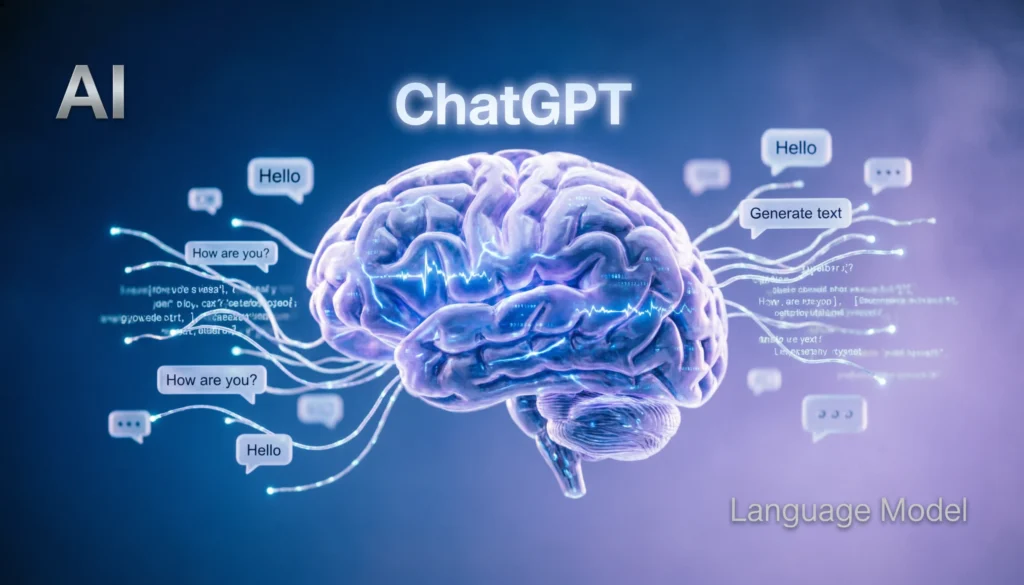
GPT in ChatGPT stands for “Generative Pre-trained Transformer.” It refers to a type of artificial intelligence model that can generate human-like text based on patterns learned from vast amounts of data. “Generative” means it creates content, “Pre-trained” means it has already learned from large datasets.
If you’ve used ChatGPT or even heard about AI tools online, you’ve probably wondered: What does GPT actually mean? It sounds technical and honestly, a little mysterious.
But here’s the truth: once you break it down, GPT is surprisingly simple to understand. It’s the engine behind the conversations, answers, and ideas that tools like ChatGPT provide.
In this guide, you’ll learn:
- The exact meaning of GPT
- How it works in simple terms
- Why it became so popular
- Real-life examples of how it’s used
- Comparisons with similar AI terms
Let’s dive in.
What Does GPT Stand For?
GPT is an acronym made up of three key parts:
1. Generative
This means the AI can create new content rather than just repeating stored information.
It can generate:
- Text
- Stories
- Emails
- Code
- Answers to questions
👉 Example: Ask ChatGPT to write a poem it creates something original, not copied.
2. Pre-trained
This means the model has already been trained on massive datasets before you use it.
- It learns patterns from books, articles, and conversations
- It doesn’t “search Google” in real-time (unless specifically connected)
- It predicts responses based on what it learned
👉 Think of it like a student who has already studied millions of pages before answering your question.
3. Transformer
This is the technology architecture behind GPT.
- It helps the AI understand context
- It processes words in relation to each other
- It allows more natural, human-like responses
👉 Without transformers, AI responses would feel robotic and disconnected.
Simple Explanation of GPT
GPT is an AI system trained to understand and generate human-like language using advanced machine learning techniques.
Origin of GPT
GPT was developed by the company OpenAI as part of its mission to make artificial intelligence more useful and accessible.
Timeline Overview:
- 2018: GPT-1 introduced
- 2019: GPT-2 improved text generation
- 2020: GPT-3 became widely popular
- 2023+: GPT models power tools like ChatGPT
Why It Became Popular:
- Easy-to-use conversational interface
- Ability to answer almost any question
- Useful for writing, coding, learning, and more
How GPT Works
Even though GPT is complex under the hood, here’s a simple way to understand it:
- You type a question or prompt
- GPT analyzes the words and context
- It predicts the most likely next words
- It generates a response in real time
👉 It’s like advanced autocomplete—but much smarter.
Real-World Uses of GPT
GPT is used in many everyday situations:
Content Creation
- Blog posts
- Social media captions
- Product descriptions
Education
- Explaining concepts
- Homework help
- Language learning
Business
- Customer support chatbots
- Email drafting
- Data summarization
Coding
- Writing code
- Debugging
- Explaining programming logic
Examples of GPT in Action
Here’s how GPT might respond in different contexts:
| Situation | User Input | GPT Response Style |
|---|---|---|
| Friendly | “Write a birthday message 😊” | Warm, cheerful, emotional |
| Neutral | “Explain photosynthesis” | Clear, factual, structured |
| Professional | “Draft a business email” | Formal, polite, precise |
| Creative | “Write a short story” | Imaginative, engaging |
| Casual | “What’s a quick dinner idea?” | Simple, helpful, conversational |
Tone Variations with GPT
GPT can adapt its tone depending on how you ask:
- 😊 Friendly: “Hey! Here’s a fun idea…”
- 📘 Neutral: “Photosynthesis is the process by which…”
- 💼 Professional: “Dear Sir/Madam, I hope this message finds you well…”
- 😐 Dismissive (rare): Usually avoided unless prompted
👉 Tip: The clearer your prompt, the better the tone.
Why GPT Matters in ChatGPT
GPT is the core technology that powers ChatGPT.
Without GPT:
- ChatGPT wouldn’t understand questions
- It couldn’t generate meaningful answers
- Conversations would feel robotic
👉 In simple terms:
ChatGPT = Chat interface + GPT brain
Comparison with Related Terms
Here’s how GPT compares to other AI-related terms:
| Term | Meaning | Difference from GPT |
|---|---|---|
| AI | Artificial Intelligence | Broad concept; GPT is a type of AI |
| NLP | Natural Language Processing | Field of study; GPT is a tool within it |
| LLM | Large Language Model | GPT is a type of LLM |
| Chatbot | Conversational program | GPT powers advanced chatbots |
| Machine Learning | AI training method | GPT uses machine learning |
GPT vs ChatGPT
Many people mix these up:
- GPT: The technology/model
- ChatGPT: The application you use
👉 Example:
GPT is like the engine, and ChatGPT is the car.
Alternate Meanings of GPT
While GPT usually refers to AI, it can have other meanings depending on context:
- General Purpose Technology (economics)
- Guid Partition Table (computer storage)
- Global Positioning Tracker (informal usage)
👉 However, in ChatGPT, it always means Generative Pre-trained Transformer.
Polite or Professional Alternatives
If you’re explaining GPT in formal settings, you can say:
- “AI language model”
- “Advanced text-generation system”
- “Machine learning-based conversational model”
👉 These sound more professional in reports or presentations.
Usage Tips: How to Use GPT Effectively
To get the best results:
Be Clear and Specific
❌ “Write something”
✅ “Write a 100-word motivational message”
Provide Context
❌ “Explain this”
✅ “Explain blockchain in simple terms”
Adjust Tone
- “Make it formal”
- “Write in a friendly tone”
Iterate
- Ask follow-up questions
- Refine your prompt
Common Misconceptions About GPT
Let’s clear up some myths:
- ❌ GPT understands like a human
✔️ It predicts patterns, not true understanding - ❌ GPT always gives correct answers
✔️ It can make mistakes - ❌ GPT searches the internet live
✔️ It relies on training data (unless connected to tools)
FAQs:
1. What does GPT stand for in simple words?
GPT means Generative Pre-trained Transformer, an AI that creates human-like text.
2. Is GPT the same as ChatGPT?
No. GPT is the technology, while ChatGPT is the application.
3. Why is GPT important?
It allows machines to understand and generate natural language.
4. Can GPT think like humans?
No. It predicts patterns but doesn’t have real understanding or emotions.
5. Is GPT free to use?
Some versions are free, while advanced versions may require payment.
6. What is a transformer in GPT?
It’s the AI architecture that helps process language efficiently.
7. How accurate is GPT?
It’s highly capable but not perfect always verify critical information.
8. Where is GPT used besides ChatGPT?
In chatbots, writing tools, coding assistants, and customer service systems.
Conclusion:
Understanding GPT in ChatGPT helps you get the most out of AI tools.
- GPT = Generative Pre-trained Transformer – the AI “brain” that powers ChatGPT.
- It creates human-like text based on patterns learned from vast data.
- GPT is used in writing, education, business, coding, and more.
- Better prompts = better results. Clear instructions help GPT respond accurately and in the desired tone.
- Remember: GPT predicts patterns, it doesn’t truly “think,” so always verify critical information.
Practical Tip: Treat GPT as a highly capable assistant give it context, specify tone, and refine your prompts for the best results.
Discover More Related Articles:
- OEM Mean in Car Parts: Here’s Why OEM Could Be the Right Choice in 2026
- Reconciliation Mean in the Bible: A Complete Christian Guide in 2026

James Anderson is an experienced content writer and language researcher who focuses on explaining word meanings, definitions, slang terms, and modern expressions. He writes for WordNexy.com, where his articles are designed to provide accurate meanings, practical usage examples, and easy-to-understand explanations for readers worldwide.