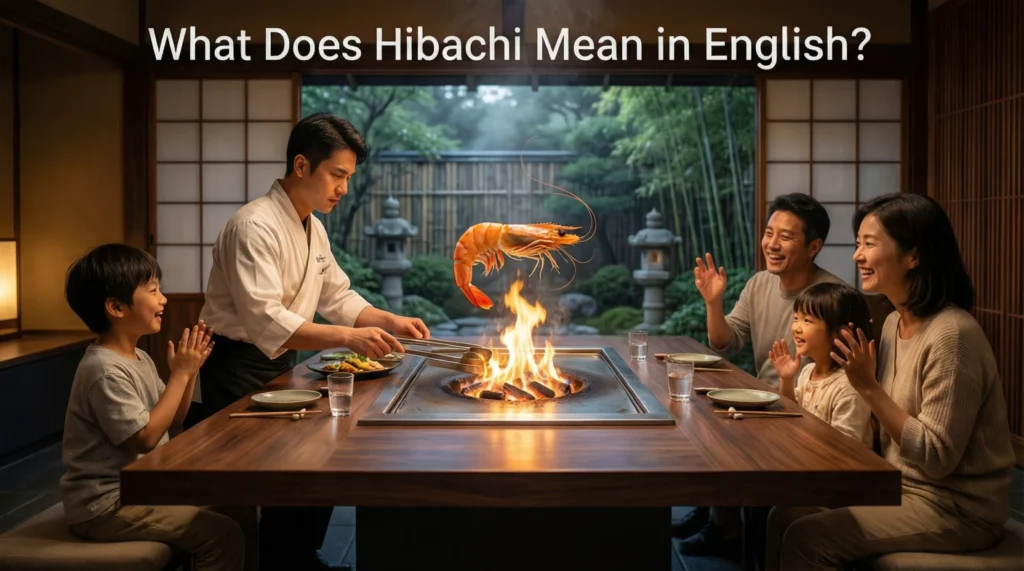
When you hear the word hibachi, you might instantly think of sizzling grills, flying shrimp, and chefs performing tricks at Japanese-style restaurants. I used to think the same. But as I dug deeper into its origins, I realized that the true meaning of hibachi in English goes far beyond modern restaurant entertainment.
The word hibachi actually has a rich cultural and historical background rooted in traditional Japanese life, and its English usage today doesn’t always reflect its original meaning.
Definition
Hibachi (noun) means “fire bowl” in English.
It refers to a traditional Japanese heating device, typically a small, portable container used to hold burning charcoal for warmth or cookin
Why the Word “Hibachi” Is So Popular Today
If hibachi originally meant a charcoal fire bowl, why do people associate it with restaurants, steak, shrimp, and dramatic cooking shows?
The answer lies in cultural adaptation and Western usage, especially in the United States. Today, “hibachi” is commonly used to describe Japanese-style teppanyaki cooking, where chefs prepare food on a flat iron grill in front of guests, even though this is technically a different cooking method.
Origin of the Word “Hibachi”
Japanese Roots
The word hibachi comes from Japanese:
- Hi (火) = fire
- Hachi (鉢) = bowl or container
The literal translation is fire bowl.
Traditional Hibachi in Japan
In Japan, a hibachi was not originally designed for elaborate cooking. Instead, it was used for:
- Heating homes
- Boiling water
- Simple food warming
- Ceremonial or aesthetic purposes
Traditional hibachi were often made from wood, ceramic, metal, or clay. They were sometimes beautifully decorated and used as part of interior design.
What Does Hibachi Mean in English Today?
In modern English usage, hibachi has two main meanings, depending on context.
1. Traditional Meaning (Accurate)
In English dictionaries, hibachi means a portable Japanese heating brazier using charcoal. This aligns closely with the original Japanese meaning.
2. Popular Western Meaning (Informal but Common)
In everyday English, especially in the U.S., hibachi often refers to:
- A Japanese-style restaurant
- Live grill cooking with chef performances
- Steak, shrimp, chicken, fried rice, and vegetables cooked in front of guests
This usage is technically inaccurate because the style of cooking is called teppanyaki, but the term hibachi has stuck in popular culture.
Hibachi vs. Teppanyaki
Many people search “what does hibachi mean in English” because they want to understand this difference.
| Feature | Hibachi | Teppanyaki |
| Literal Meaning | Fire bowl | Iron plate grill |
| Origin | Japan | Japan |
| Cooking Surface | Charcoal brazier | Flat iron griddle |
| Restaurant Style | Rare | Common |
| Chef Performance | No | Yes |
| Common in the U.S. | Name only | Actual cooking method |
Most “hibachi restaurants” in English-speaking countries are actually teppanyaki restaurants.
How “Hibachi” Is Used in Real Life
Friendly / Casual Tone
- “Let’s go out for hibachi tonight!”
- “The hibachi chef was hilari ou she flipped shrimp into everyone’s mouth!”
Neutral / Informative Tone
- “In English, hibachi traditionally refers to a charcoal heating device.”
- “Hibachi-style dining in the U.S. usually means teppanyaki cooking.”
Slightly Incorrect but Accepted Usage
- “I ordered hibachi chicken with fried rice.”
- “That restaurant serves amazing hibachi steak.”
Rare Negative or Dismissive Tone
- “That’s not real hibachi it’s just teppanyaki.”
- “People misuse the word hibachi all the time.”
Hibachi in American Culture
The meaning of hibachi in English has evolved heavily due to American dining culture.
Why the Meaning Shifted
- Teppanyaki restaurants branded themselves as “hibachi”
- The word sounded introduced and memorable
- Customers associated hibachi with entertainment, not tradition
- Marketing simplified Japanese terminology
As a result, hibachi became a catch-all term for Japanese grill dining in English.
Alternate Meanings of Hibachi
While rare, hibachi can also refer to:
- Hibachi grill sold in Western countries
- Decorative hibachi used as a non-functional ornamental fire bowl
- Cultural reference used metaphorically to suggest warmth or tradition
Polite or Professional Alternatives to “Hibachi”
If you’re writing formally or academically, consider these alternatives:
- Teppanyaki cooking
- Japanese flat-top grilling
- Live grill dining
- Japanese iron griddle cuisine
Example:
Instead of saying “Hibachi cooking is performed on a flat grill,” it is more accurate to say “Teppanyaki cooking is performed on a flat iron griddle.”
When Should You Use the Word “Hibachi”?
Use “Hibachi” When:
- Speaking casually
- Referring to restaurants in everyday conversation
- Ordering food at a restaurant labeled “hibachi”
Avoid or Clarify When:
- Writing academic content
- Teaching Japanese culture
- Explaining authentic cooking methods
Example
| Context | Meaning |
| Japanese tradition | Charcoal fire bowl |
| English dictionary | Portable heating brazier |
| American restaurant | Teppanyaki-style cooking |
| Casual speech | Japanese grill dining |
| Academic usage | Cultural heating device |
Conclusion:
In conclusion, the meaning of hibachi in English reflects both tradition and modern adaptation. While English speakers commonly use hibachi to describe a lively style of Japanese cooking performed on flat grills in restaurants, its original Japanese meaning refers to a small, portable charcoal heating device rather than a cooking method.
Over time, cultural exchange and restaurant branding reshaped how the word is understood outside Japan.
FAQs
- What does hibachi literally mean in English?
It literally means “fire bowl.” - Is hibachi actually Japanese?
Yes, hibachi is a Japanese word and cultural object, though its modern usage in English has changed. - Why do Americans call teppanyaki hibachi?
Because the term was popularized through restaurant branding and simplified marketing. - Is hibachi cooking authentic Japanese food?
Traditional hibachi is authentic, but hibachi-style restaurant cooking is actually teppanyaki. - What is the difference between hibachi and a grill?
A hibachi is a charcoal container, while a grill is designed specifically for cooking food. - Can hibachi be used for cooking?
Yes, but traditionally only for simple cooking or warming, not elaborate meals. - Is it wrong to say “hibachi restaurant”?
Not socially wrong, just technically inaccurate. - What is the correct term for hibachi-style cooking?
The correct term is teppanyaki.

James Anderson is an experienced content writer and language researcher who focuses on explaining word meanings, definitions, slang terms, and modern expressions. He writes for WordNexy.com, where his articles are designed to provide accurate meanings, practical usage examples, and easy-to-understand explanations for readers worldwide.