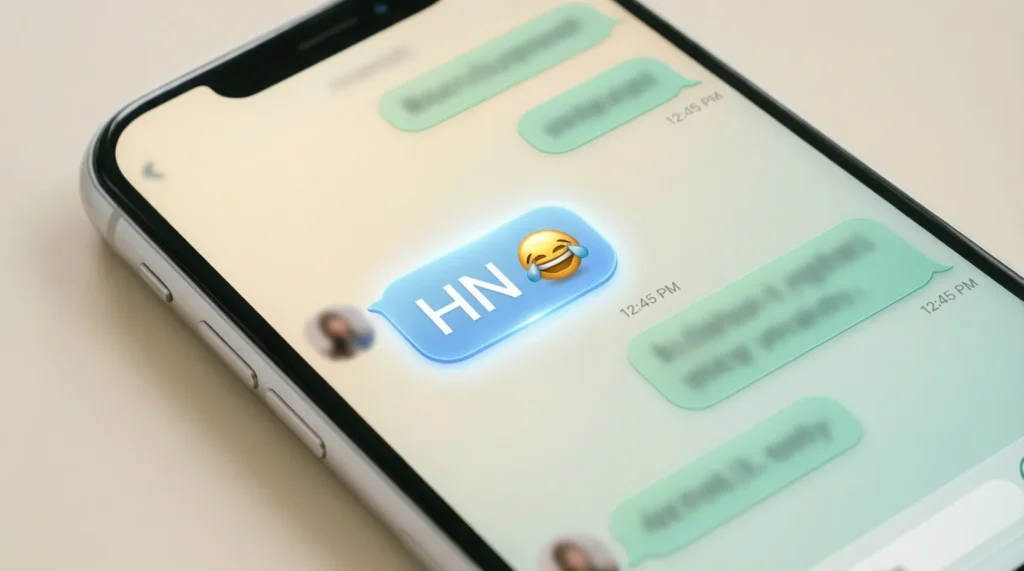
HN in text usually means “Hell No.” It is an informal abbreviation used to express strong refusal, disagreement, or rejection in casual digital conversations.
Texting slang changes fast, and some abbreviations can feel confusing if you see them without context. One such term is HN Meaning in Texting Apps. If you have received a message with “HN” and wondered what it actually means, this guide will give you a clear and complete explanation.
This article explains what HN means in text, how people use it in real conversations, the tone it carries, and when it is appropriate or inappropriate to use.
What Does HN Mean in Text?
In most texting and social media contexts, HN is a shortened form of “Hell No.” It is used when someone wants to quickly and clearly reject an idea, suggestion, or request.
HN is commonly used because it:
- Saves time while texting
- Conveys emotion without long explanations
- Feels casual and conversational
- Adds emphasis to a refusal
In simple terms, HN means a very firm “no.”
Origin of HN in Messaging
The phrase “hell no” has existed in spoken English for many years as an expressive way to say no. As texting and online chats became popular, users began shortening frequently used expressions.
HN emerged naturally as:
- Texting encouraged abbreviations
- Internet culture favored short, punchy replies
- Emotional reactions needed fast expression
Over time, HN became widely understood in informal communication.
How Popular Is HN Today?
HN is not as universal as acronyms like LOL or OMG, but it is still widely used in:
- Personal text messages
- Group chats
- Social media replies
- Meme culture
It is most common among younger users and casual online conversations. It is rarely used in professional or formal writing.
How HN Is Used in Real Conversations
The meaning of HN stays the same, but its tone changes based on context, emojis, and punctuation.
Friendly or Playful Tone
HN can be lighthearted when used between friends.
Example
Want to wake up at 5 AM for jogging?
HN 😂
In this case, it clearly means no, but in a joking way.
Neutral or Casual Tone
HN can also be simple and straightforward.
Example
Do you want to order dessert again?
HN
This is a quick refusal without emotion.
Strong or Dismissive Tone
Without emojis or extra words, HN can sound blunt.
Example
That plan makes sense.
HN.
Here, the period makes it feel firm and serious.
Emoji and Punctuation Effects
Small details can change the tone of HN.
| Style | Meaning | Tone |
|---|---|---|
| HN 😂 | Playful refusal | Friendly |
| HN 😒 | Annoyance | Dismissive |
| HN!!! | Strong rejection | Intense |
| hn | Casual reply | Relaxed |
| HN. | Firm disagreement | Serious |
Example
| Situation | Message | Meaning | Tone |
|---|---|---|---|
| Friends chatting | Go skydiving tomorrow? HN 😂 | Joking refusal | Friendly |
| Casual conversation | Want spicy food again? HN | Simple no | Neutral |
| Argument | That rumor is true. HN. | Strong disagreement | Harsh |
| Group chat | Let’s redo everything. HN!!! | Emphatic rejection | Intense |
Alternate Meanings of HN
Although rare, HN can have other meanings depending on context.
Handle Name
In tech or social media discussions, HN may refer to a username.
Health News
Occasionally used in specific informational contexts.
Initials or Codes
HN can also represent:
- A person’s initials
- Internal project names
- Website references such as Hacker News
However, in everyday texting, HN almost always means “Hell No.”
HN Compared to Similar Text Terms
Difference HN vs No
| Term | Meaning | Strength |
|---|---|---|
| No | Simple refusal | Mild |
| HN | Hell No | Strong |
Comparing HN vs NFW
| Term | Meaning | Usage |
|---|---|---|
| HN | Hell No | Casual |
| NFW | No Freaking Way | Dramatic |
Using HN vs Nope
| Term | Tone |
|---|---|
| HN | Blunt or expressive |
| Nope | Polite or light |
HN vs WTF
| Term | Purpose |
|---|---|
| HN | Refusal |
| WTF | Shock or confusion |
When You Should Avoid Using HN
HN is informal and can sound rude in some situations.
Avoid using HN:
- In professional emails
- With supervisors or clients
- In formal discussions
- When speaking with elders
In such cases, a polite alternative is better.
Polite and Professional Alternatives to HN
Casual Alternatives
- I don’t think so
- Probably not
- I’ll pass
Professional Alternatives
- I’m afraid that won’t be possible
- I don’t agree with that approach
- I’ll have to decline
Friendly Alternatives
- Hard no, sorry
- Not happening, haha
How to Understand HN in a Message
To interpret HN correctly, consider:
- Who sent the message
- The topic being discussed
- Emojis or punctuation used
- Overall conversation tone
Context always determines how strong or playful HN sounds.
FAQs
What does HN mean in texting?
HN usually means “Hell No” and expresses strong refusal.
Is HN rude?
It can be rude in formal situations but is often playful among friends.
Is HN stronger than no?
Yes, HN is more forceful than a simple no.
Can HN be used jokingly?
Yes, emojis and humor make it playful.
What does HN mean on social media?
Most of the time, it still means “Hell No.”
Does HN have professional meanings?
Rarely. In professional contexts, it may mean initials or usernames.
Is HN used by Gen Z?
Yes, it is common in casual online conversations.
How should I respond to HN?
Respect the refusal or reply based on the tone used.
Conclusion
So, what does HN mean in text? In most cases, it stands for “Hell No,” a quick and expressive way to reject an idea or disagree. While it works well in casual conversations, it can sound blunt or rude in formal settings.
Understanding the tone, context, and audience helps you use or interpret HN correctly. When clarity or politeness matters, choosing a more respectful alternative is always the better option.
Search More Related Articles :
- RSVP Meaning in English: Complete Guide with Origin and Examples (2026)
- What Does LOI Stand For in Business Transactions? (2026)

Amanda Lewis is a professional content writer and word-meaning researcher who specializes in explaining definitions, slang, abbreviations, and modern language terms. She writes for WordNexy.com, where she creates clear, accurate, and reader-friendly articles to help users understand word meanings and proper usage. Her work is especially useful for students, writers, and online readers seeking quick and reliable explanations.