

In the Bible, “I Am” is a sacred expression of God’s eternal, self-existent nature, most clearly revealed in God’s name to Moses and later used by Jesus to identify Himself as divine.
Few phrases in Scripture are as short yet as powerful as “I Am.” These two simple words carry deep theological weight, shaping how believers understand God’s identity, His relationship with humanity, and the claims Jesus made about Himself.
From the burning bush in Exodus to the Gospels of the New Testament, “I Am” stands at the center of biblical faith.
This article explores what “I Am” means in the Bible, its origin, usage, spiritual significance, comparisons with related terms, and how it continues to influence faith and theology today.
Origin of “I Am” in the Bible
“I Am” in the Old Testament
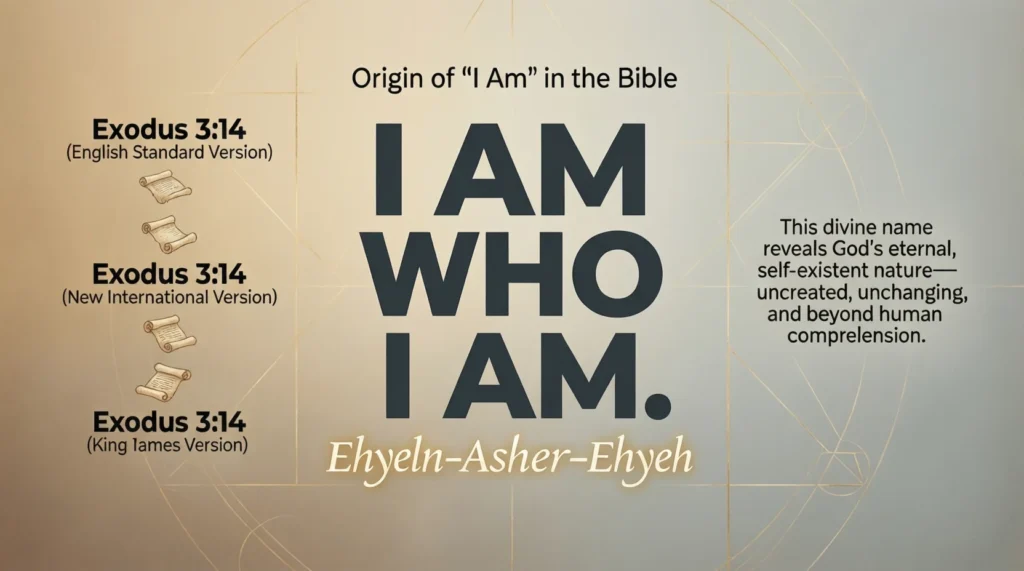
The origin of “I Am” in the Bible begins in Exodus 3:14, one of the most important verses in Scripture.
“God said to Moses, ‘I AM WHO I AM.’ This is what you are to say to the Israelites: ‘I AM has sent me to you.’”
Here, God reveals His name during Moses’ encounter with the burning bush. This moment establishes “I Am” as a divine identifier, not just a phrase.
Meaning in Hebrew
- The original Hebrew phrase is “Ehyeh Asher Ehyeh”
- It can be translated as:
- “I Am Who I Am”
- “I Will Be What I Will Be”
- “I Am the One Who Exists”
This name communicates that God:
- Exists independently
- Is eternal and unchanging
- Depends on no one and nothing
The Divine Name and God’s Self-Existence
What “I Am” Reveals About God
The phrase “I Am” is not descriptive like other names. Instead, it expresses being itself.
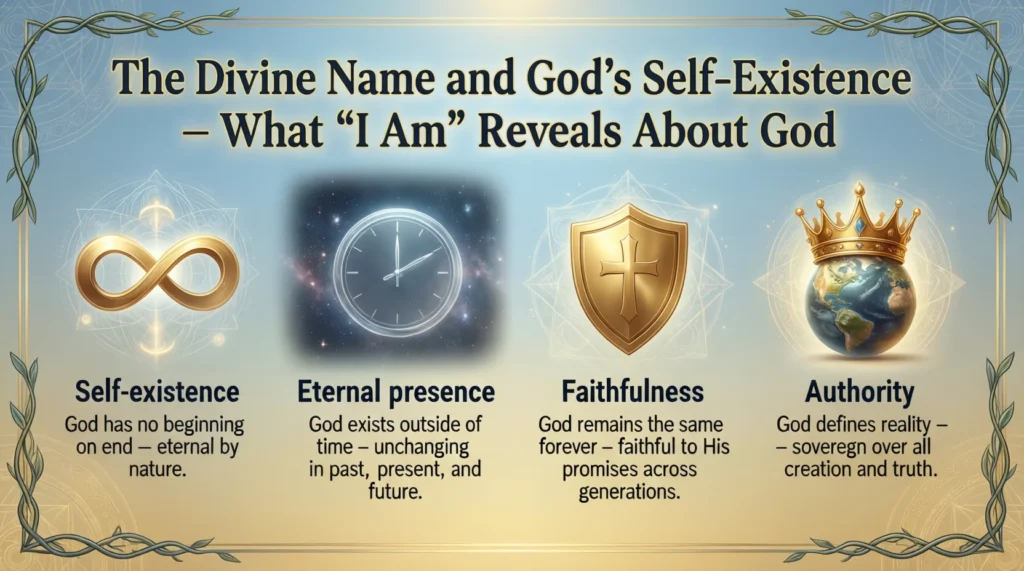
Key theological ideas behind “I Am” include:
- Self-existence – God has no beginning or end
- Eternal presence – God exists outside of time
- Faithfulness – God remains the same forever
- Authority – God defines reality, not the other way around
Unlike humans, who define themselves by roles or circumstances (“I am a teacher,” “I am tired”), God simply says “I Am.”
“I Am” in the New Testament
Jesus and the “I Am” Statements
In the New Testament, Jesus uses “I Am” in a way that directly echoes God’s words in Exodus. This is especially clear in the Gospel of John.
Famous “I Am” Statements of Jesus
- “I am the bread of life” (John 6:35)
- “I am the light of the world” (John 8:12)
- “I am the door” (John 10:9)
- “I am the good shepherd” (John 10:11)
- “I am the resurrection and the life” (John 11:25)
- “I am the way, the truth, and the life” (John 14:6)
- “I am the true vine” (John 15:1)
Each statement reveals who Jesus is and what He provides spiritually.
“Before Abraham Was, I Am”
One of the most striking uses of the phrase appears in John 8:58:
“Before Abraham was born, I am!”
This statement shocked Jesus’ audience because:
- He did not say “I was”
- He used the timeless “I Am”
- His listeners understood it as a claim to divinity
The immediate reaction of the crowd confirms this, as they attempted to stone Him for blasphemy.
Why “I Am” Is So Important in the Bible
Spiritual and Theological Significance
“I Am” matters because it answers some of life’s deepest questions:
- Who is God?
God is eternal and self-existent. - Who is Jesus?
Jesus identifies Himself with God’s divine name. - Can God be trusted?
Yes, because He does not change.
Real-World Usage and Popularity of the Phrase
“I Am” in Worship and Christian Language
Today, “I Am” appears frequently in:
- Worship songs
- Sermons and Bible studies
- Christian literature and theology
Phrases like:
- “God is the great I Am”
- “Jesus, the great I Am”
are rooted directly in biblical language.
Tone and Context: How “I Am” Is Used
Unlike casual modern speech, “I Am” in the Bible is always intentional and weighty.
Tone Variations
- Authoritative: God declaring His nature
- Revelatory: Jesus revealing truth about Himself
- Comforting: Assurance of God’s presence
- Confrontational: Challenging false beliefs
There is no dismissive or negative tone in biblical uses of “I Am.” It always conveys truth and authority.
Example
| Passage | Speaker | Phrase | Meaning |
|---|---|---|---|
| Exodus 3:14 | God | “I AM WHO I AM” | God’s eternal self-existence |
| John 6:35 | Jesus | “I am the bread of life” | Spiritual nourishment |
| John 8:12 | Jesus | “I am the light of the world” | Truth and guidance |
| John 10:11 | Jesus | “I am the good shepherd” | Care and protection |
| John 14:6 | Jesus | “I am the way, the truth, and the life” | Salvation through Christ |
Comparison With Related Biblical Terms
“I Am” vs. Other Names of God
| Name | Meaning | Difference |
|---|---|---|
| Yahweh | Covenant name of God | Closely tied to “I Am” |
| Elohim | Mighty Creator | Emphasizes power |
| Adonai | Lord or Master | Emphasizes authority |
| I Am | Self-existent Being | Emphasizes eternal existence |
“I Am” stands apart because it describes God’s nature, not just His role.
Alternate Meanings of “I Am”
In everyday language, “I am” simply identifies:
- A state (“I am tired”)
- A role (“I am a student”)
- An emotion (“I am happy”)
However, these meanings do not apply to the biblical usage, which is theological and divine.
Polite or Professional Alternatives (Contextual Use)
In Christian writing or teaching, alternatives include:
- “The Eternal One”
- “The Self-Existent God”
- “The Great I Am”
- “Yahweh”
These terms help communicate the same truth respectfully and clearly.
How “I Am” Shapes Christian Faith Today
Believers often reflect on “I Am” to understand:
- God’s constant presence
- Jesus’ divine authority
- Personal trust in God’s promises
It reminds Christians that God is not limited by time, circumstances, or human weakness.
FAQs
1. What does “I Am” literally mean in the Bible?
It means God exists eternally and depends on nothing else for His being.
2. Why did God call Himself “I Am”?
To reveal His eternal, unchanging nature and divine authority.
3. Is “I Am” the same as Yahweh?
Yes, “I Am” is closely connected to Yahweh, God’s covenant name.
4. Why did Jesus say “I Am” so often?
To reveal His identity and mission, and to show His unity with God.
5. Did people understand Jesus’ “I Am” claims?
Yes, many recognized them as claims to divinity.
6. Is “I Am” used outside Christianity?
It appears in philosophy and spirituality, but its biblical meaning is unique.
7. Can believers use “I Am” statements today?
Yes, but with humility and awareness that the divine usage belongs to God.
8. Why is “I Am” still important today?
It reassures believers that God remains present, faithful, and unchanging.
Conclusion:
The phrase “I Am” in the Bible is far more than a grammatical statement. It is a declaration of God’s eternal existence, unchanging nature, and sovereign authority. When Jesus used these words, He was not speaking casually He was revealing divine truth.
In a world of constant change, “I Am” reminds believers that God simply is and always will be.
Search More Related Articles:

Sarah Williams is the passionate author behind WordNexy.com, dedicated to creating content that informs, inspires, and sparks curiosity. With a love for words and storytelling, she transforms ideas into meaningful articles that educate, entertain, and leave a lasting impression on every reader.

