Definition
“IHH” in text messaging usually stands for a soft expression of hesitation, mild discomfort, or awkwardness similar to saying “uhh,” “um,” or “hmm.”
It’s often used in casual conversations to show uncertainty, reluctance, or a slightly negative reaction without being too direct.
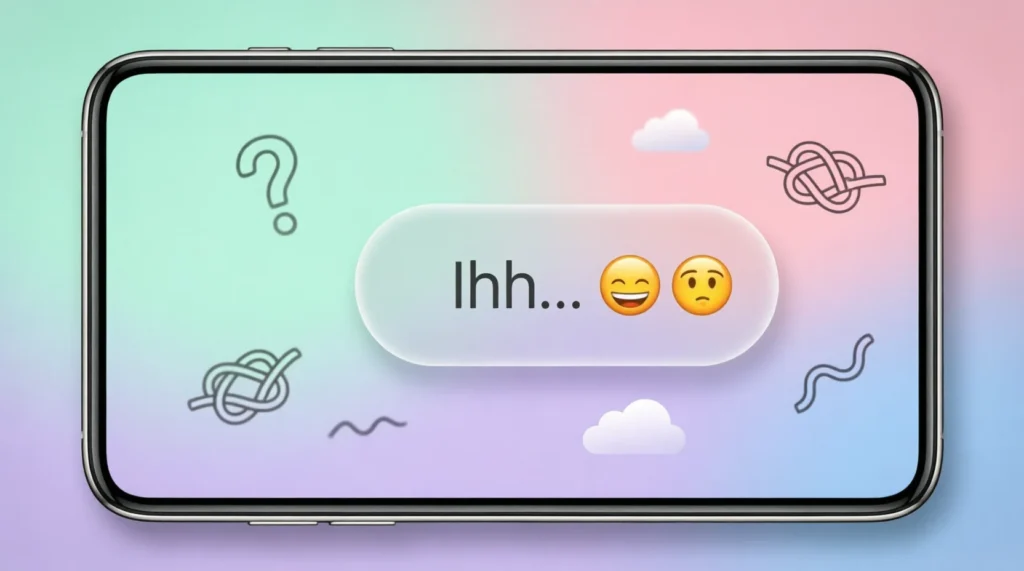
Ever received a message like “Ihh… I don’t think that’s a good idea 😅” and paused for a second?
You’re not alone.
Modern texting is full of subtle expressions tiny abbreviations that carry big emotional meaning. One of those is “ihh.” It may look simple, but it can completely change the tone of a message. Whether it signals hesitation, awkwardness, or a polite “no,” understanding what “ihh” means in text can help you avoid confusion and even improve your own communication.
In this guide, we’ll break down everything you need to know about “ihh,” including its meaning, tone, usage, examples, and how it compares to similar slang.
🧩 What Does “IHH” Mean in Texting?
At its core, “ihh” is an informal expression that mimics a sound people make when they’re unsure, uncomfortable, or hesitant.
💬 Common meanings of “ihh”:
- Hesitation (“Ihh… I’m not sure”)
- Mild discomfort (“Ihh that’s kinda weird”)
- Reluctance (“Ihh I don’t want to go”)
- Awkwardness (“Ihh… what do I say now?”)
👉 Think of it as a text version of a pause or uncertain reaction.
📜 Origin and Popularity of “IHH”
“Ihh” doesn’t come from a formal dictionary it evolved naturally from spoken sounds.
🗣️ Where it comes from:
- Inspired by sounds like “uhh,” “ehh,” or “hmm”
- Represents how people pause or hesitate in real-life speech
- Became popular through texting and social media platforms like:
- Snapchat
- Instagram DMs
- TikTok comments
📈 Why it became popular:
- Quick way to express emotions without long explanations
- Adds personality and tone to otherwise flat text
- Feels more human and relatable
🎯 How “IHH” Is Used in Real Conversations
“Ihh” is all about tone. Depending on context, it can be friendly, neutral, or slightly negative.
🟢 Friendly / Playful Tone
Used when joking or lightly teasing.
- “Ihh you’re always late 😂”
- “Ihh stop it, you’re making me laugh”
🟡 Neutral / Hesitant Tone
Shows uncertainty or thinking.
- “Ihh I need to check first”
- “Ihh maybe later?”
🔴 Negative / Dismissive Tone
Soft way to disagree or reject.
- “Ihh I don’t like that idea”
- “Ihh no thanks”
📊 Example Table: “IHH” in Different Contexts
| Situation | Example Message | Tone | Meaning |
|---|---|---|---|
| Making a decision | “Ihh… I’ll think about it” | Neutral | Unsure / hesitant |
| Reacting to idea | “Ihh that’s kinda weird” | Slightly negative | Discomfort |
| Friendly teasing | “Ihh you again 😂” | Playful | Light joke |
| Rejecting politely | “Ihh I don’t think I can come” | Polite negative | Soft refusal |
| Awkward moment | “Ihh… okay then” | Awkward | Unsure how to respond |
🔍 “IHH” vs Similar Text Slang
“Ihh” isn’t the only expression of hesitation. Here’s how it compares:
| Term | Meaning | Tone Difference |
|---|---|---|
| Uhh | Thinking or pausing | More common, less emotional |
| Hmm | Thinking deeply or considering | More thoughtful than awkward |
| Ehh | Indifference or dislike | More negative than “ihh” |
| Ihh | Hesitation + mild discomfort | Softer and more expressive |
🧠 When Should You Use “IHH”?
“Ihh” works best in casual conversations.
✅ Good situations:
- Chatting with friends
- Texting casually
- Reacting to something awkward or funny
❌ Avoid using “ihh”:
- In professional emails
- In formal communication
- When clarity is important
💡 Polite or Professional Alternatives
If you want to express hesitation without slang, try these:
| Situation | Alternative Phrase |
|---|---|
| Unsure | “I’m not certain about that” |
| Hesitant | “Let me think about it” |
| Disagree politely | “I’m not sure that’s the best option” |
| Uncomfortable | “I feel a bit unsure about this” |
🔄 Alternate Meanings of “IHH”
While rare, “IHH” can have other meanings depending on context:
- Inside joke or personal slang between friends
- Typo for “ugh” or “uhh”
- Occasionally used as a random expression without fixed meaning
👉 However, the most common meaning remains hesitation or mild discomfort in texting.
⚠️ Common Mistakes to Avoid
- ❌ Misinterpreting it as something serious
- ❌ Using it in formal writing
- ❌ Assuming it always means “no”
👉 Remember: context is everything.
❓ FAQs:
1. What does “ihh” mean in texting?
“Ihh” means hesitation, discomfort, or uncertainty similar to “uhh” or “ehh.”
2. Is “ihh” positive or negative?
It can be both. It depends on context sometimes playful, sometimes slightly negative.
3. Is “ihh” rude?
Not usually. It’s a soft, indirect way to express feelings, but tone matters.
4. Can I use “ihh” in professional messages?
No, it’s best to avoid it in formal communication.
5. What’s the difference between “ihh” and “uhh”?
“Ihh” shows more emotion or discomfort, while “uhh” is just a pause.
6. Does “ihh” mean no?
Not always it can suggest hesitation, not a clear refusal.
7. Why do people use “ihh”?
To sound more natural, expressive, and relatable in text conversations.
8. Is “ihh” commonly used?
Yes, especially among younger users on social media and messaging apps.
🧾 Conclusion:
In texting, “ihh” is a small but powerful tool to convey hesitation, awkwardness, or mild discomfort without sounding harsh. Its meaning changes depending on context friendly, neutral, or slightly negative making it versatile in casual conversations.
While it adds personality and emotion to chats, it’s best avoided in professional or formal communication. Understanding “ihh” helps you interpret messages more accurately and express your own reactions naturally.
👉 When used correctly, “ihh” can make your messages feel more natural, human, and expressive just like real-life speech.
Discover More Related Articles:
- A Spread Mean in Sports Betting: How to Read and Use the Spread in 2026
- Exhortation Mean in the Bible: Encouragement Through Scripture in 2026

Amanda Lewis is a professional content writer and word-meaning researcher who specializes in explaining definitions, slang, abbreviations, and modern language terms. She writes for WordNexy.com, where she creates clear, accurate, and reader-friendly articles to help users understand word meanings and proper usage. Her work is especially useful for students, writers, and online readers seeking quick and reliable explanations.