Definition
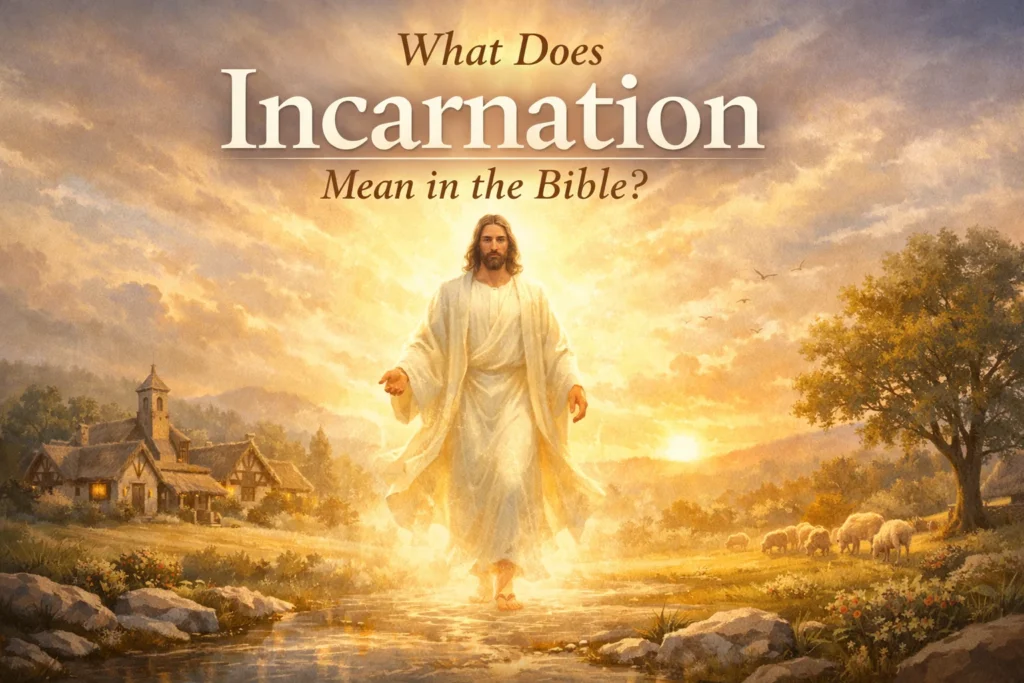
In the Bible, “incarnation” refers to the belief that God became human in the person of Jesus Christ. It specifically describes the moment when the divine took on human flesh, fully God and fully man, to live among humanity and fulfill God’s plan of salvation.
Have you ever wondered how Christians believe God connects with humanity on a personal level? The answer lies in one powerful word: incarnation.
In biblical teaching, incarnation isn’t just a theological idea it’s the foundation of the Christian faith. It explains how the eternal, invisible God stepped into human history, experienced life as we do, and ultimately offered redemption.
Whether you’re studying theology, exploring faith, or just curious, understanding the incarnation helps unlock the deeper message of the Bible.
📖 What Does Incarnation Mean in the Bible?
The word “incarnation” comes from the Latin incarnatio, meaning “to become flesh.”
In the Bible, it refers to:
- God taking on a human body
- Living among people as a real person
- Experiencing human life (birth, growth, emotions, suffering)
Key Biblical Verse
“The Word became flesh and made his dwelling among us.” (John 1:14)
This verse summarizes the entire concept:
- “The Word” = God’s divine nature
- “Became flesh” = took on human form
🕊️ Origin of the Concept of Incarnation
Although the English word “incarnation” doesn’t appear directly in most Bible translations, the concept is deeply rooted in Scripture.
Old Testament Foundations
The Old Testament hints at God coming closer to humanity:
- God appears in human-like forms (e.g., Genesis appearances)
- Prophecies about a coming Messiah (Isaiah 7:14, Isaiah 9:6)
New Testament Fulfillment
The idea becomes clear in the New Testament:
- Jesus is born as a human (Luke 2)
- Declared both divine and human (Philippians 2:6–8)
- Lives, teaches, suffers, and dies
📊 Popularity and Importance in Christianity
The doctrine of incarnation is:
- A core belief in Christianity
- Central to teachings about salvation and redemption
- Celebrated especially during Christmas
Why It’s Important:
- Shows God’s love in action ❤️
- Bridges the gap between God and humanity
- Makes salvation possible through Jesus
💬 Real-World Usage of “Incarnation”
Outside strict theology, the word “incarnation” is sometimes used more loosely.
Common Uses:
- “She is the incarnation of kindness.” 😊 (positive tone)
- “That moment was the incarnation of chaos.” 😅 (neutral/expressive tone)
- “He became the incarnation of fear.” 😨 (negative tone)
👉 In these cases, it means:
“A perfect example or embodiment of something.”
📌 Examples of Incarnation in Context
| Context | Example Sentence | Tone |
|---|---|---|
| Biblical | “Jesus is the incarnation of God in human form.” | Formal/Religious |
| Everyday (Positive) | “She’s the incarnation of generosity.” | Friendly |
| Everyday (Neutral) | “That place is the incarnation of modern design.” | Neutral |
| Everyday (Negative) | “That situation became the incarnation of stress.” | Negative |
🔍 Deep Dive: How the Incarnation Works
Christian teaching describes Jesus as:
- Fully God (divine nature)
- Fully human (human nature)
This is often called the “hypostatic union.”
Key Elements:
- Jesus experienced hunger, pain, and emotions
- Yet remained sinless
- Maintained divine authority
👉 This makes the incarnation unique God didn’t just appear human; He truly became human.
⚖️ Incarnation vs Related Terms
Understanding incarnation becomes easier when compared to similar concepts:
| Term | Meaning | Difference from Incarnation |
|---|---|---|
| Incarnation | God becoming human | Unique to Jesus in Christianity |
| Manifestation | Showing something abstract | Not necessarily becoming human |
| Avatar | A deity appearing in form (Hinduism) | Multiple appearances vs one-time event |
| Embodiment | Representing a quality | Not necessarily divine |
🔄 Alternate Meanings of “Incarnation”
While the biblical meaning is specific, the word can have other interpretations:
1. General English Meaning
- A person who represents a quality
- Example: “He’s the incarnation of patience”
2. Philosophical/Religious (Non-Christian)
- Some religions use similar ideas (like rebirth or avatars)
- However, these are not the same as the biblical incarnation
🗣️ Polite or Professional Alternatives
If you want to avoid strong religious wording, you can use:
- Embodiment
- Representation
- Personification
- Living example
Example:
- Instead of: “Jesus is the incarnation of God”
- You might say: “Jesus represents God in human form” (simplified explanation)
📚 Practical Usage Tips
- Use “incarnation” carefully in religious contexts it carries deep meaning
- In everyday speech, it’s fine for emphasis or expression
- Avoid confusing it with:
- Reincarnation (completely different concept ❌)
- Symbolism (less literal)
❓FAQs
1. What does incarnation mean in simple words?
It means God became human, specifically in the person of Jesus Christ.
2. Where is incarnation found in the Bible?
The idea appears in:
- John 1:14
- Philippians 2:6–8
- Colossians 2:9
3. Is incarnation the same as reincarnation?
No.
- Incarnation = God becoming human once
- Reincarnation = repeated rebirth (different belief system)
4. Why is the incarnation important in Christianity?
It explains how Jesus can:
- Understand human life
- Offer salvation
- Connect God with humanity
5. Does the Bible use the word “incarnation”?
Not directly in most translations, but the concept is clearly taught.
6. What does “the Word became flesh” mean?
It means God (the Word) took on a human body and lived among people.
7. Can “incarnation” be used in everyday language?
Yes! It often means:
- “A perfect example of something”
Example: “He’s the incarnation of bravery.”
8. Who is the incarnation of God in the Bible?
Christians believe Jesus Christ is the incarnation of God.
🧾 Conclusion:
The concept of incarnation in the Bible is both simple and profound:
- It means God became human in Jesus
- It shows God’s love and closeness to humanity
- It forms the foundation of Christian belief
Incarnation in the Bible means that God became human in the person of Jesus Christ. It refers to the belief that Jesus is both fully God and fully man, living on earth to reveal God’s nature and bring salvation to humanity.
Ultimately, the incarnation is more than just a theological idea it’s a message of connection, compassion, and divine presence in human life.
Discover More Related Articles:
A Spread Mean in Sports Betting: How to Read and Use the Spread in 2026- Exhortation Mean in the Bible: Encouragement Through Scripture in 2026

Amanda Lewis is a professional content writer and word-meaning researcher who specializes in explaining definitions, slang, abbreviations, and modern language terms. She writes for WordNexy.com, where she creates clear, accurate, and reader-friendly articles to help users understand word meanings and proper usage. Her work is especially useful for students, writers, and online readers seeking quick and reliable explanations.