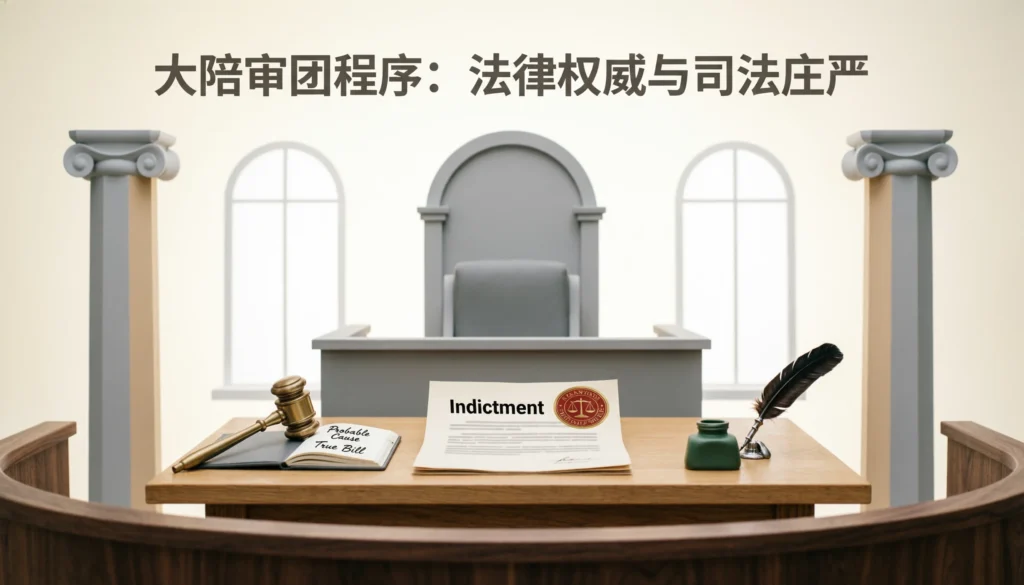
An indictment in court is a formal criminal charge issued usually by a grand jury stating there is enough evidence to accuse someone of a serious crime and require them to stand trial.
It does not mean the person is guilty; it means the legal process moves forward.
When people hear that someone “has been indicted,” the reaction is often dramatic news alerts, speculation, and strong opinions. But legally speaking, an indictment is not a conviction, not a punishment, and not even a final determination of wrongdoing.
It’s a procedural step that signals: there’s enough evidence to formally accuse and proceed to trial.
If you’ve ever wondered how indictments work, why they matter, and what happens next, this guide breaks it down in clear, everyday language.
What Is an Indictment in Court?
An indictment is an official accusation of a crime, typically issued after prosecutors present evidence to a grand jury. The grand jury reviews whether the evidence establishes probable cause a reasonable basis to believe a crime occurred and the accused person committed it.
Key ideas to remember:
- ✔ It is a formal charge, not proof of guilt
- ✔ It is often used for felonies or serious offenses
- ✔ It allows the case to proceed to arraignment and trial
- ✔ It comes from a grand jury, not a trial jury
In simple terms:
👉 An indictment is the court system saying, “There’s enough evidence to take this case forward.”
How the Indictment Process Works
While procedures vary slightly by jurisdiction, the basic steps are similar across many legal systems, especially in the United States.
Step-by-step overview
- Investigation
Law enforcement gathers evidence documents, testimony, forensic results. - Prosecutor’s Review
A prosecutor decides whether to present the case to a grand jury. - Grand Jury Proceedings
- Usually 16–23 citizens
- Proceedings are private
- Prosecutors present evidence and witnesses
- The defense typically does not participate
- Grand Jury Vote
If enough jurors agree there is probable cause → true bill (indictment)
If not → no bill (no indictment) - Arraignment
The accused is formally informed of charges and enters a plea.
Origin and Legal Background of Indictments
The concept of indictment dates back to English common law, where local citizens were empowered to accuse individuals of crimes based on community knowledge. This idea evolved into the grand jury system, intended as a safeguard against arbitrary prosecution.
In the U.S., indictments are embedded in constitutional law. The Fifth Amendment requires grand jury indictments for serious federal crimes. Federal prosecutions are often overseen by entities such as the United States Department of Justice, and constitutional interpretations ultimately rest with the U.S. Supreme Court.
Why indictments exist
- To protect citizens from unfounded criminal charges
- To ensure independent review of prosecution evidence
- To uphold due process before trial
Real-World Usage and Legal Context
You’ll most often hear the word “indicted” in news coverage of major criminal cases financial crimes, public corruption, or high-profile offenses.
For example:
- Corporate fraud cases like those involving Enron executives began with indictments.
- Financial crime prosecutions, including the case against Bernie Madoff, also moved forward through indictment.
Even state-level prosecutions such as those brought in places like New York may rely on grand jury indictments before trial.
Why indictments make headlines
- They signal a case is serious and supported by evidence
- They represent a major legal milestone
- They often involve public figures or large-scale crimes
But remember: indictment ≠ conviction.
Tone and Usage in Everyday Language
Outside legal settings, “indictment” is sometimes used metaphorically.
Legal tone (formal, neutral)
- “The grand jury issued an indictment on multiple counts.”
- “He was indicted but has pleaded not guilty.”
Journalistic tone (neutral to serious)
- “The indictment marks a significant development in the investigation.”
Figurative tone (critical or dismissive)
- “The report is an indictment of the company’s leadership.”
👉 Meaning: strong criticism, not a legal charge.
Emotional reactions in conversation
- “Wow… that’s serious 😮”
- “Being indicted doesn’t mean they’re guilty.”
Examples of Indictment in Context
| Context | Example Sentence | Tone |
|---|---|---|
| Criminal law | “The grand jury issued an indictment for fraud.” | Formal |
| News report | “The indictment includes five criminal charges.” | Neutral |
| Defense response | “The defendant denies all allegations in the indictment.” | Professional |
| Everyday speech | “The audit felt like an indictment of management.” | Figurative |
| Public reaction | “He was indicted?! That escalated quickly.” | Emotional |
Indictment vs Related Legal Terms
Legal terminology can feel like alphabet soup. Here’s how indictment compares to similar concepts.
Comparison Table
| Term | Meaning | Who Issues It | When Used |
|---|---|---|---|
| Indictment | Formal criminal charge based on probable cause | Grand jury | Serious crimes |
| Charge | Official accusation of wrongdoing | Prosecutor | All crime levels |
| Information | Formal charge without grand jury | Prosecutor | Some jurisdictions |
| Arraignment | Court appearance to hear charges | Judge | After indictment |
| Conviction | Legal finding of guilt | Judge or trial jury | After trial |
| Impeachment | Political accusation of misconduct | Legislature | Public officials |
Quick clarity tip
- Indictment = accusation
- Trial = evaluation
- Conviction = outcome
Indictment vs Arrest: Common Confusion
Many people assume indictment and arrest are the same. They’re not.
| Feature | Indictment | Arrest |
|---|---|---|
| Purpose | Formal charge | Physical custody |
| Evidence threshold | Probable cause reviewed by grand jury | Probable cause by police |
| Timing | Before trial | Before or after indictment |
| Result | Case moves forward | Person detained |
Someone can be:
- Arrested without indictment
- Indicted without immediate arrest
- Arrested after indictment
What Happens After an Indictment?
An indictment launches the next phase of the criminal process.
Typical next steps
- Arraignment: Defendant enters plea
- Pretrial motions: Legal arguments about evidence
- Discovery: Both sides exchange information
- Trial or plea agreement
Possible outcomes:
- Case dismissed
- Plea bargain
- Not guilty verdict
- Guilty verdict
Alternate Meanings of “Indictment”
While primarily legal, the word also has broader uses.
1. Moral or social criticism
A strong condemnation of behavior or policy.
Example: “The study is an indictment of systemic failures.”
2. Historical/legal documents
In older texts, “indictment” may refer to any formal accusation, not strictly criminal.
Professional and Polite Alternatives
In writing or conversation, you may want softer or more neutral wording.
Legal context alternatives
- Formal charges filed
- Criminal accusation
- Prosecutorial complaint
Figurative alternatives
- Strong criticism
- Evidence of failure
- Serious allegation
Why Indictments Matter in the Justice System
Indictments serve several essential functions:
- Protect individuals from baseless prosecution
- Ensure independent review of evidence
- Establish official legal proceedings
- Preserve fairness before trial
They balance two goals:
⚖ Holding suspects accountable
⚖ Protecting civil liberties
FAQs
1. Does an indictment mean someone is guilty?
No. An indictment only means there is enough evidence to formally charge someone and move the case to trial. It is not a judgment of guilt.
2. Who decides whether to issue an indictment?
A grand jury decides. They review evidence presented by a prosecutor to see if there’s probable cause to charge someone.
3. What is a grand jury?
It’s a group of citizens who examine the evidence and determine whether there’s enough reason to formally accuse someone of a crime.
4. Can charges be dropped after an indictment?
Yes. Prosecutors or the court can dismiss the charges if the evidence isn’t strong enough or circumstances change.
5. What crimes require an indictment?
Mostly serious crimes, like felonies, especially in federal court. Some states also require indictments for major offenses.
6. Can someone be indicted without knowing?
Yes. Grand jury proceedings are usually private, so a person may not know they are being investigated until the indictment is announced.
7. What is the difference between an indictment and a conviction?
An indictment is a formal accusation. A conviction happens only after a trial or plea when someone is found guilty.
8. How long does it take to get indicted?
It can take a few weeks or even years, depending on how complex the investigation is.
Practical Tips for Understanding Legal News
If you see headlines about indictments, keep these principles in mind:
- 🧠 Treat it as the start of formal proceedings, not the end
- ⚖ The accused still has full legal rights
- 📰 Media language may sound dramatic but remains procedural
- 📚 Legal terms have precise meanings context matters
Conclusion:
An indictment is a cornerstone of the criminal justice process. It formally accuses someone of a crime based on evidence reviewed by a grand jury. Crucially, it is not a judgment of guilt, but a gateway to trial and due process.
Remember these essentials
- It is a formal criminal charge
- It is based on probable cause
- It usually involves a grand jury
- It begins the court process, not the punishment
Understanding what indictment means helps you interpret legal news accurately and separates fact from assumption. Whenever you hear the term, think: formal accusation, not final verdict.
Discover More Related Articles:
- Understanding FIP in Baseball: Definition, Formula, and Uses (2026)
- TW in Jewelry Meaning: What It Really Stands For (2026)

James Anderson is an experienced content writer and language researcher who focuses on explaining word meanings, definitions, slang terms, and modern expressions. He writes for WordNexy.com, where his articles are designed to provide accurate meanings, practical usage examples, and easy-to-understand explanations for readers worldwide.