Definition:
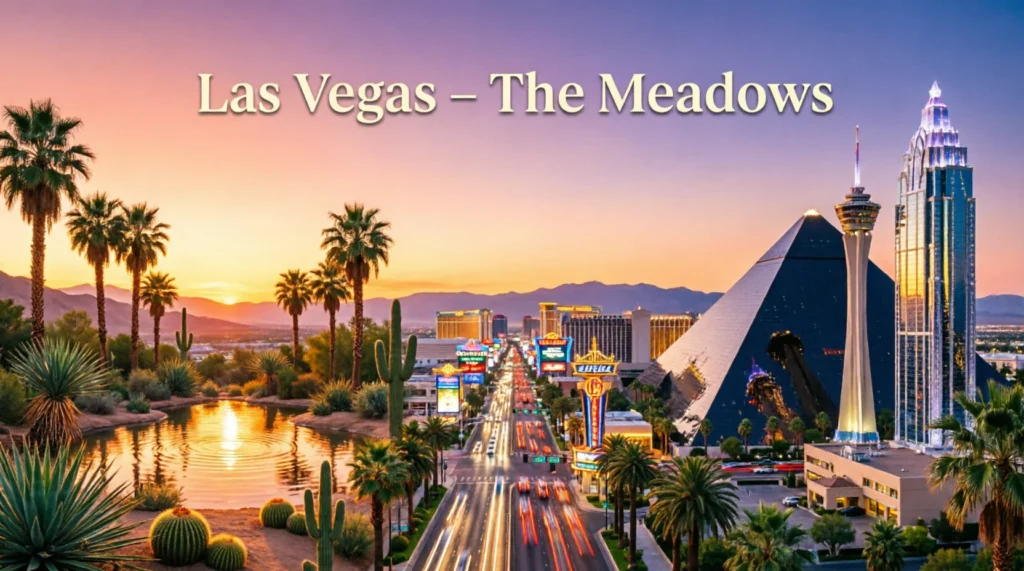
Las Vegas, translated from Spanish to English, literally means “The Meadows.” 🌿 The name refers to the fertile lands and springs that early explorers discovered in the desert region of present-day Nevada.
When you hear Las Vegas, what comes to mind? Glittering casinos, neon lights, and the world-famous Las Vegas Strip? 🌟 Surprisingly, the name itself has a much more serene origin. In English, Las Vegas literally translates to “The Meadows” a nod to the natural springs and fertile lands discovered by Spanish explorers in the desert region of present-day Nevada.
From a quiet oasis in the arid Mojave Desert to the bustling entertainment capital of the world, Las Vegas carries a fascinating story behind its name. Understanding what Las Vegas means in English not only reveals its historical roots but also sheds light on how this desert meadow transformed into a global symbol of excitement, nightlife, and tourism.
Las Vegas is more than just a name it carries history, culture, and a story of transformation from a natural oasis into the “Entertainment Capital of the World.” In this guide, we’ll explore its meaning, origin, usage, examples, and even some fun comparisons and alternate interpretations.
Origin of Las Vegas
Spanish Roots
The name Las Vegas comes directly from Spanish explorers in the early 19th century. Breaking it down:
| Spanish Term | English Meaning |
|---|---|
| Las | The (feminine plural article) |
| Vegas | Meadows or fertile plains |
The Spanish term vega refers to a lush, low-lying area, typically fertile and well-irrigated. When explorers found natural springs in the desert, they named the area Las Vegas to reflect its surprising greenery amidst the arid landscape.
Historical Context
- Early 1800s: Spanish traders and explorers were mapping the southwestern United States.
- 1829: Rafael Rivera, a Mexican scout, is credited with being among the first non-Native explorers to enter the area.
- 1855: Mormon settlers established a fort in Las Vegas to cultivate the fertile land and raise livestock.
So, the name literally celebrates the natural meadows and life-giving water in a harsh desert setting quite poetic when you think about it! 🌵💧
How Las Vegas Became Popular
While its name emphasizes nature, Las Vegas is now globally associated with entertainment, nightlife, and tourism. Here’s a quick timeline of how it evolved:
- 1905: The city of Las Vegas was officially founded.
- 1931: Legalization of gambling in Nevada made Las Vegas a hotspot for tourists.
- 1940s–50s: The construction of lavish casinos and hotels, often with ties to Hollywood stars and organized crime, skyrocketed its fame.
- Today: Las Vegas is known for luxury resorts, nightlife, conventions, and major entertainment events like concerts, magic shows, and sporting events.
Despite its modern reputation, the original meaning of “The Meadows” is still reflected in parts of the city with parks, golf courses, and natural springs. 🌺
Usage of Las Vegas in English
In English, Las Vegas is used primarily as a proper noun referring to the city in Nevada. It can appear in different contexts:
- Neutral / Informative: “I’m planning a trip to Las Vegas this summer.”
- Friendly / Fun: “Let’s hit the Las Vegas strip and see a show! 🎰”
- Dismissive / Critical: “All that glitz in Las Vegas isn’t for me it’s just touristy hype.”
The name is instantly recognizable worldwide, often symbolizing extravagance, entertainment, and nightlife, but the literal meaning is surprisingly grounded in nature.
Examples of Las Vegas in Context
| Tone | Example Sentence |
|---|---|
| Friendly | “Las Vegas has something for everyone, from world-class shows to delicious buffets! 😄” |
| Neutral | “Las Vegas is located in the Mojave Desert of southern Nevada.” |
| Negative / Dismissive | “Some people feel Las Vegas is all neon lights and noise with no real culture.” |
Comparison with Related Terms
Sometimes, people confuse Las Vegas with other terms or abbreviations:
| Term / Abbreviation | Explanation |
|---|---|
| LV | Common shorthand for Las Vegas, often used in travel itineraries or texts. |
| Las Vegas Strip | Refers specifically to the main stretch of Las Vegas Boulevard, lined with casinos and resorts. |
| Nevada | The U.S. state where Las Vegas is located; sometimes misused as interchangeable with the city. |
| Vegas | Casual, informal shorthand used in conversation or marketing. |
Understanding these distinctions helps avoid confusion, especially in travel guides, social media, and entertainment contexts.
Alternate Meanings of Las Vegas
While most people recognize Las Vegas as the city, there are a few alternate references:
- Las Vegas in Culture: Many movies, songs, and books use “Las Vegas” metaphorically to represent indulgence, risk, or excitement.
- Other Places Named Las Vegas: There are smaller towns or regions named Las Vegas in countries like Chile or Honduras, though far less famous.
- Symbolic Meaning: In literature or media, it can represent the idea of opportunity, gambling, or excess.
Polite or Professional Alternatives
When writing formally or professionally, you may avoid casual shorthand like “Vegas.” Examples:
- “The city of Las Vegas in Nevada” ✅
- “Las Vegas, a prominent tourism and entertainment destination” ✅
- Avoid: “Let’s party in Vegas!” ❌ (too casual for professional contexts)
FAQs
- What does Las Vegas mean in English?
Las Vegas translates from Spanish to English as The Meadows, referring to the fertile springs and greenery found by early explorers in the desert. - Why is Las Vegas called The Meadows?
Early Spanish explorers noticed natural springs and fertile lands in the desert, which was rare and significant in the arid region. - Where is Las Vegas located?
Las Vegas is located in southern Nevada, in the Mojave Desert of the United States. - Is Las Vegas only about gambling?
No. While famous for casinos, Las Vegas also offers entertainment, fine dining, concerts, conventions, and natural attractions. - What is the Las Vegas Strip?
The Las Vegas Strip is the main stretch of Las Vegas Boulevard known for casinos, resorts, and entertainment venues. - Can Las Vegas mean anything else?
Symbolically, it can represent risk, indulgence, or excitement in cultural references. - Is ‘Vegas’ an acceptable short form?
Yes, in casual or conversational English. In professional writing, it’s better to use “Las Vegas.” - Are there other places called Las Vegas?
Yes, smaller towns in countries like Chile or Honduras share the name but are not widely known internationally.
Conclusion
Las Vegas is a name that blends history, geography, and modern culture. Originally meaning The Meadows, it reflects the surprising greenery in an arid desert. Over time, the city transformed into an internationally renowned hub of entertainment, tourism, and nightlife.
Whether you’re visiting, writing about it, or simply curious about its name, understanding Las Vegas’ meaning adds depth to your knowledge of this iconic destination.
Remember, behind the neon lights and bustling Strip lies a story of natural beauty, history, and transformation a true desert meadow turned global landmark.
Discover More Related Articles:
- A Spread Mean in Sports Betting: How to Read and Use the Spread in 2026
- Exhortation Mean in the Bible: Encouragement Through Scripture in 2026

Amanda Lewis is a professional content writer and word-meaning researcher who specializes in explaining definitions, slang, abbreviations, and modern language terms. She writes for WordNexy.com, where she creates clear, accurate, and reader-friendly articles to help users understand word meanings and proper usage. Her work is especially useful for students, writers, and online readers seeking quick and reliable explanations.