Definition:
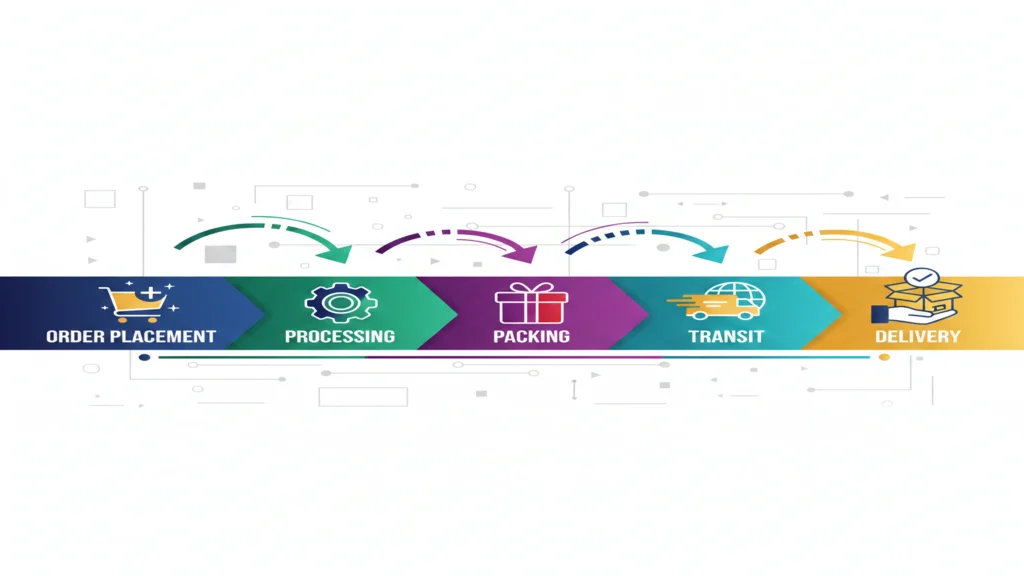
In shipping, lead time is the total amount of time between placing an order and receiving the shipment. It includes order processing, production or picking, packaging, transit, and final delivery.
If you’ve ever tracked a package and wondered why delivery takes longer than the shipping method suggests, you’ve bumped into lead time. It’s one of the most important (and most misunderstood) logistics terms because it covers everything that happens before your order arrives, not just the time the box spends on a truck or plane.
Whether you run an online store, manage inventory, or simply want to understand delivery estimates, this guide explains lead time in plain English—with examples, comparisons, and practical tips you can actually use.
Understanding Lead Time in Shipping
Lead time measures the full timeline of fulfillment—from the moment an order is confirmed to the moment it reaches the customer.
What Lead Time Typically Includes
- Order processing: Payment verification and order confirmation
- Picking & packing: Items selected from inventory and packaged
- Production (if applicable): Manufacturing or customization
- Transit time: Movement through carriers and logistics networks
- Final delivery: Last-mile handoff to the customer
Think of lead time as the big picture timeline, while shipping speed is just one piece of it.
Lead Time vs. Shipping Time — The Key Difference
These terms are often used interchangeably, but they mean different things.
| Term | What It Measures | Includes Processing? | Includes Transit? |
|---|---|---|---|
| Lead Time | Total time from order to delivery | Yes | Yes |
| Shipping Time | Time in transit only | No | Yes |
| Handling Time | Time before shipment leaves seller | Yes | No |
Quick takeaway:
Lead time = handling time + shipping time (+ production if needed).
Origin and Growth of the Term
The phrase lead time originated in manufacturing and supply chain management, where planners needed a way to measure how long materials took to arrive and be ready for use. As e-commerce expanded, the term became standard in online retail and fulfillment operations.
Today, it’s widely used by logistics providers and carriers like UPS and DHL, and by marketplaces that display estimated delivery windows based on fulfillment timelines.
Why Lead Time Matters in Real Life
Lead time influences both customer expectations and business performance.
For Customers
- Helps estimate when an order will arrive
- Explains delays beyond transit speed
- Guides purchasing decisions (urgent vs. flexible)
For Businesses
- Determines inventory planning
- Impacts customer satisfaction ratings
- Affects production scheduling
- Shapes delivery promises and SLAs
A short, predictable lead time builds trust. A long or inconsistent one can lead to cancellations and negative reviews.
Types of Lead Time in Shipping and Logistics
Different industries break lead time into components for planning and optimization.
1. Order Lead Time
Time between customer order placement and delivery.
2. Production Lead Time
Time required to manufacture or customize an item before shipping.
3. Supplier Lead Time
Time it takes a supplier to deliver materials or goods to a seller.
4. Delivery Lead Time
Time from dispatch to final delivery (similar to transit time but may include local handling).
Example Scenarios
Friendly Scenario 🙂
You order a personalized mug on Monday.
- 2 days for customization
- 1 day for packing
- 3 days shipping
Total lead time: 6 days
Neutral Scenario
An online retailer lists “5–8 business days lead time.”
This means processing and shipping together may take up to eight days.
Frustrated Scenario 😬
Express shipping selected, but item still arrives late.
Reason: long processing stage increased total lead time.
Labeled Example Table: Lead Time Breakdown
| Stage | Description | Example Duration |
|---|---|---|
| Order Confirmation | Payment approved and order logged | 4 hours |
| Processing | Picking and packaging | 1 day |
| Production | Custom engraving | 2 days |
| Transit | Carrier transport | 3 days |
| Final Delivery | Local dispatch | 1 day |
| Total Lead Time | Order → Delivery | 7 days |
Real-World Usage in E-Commerce and Supply Chains
Lead time appears in product pages, fulfillment agreements, and inventory systems.
Common Business Uses
- “Estimated lead time: 10 business days”
- “Reduced lead time improves customer satisfaction”
- “Supplier lead time increased due to demand surge”
What It Signals to Customers
- How soon they can expect delivery
- Whether an item is in stock
- If customization affects timing
Factors That Affect Lead Time
Lead time isn’t fixed. It changes based on multiple variables.
Operational Factors
- Inventory availability
- Warehouse efficiency
- Order volume
- Automation level
External Factors
- Weather disruptions
- Customs clearance
- Supply shortages
- Transportation delays
Product-Specific Factors
- Customization requirements
- Fragile packaging needs
- Bulk order size
Lead Time vs. Related Logistics Terms
Understanding similar concepts helps prevent confusion.
Difference Lead Time vs. Turnaround Time
- Lead time: Order to delivery
- Turnaround time: Time to complete a specific task
Comparing Lead Time vs. Cycle Time
- Lead time: External customer-facing timeline
- Cycle time: Internal process duration
Using Lead Time vs. Delivery Window
- Lead time: Total fulfillment duration
- Delivery window: Expected arrival range
Alternate Meanings Outside Shipping
While primarily a logistics term, lead time also appears in:
- Manufacturing planning
- Project management
- Procurement scheduling
Across industries, the meaning stays consistent: time between request and completion.
Professional Alternatives and Clearer Phrasing
If you’re communicating with customers or non-experts, try these plain-language options:
| Technical Term | Customer-Friendly Alternative |
|---|---|
| Lead time | Total delivery time |
| Processing time | Preparation time |
| Supplier lead time | Restock time |
| Extended lead time | Longer-than-usual delivery time |
Tip: Pair the technical term with a short explanation the first time you use it.
Practical Tips to Reduce Lead Time
- Maintain accurate inventory levels
- Automate order processing
- Use regional warehouses
- Improve supplier relationships
- Offer clear delivery estimates
- Monitor bottlenecks regularly
Even small improvements in processing time can significantly shorten total lead time.
FAQs:
1. What does lead time mean in shipping?
It’s the total time from placing an order to receiving the shipment.
2. Is lead time the same as shipping time?
No. Shipping time covers transit only, while lead time includes processing and preparation.
3. Why is lead time longer than delivery estimates?
Processing, customization, or supply delays may extend the total timeline.
4. How do businesses calculate lead time?
By adding processing time, production time (if any), and transit time.
5. Can lead time change after ordering?
Yes. Factors like inventory issues or weather disruptions may alter timelines.
6. What is a good lead time for e-commerce?
It depends on the product, but shorter and consistent timelines improve satisfaction.
7. Why do custom products have longer lead times?
They require production before shipment.
8. How can customers reduce lead time?
Choose in-stock items, faster fulfillment options, or local sellers.
Conclusion:
Understanding lead time is essential for both businesses and customers. It’s not just the time a package spends on a truck it’s the total journey from order to delivery, including processing, production (if applicable), and transit.
In short, whether you’re ordering products online or managing a supply chain, knowing the lead time allows you to plan smarter, ship faster, and communicate clearly. 📦✨
Discover More Related Articles:
- Concubine Mean in the Bible: History and Insights for 2026
- The Color Yellow Mean in the Bible: Light, Glory, and Faith in 2026

Amanda Lewis is a professional content writer and word-meaning researcher who specializes in explaining definitions, slang, abbreviations, and modern language terms. She writes for WordNexy.com, where she creates clear, accurate, and reader-friendly articles to help users understand word meanings and proper usage. Her work is especially useful for students, writers, and online readers seeking quick and reliable explanations.