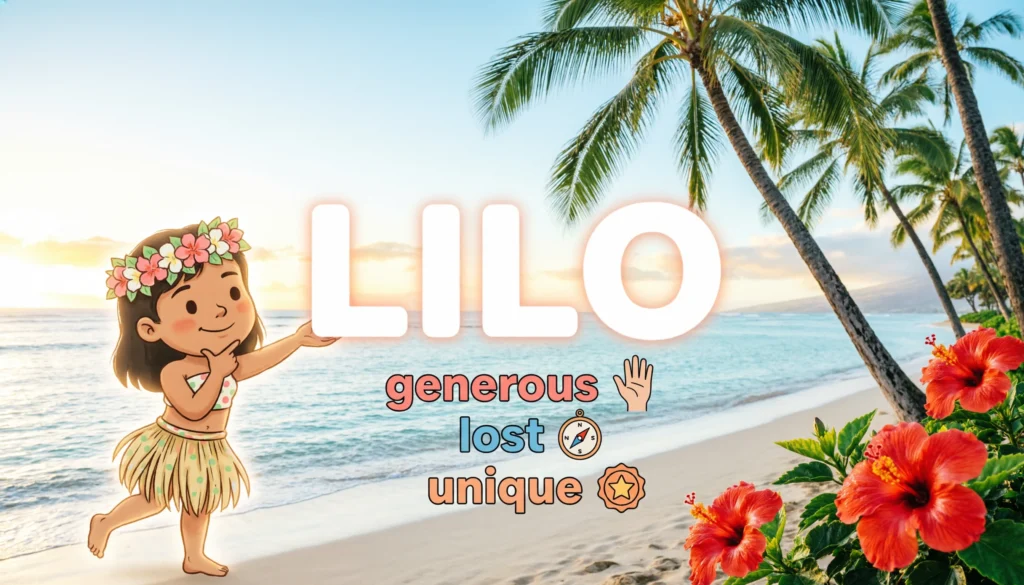
Definition:
Lilo is a Hawaiian word and name that generally means “generous,” “lost,” or “detached,” depending on context and interpretation. In Hawaiian naming traditions, the word can symbolize someone who is unique, independent, or spiritually separated from ordinary life.
If you’ve ever watched the beloved Disney movie Lilo & Stitch, you may have wondered: Is “Lilo” a real Hawaiian word? And if so, what does it actually mean in Hawaiian culture and language?
Hawaiian names often carry deep cultural significance. Unlike many English names, Hawaiian words and names are usually connected to nature, emotions, family traditions, and symbolic meanings. The name Lilo is no exception.
In this guide, we’ll explore what Lilo means in Hawaiian, its origins, cultural context, real-world usage, and how it compares with other Hawaiian words and names. We’ll also look at examples, alternate interpretations, and frequently asked questions people search online.
The name became globally popular because of the character Lilo Pelekai from the Disney film Lilo & Stitch, but its roots come from traditional Hawaiian language and naming customs.
The Origin of the Word “Lilo”
The Hawaiian language is rich with layered meanings. Many Hawaiian words carry multiple interpretations depending on context, tone, and cultural tradition.
Linguistic Roots
In Hawaiian, lilo can be interpreted as:
- Lost
- Detached
- Separated
- Generous or giving
These meanings may sound different, but they connect through the idea of being set apart or distinct.
For example:
- Something lost or detached is separated from something else.
- A generous person gives something away, letting it go.
This symbolic connection is common in Hawaiian word structures.
Cultural Meaning of Lilo in Hawaiian Names
In Hawaiian culture, names often reflect personality traits, family stories, or spiritual symbolism.
When used as a name, Lilo may represent:
- Individuality
- Emotional depth
- Compassion
- Someone who stands apart from others
This is why the name felt culturally fitting for the character Lilo Pelekai, who is portrayed as independent, imaginative, and a little different from everyone else.
Why the Name Lilo Became So Popular
Although the word existed long before modern media, it became widely recognized after the release of Lilo & Stitch in 2002.
The movie introduced audiences around the world to Hawaiian culture, values, and language.
Cultural Themes in the Film
The film highlights important Hawaiian concepts such as:
- Family bonds
- Acceptance
- Compassion
- Community
One of the most famous lines explains the Hawaiian word Ohana, meaning family.
Because of the movie’s popularity, the name Lilo became associated with:
- Kindness
- Quirkiness
- Loyalty
- Strong family values
How “Lilo” Is Used in Real Life
While “Lilo” is mainly known as a name, it can appear in Hawaiian language contexts that reflect its core meanings.
Common Ways the Name Appears
- Personal name
- Character name in media
- Symbolic or poetic use in Hawaiian storytelling
However, it is not commonly used as a casual word in everyday Hawaiian conversations the way words like aloha or mahalo are.
Example Sentences Using the Name Lilo
| Context | Example Sentence | Tone |
|---|---|---|
| Personal name | “Lilo is a beautiful Hawaiian name.” | Neutral |
| Pop culture | “My favorite character from Lilo & Stitch is Lilo Pelekai.” | Friendly |
| Symbolic meaning | “Her personality reminds me of the meaning behind the name Lilo—unique and independent.” | Positive |
| Cultural discussion | “Many Hawaiian names like Lilo carry deeper symbolic meanings.” | Informational |
Tone and Meaning Variations
Depending on interpretation, Lilo can have slightly different emotional tones.
1. Positive Tone
Used as a name symbolizing kindness or uniqueness.
Example:
“Lilo is such a sweet and caring person.”
2. Neutral Tone
Used simply as a name.
Example:
“Lilo will be performing in the school play.”
3. Symbolic or poetic tone
Used to represent someone set apart.
Example:
“The name Lilo reflects someone who walks their own path.”
Comparison With Other Hawaiian Words
The Hawaiian language includes many meaningful words often confused with or compared to Lilo.
| Word | Meaning | Usage |
|---|---|---|
| Aloha | Love, hello, goodbye | Greeting and emotional expression |
| Mahalo | Thank you | Gratitude |
| Ohana | Family | Cultural value |
| Nani | Beautiful | Compliment |
| Lilo | Generous / lost / unique | Personal name |
Unlike the others, Lilo is primarily used as a name rather than a daily vocabulary word.
Alternate Meanings of Lilo
Outside the Hawaiian language, Lilo may have other meanings depending on region or context.
1. Personal Name
Most commonly recognized globally as a female given name because of Lilo & Stitch.
2. Brand or Product Name
Some companies or products may use the name Lilo, but these meanings are unrelated to the Hawaiian origin.
3. Cultural Reference
Sometimes the word “Lilo” is simply used as shorthand for the Disney character Lilo Pelekai.
Example:
“That costume looks just like Lilo!”
Polite or Professional Alternatives
If you’re looking for Hawaiian words with clear meanings for conversation, consider these alternatives.
Hawaiian Words Often Used in Communication
- Aloha – Hello, love, compassion
- Mahalo – Thank you
- Ohana – Family
These words are widely used and recognized across Hawaii and beyond.
Why Hawaiian Names Have Deep Symbolism
Hawaiian names often come from:
- Dreams
- Nature
- Family stories
- Cultural traditions
- Spiritual meanings
Because of this, the meaning of Lilo can vary depending on family interpretation or cultural context.
A name in Hawaiian culture may carry a story rather than just a definition.
FAQs
1. What does the Hawaiian name Lilo mean?
The Hawaiian name Lilo can mean generous, lost, detached, or separated, depending on the interpretation and context.
2. Is Lilo a real Hawaiian word?
Yes. Lilo originates from the Hawaiian language and is used mainly as a personal name rather than a common everyday word.
3. What does Lilo represent in Hawaiian culture?
Symbolically, Lilo may represent individuality, kindness, and emotional depth, reflecting Hawaiian naming traditions.
4. Is Lilo a common Hawaiian name?
It is recognized but not among the most common Hawaiian names. Its global popularity increased after Lilo & Stitch.
5. What does Lilo mean in the Disney movie?
In the film, the name reflects the personality of Lilo Pelekai, who is unique, caring, and independent.
6. Is Lilo only a girl’s name?
Most often yes, but technically Hawaiian names are not always strictly gender-specific.
7. What Hawaiian words are similar to Lilo?
Words like Nani, Aloha, and Mahalo are also popular Hawaiian terms with positive meanings.
8. Why do Hawaiian names have multiple meanings?
The Hawaiian language is contextual and poetic, meaning words can carry several symbolic meanings based on usage and tradition.
Conclusion
The Hawaiian name Lilo is more than just a cute or popular name it carries layers of cultural meaning. Depending on context, it can symbolize being generous, unique, or set apart, reflecting the rich poetic nature of the Hawaiian language.
Popularized globally by Lilo & Stitch, Lilo has become synonymous with independence, kindness, and individuality, making it a name that resonates both in Hawaii and around the world.
When choosing or using Hawaiian names like Lilo, it’s important to appreciate their cultural depth and symbolic stories, rather than just their surface-level charm. Whether for naming a child, a character, or simply exploring Hawaiian language, Lilo offers a beautiful example of how words carry meaning, emotion, and heritage.
Discover More Related Articles:
- Pick Six Mean in Football: Rules, Points, and Game Strategy for 2026
- Break Point Mean in Tennis: Tactical Guide for Tennis Players in 2026

James Anderson is an experienced content writer and language researcher who focuses on explaining word meanings, definitions, slang terms, and modern expressions. He writes for WordNexy.com, where his articles are designed to provide accurate meanings, practical usage examples, and easy-to-understand explanations for readers worldwide.