Definition:
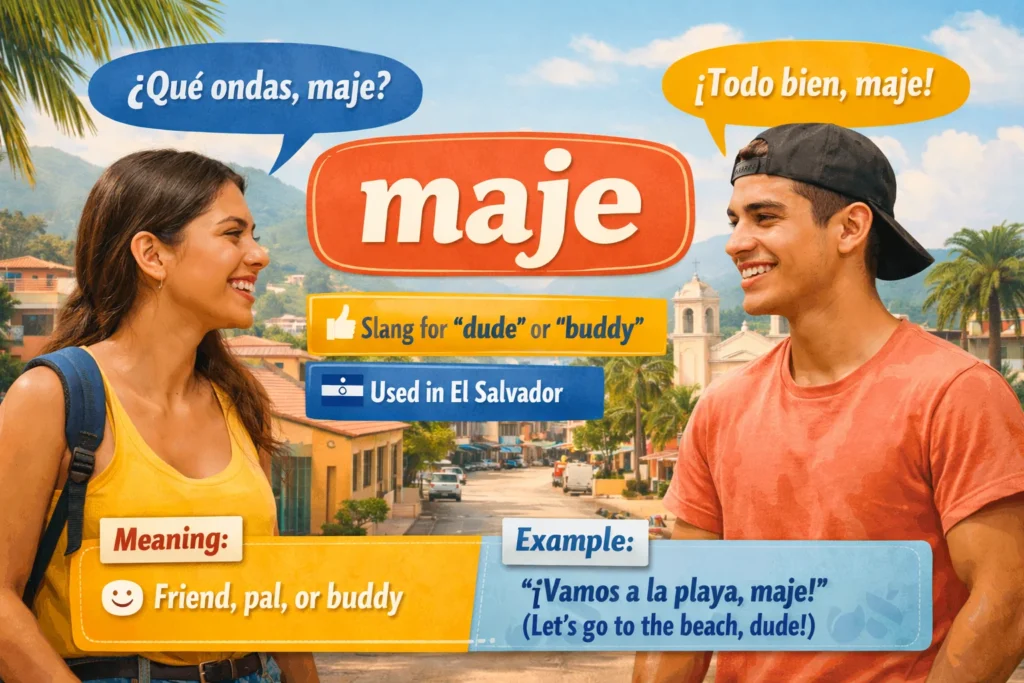
“Maje” is a Spanish slang word commonly used in El Salvador and parts of Central America. It can mean “dude,” “guy,” or “friend” in a casual tone, but it can also mean “idiot” or “fool” depending on context and tone.
Language is full of words that change meaning depending on who says them, where they’re from, and how they say them. If you’ve ever heard someone say “¡Ey, maje!” and wondered whether it was friendly or offensive, you’re not alone.
In this in-depth guide, we’ll break down:
- What maje means in Spanish
- Where it comes from
- How it’s used in real conversations
- Whether it’s offensive or friendly
- Similar slang terms
- Professional alternatives
- Frequently asked questions
By the end, you’ll confidently understand when and how to use maje — and when to avoid it.
Origin of the Word “Maje”
The word maje comes from Central American Spanish, especially from El Salvador. It is deeply rooted in Salvadoran slang culture.
Etymology
- Originally related to the Spanish word “majo/maja”, meaning “nice” or “pleasant” in Spain.
- Over time in Central America, it evolved into a colloquial slang term.
- In some historical contexts, it was used to describe someone naïve or silly.
Today, in Salvadoran Spanish, maje is extremely common in everyday speech.
Where Is “Maje” Popular?
While most strongly associated with El Salvador, it’s also heard in:
- Honduras
- Nicaragua
- Parts of Guatemala
However, its meaning and tone may vary slightly from country to country.
What Does Maje Mean?
The meaning of maje depends entirely on context, tone, and relationship between speakers.
1️⃣ Friendly Meaning: “Dude” or “Bro”
In casual conversation among friends, maje is similar to:
- Dude
- Bro
- Guy
- Buddy
Example:
“¡Maje, vení para acá!”
(“Dude, come here!”)
Tone: Friendly 😊
2️⃣ Neutral Meaning: “Person” or “Guy”
It can simply refer to a person without strong emotion.
Example:
“Ese maje trabaja conmigo.”
(“That guy works with me.”)
Tone: Neutral
3️⃣ Negative Meaning: “Idiot” or “Fool”
Depending on how it’s said, it can be insulting.
Example:
“¡No seas maje!”
(“Don’t be an idiot!”)
Tone: Dismissive or irritated 😑
Tone Matters: Friendly vs. Offensive
Here’s where things get interesting. The same word can sound affectionate or insulting.
How Tone Changes Meaning
| Situation | Tone | Meaning |
|---|---|---|
| Among close friends | Playful | Dude / Bro |
| Talking about someone casually | Neutral | Guy |
| Said angrily | Harsh | Idiot / Fool |
| Used with “no seas” | Scolding | Don’t be stupid |
The key difference lies in:
- Voice tone
- Facial expression
- Relationship between speakers
In El Salvador, friends use it constantly without offense.
Real-World Usage Examples
Let’s look at how maje appears in everyday life.
Friendly Conversation
“¿Qué ondas, maje?”
“What’s up, dude?”
“Maje, te estaba buscando.”
“Bro, I was looking for you.”
Tone: Casual and warm
Neutral Context
“Ese maje vive aquí.”
“That guy lives here.”
Tone: Matter-of-fact
Negative or Annoyed Context
“¡Qué maje sos!”
“You’re such an idiot!”
Tone: Mocking or frustrated
Is “Maje” Considered Rude?
It depends.
✅ Not Rude When:
- Used among friends
- Said jokingly
- Used in relaxed social settings
❌ Potentially Rude When:
- Used in formal environments
- Said angrily
- Directed at someone you don’t know well
Important: It is not appropriate in professional or academic settings.
Comparison: Maje vs. Similar Spanish Slang
Here’s how maje compares to other slang terms in Spanish-speaking countries.
| Word | Country | Meaning | Formal? |
|---|---|---|---|
| Maje | El Salvador | Dude / Idiot | No |
| Güey | Mexico | Dude / Fool | No |
| Tío | Spain | Guy / Dude | Semi-casual |
| Pibe | Argentina | Kid / Guy | Informal |
| Chavo | Mexico | Kid / Young guy | Neutral |
All of these words function similarly casual, slang-based, and tone-dependent.
Alternate Meanings of “Maje”
Although rare, maje may also:
- Refer historically to someone naïve.
- Be used humorously in exaggerated ways.
- Appear in regional memes and social media jokes.
But in modern usage, it almost always refers to a person.
Professional or Polite Alternatives
If you want to avoid slang, use these instead:
| Instead of Maje | Use This | Translation |
|---|---|---|
| Maje | Amigo | Friend |
| Maje | Señor | Sir |
| Maje | Joven | Young man |
| Maje | Persona | Person |
For professional communication, always avoid slang like maje.
When Should You Use “Maje”?
Use it when:
- Speaking with Salvadoran friends
- Having casual conversations
- Trying to sound local in informal settings
Avoid it when:
- Writing emails
- Speaking in interviews
- Talking to elders (unless you’re very close)
Cultural Importance in El Salvador
In El Salvador, maje is more than just slang it’s part of identity.
You’ll hear it:
- On the streets
- In music
- On social media
- In daily conversations
It reflects the relaxed and expressive communication style common in Salvadoran Spanish.
FAQs
- What does maje mean in Spanish slang?
Maje is a Central American slang term that usually means “dude” or “guy.” Depending on tone and context, it can also mean “idiot” or “fool.” - Is maje a bad word?
Not necessarily. It can sound friendly and casual among friends, but it may come across as insulting if said angrily. - Which country uses maje the most?
It is most commonly used in El Salvador. - Can I use maje in formal situations?
No. It is slang and should not be used in professional or formal settings. - Is maje similar to güey?
Yes. Like güey in Mexico, maje can mean “dude” or “fool,” depending on tone. - Does maje mean friend?
Sometimes. Among close friends, it can function like “bro” or “buddy.” - How do you pronounce maje?
It’s pronounced MAH-heh. The “j” sounds like an English “h.” - Can maje be used for women?
Yes, though less commonly. In slang usage, it is generally gender-neutral.
Conclusion
So, what does maje mean in Spanish?
It’s a versatile slang term from El Salvador that can mean dude, guy, or idiot, depending entirely on tone and relationship. Among friends, it’s warm and playful. In anger, it can be insulting.
Like many slang terms across Spanish-speaking countries, context is everything.
If you’re traveling to El Salvador or chatting with Salvadorans, understanding maje will help you connect naturally just remember to keep it casual.
Language isn’t just vocabulary it’s culture, emotion, and identity.
And maje? It’s all three.
Discover More Related Articles:
- PFP Mean in Text: Complete Guide for Social Media Users (2026)
- Shabbat Shalom Mean in English: Usage, and Significance in 2026

Sarah Williams is the passionate author behind WordNexy.com, dedicated to creating content that informs, inspires, and sparks curiosity. With a love for words and storytelling, she transforms ideas into meaningful articles that educate, entertain, and leave a lasting impression on every reader.