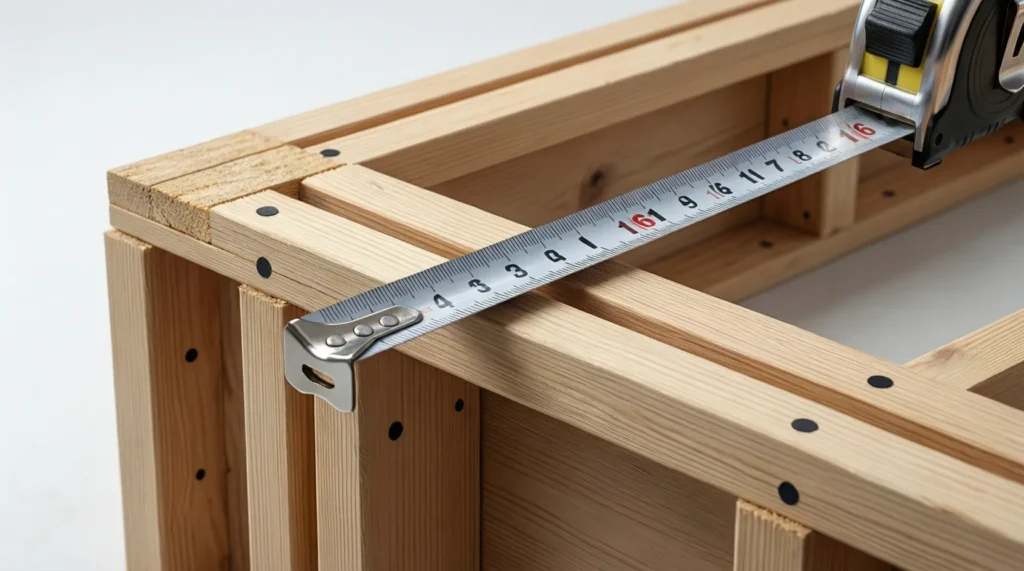
On center in construction means the distance measured from the center point of one structural component to the center point of the next.
This method is commonly used for studs, joists, rafters, beams, and columns to ensure uniform spacing, structural stability, and compliance with building codes.
If you have ever reviewed a construction plan or heard a contractor say, “Frame this wall at 16 inches on Meaning of On Center in Construction” you may have wondered what that actually means and why it matters so much.
The phrase on center may sound technical, but it plays a major role in how buildings are designed, framed, and inspected.
From residential homes to large commercial projects, on center spacing helps maintain strength, consistency, and efficiency throughout a structure.
In this detailed guide, you will learn exactly what on center means in construction, where the term comes from, how it is used in real projects, common spacing standards, examples, comparisons with related terms, frequently asked questions, and practical tips for correct usage.
What Does On Center Mean in Construction
In construction, on center refers to measuring the distance from the exact center of one framing member to the exact center of the next framing member.
Instead of measuring from the outside edge of one stud to the outside edge of another, builders measure from center point to center point. This approach keeps spacing accurate even if materials vary slightly in width.
Why On Center Measurements Are Used
On center spacing is used because it provides reliability and consistency across an entire structure.
Main Reasons Builders Use On Center Spacing
- Ensures even load distribution
- Meets building code requirements
- Makes material layout predictable
- Reduces material waste
- Improves structural accuracy
Using center based measurements allows builders to frame faster while maintaining precision.
Origin and Popularity of the Term
The term on center originated in engineering and drafting practices where measurements were taken from reference points rather than edges.
As modern wood framing developed in North America, builders needed a measurement system that worked even when lumber sizes were not perfectly uniform. Measuring from the center solved that issue and became an industry standard.
Today, on center is widely used in:
- Construction blueprints
- Building codes
- Engineering calculations
- Residential and commercial framing
Common On Center Spacing Standards
Different structural elements require different spacing based on load requirements and design.
Typical On Center Measurements
- 16 inches on center for standard wall framing
- 24 inches on center for lighter loads
- 12 inches on center for heavy loads
- 19.2 inches on center for engineered lumber systems
On Center Spacing Table
| Component | Typical Spacing | Common Use |
|---|---|---|
| Wall studs | 16 inches | Residential framing |
| Floor joists | 16 or 19.2 inches | Floor systems |
| Roof rafters | 16 or 24 inches | Roof framing |
| Ceiling joists | 16 or 24 inches | Ceiling support |
| Deck joists | 12 to 16 inches | Outdoor decks |
| Steel studs | 16 or 24 inches | Commercial buildings |
Real World Examples of On Center Usage
Neutral and Professional Examples
- Install the wall studs at 16 inches on center
- Floor joists are spaced 24 inches on center
- Rafters are laid out at 16 inches on center according to plan
Technical Examples
- Structural calculations assume joists at 19.2 inches on center
- Interior partitions must maintain 16 inch on center spacing per code
Corrective Examples
- The studs are not on center, which will affect drywall installation
- The inspection failed due to improper on center spacing
Incorrect spacing often results in structural or finishing problems.
How to Measure On Center Correctly
Step by Step Method
- Identify the center of the first stud or joist
- Measure from that center point to the center of the next member
- Confirm the spacing matches the plan
- Continue the same measurement across the structure
Helpful Tip
Many tape measures include highlighted markings for common on center spacing, making layout faster and more accurate.
On Center vs Similar Construction Terms
Comparing On Center and Edge to Edge
- On center measures from center point to center point
- Edge to edge measures from outer edge to outer edge
On center is preferred because it remains accurate regardless of material thickness.
Differences Between On Center and Clear Spacing
- On center refers to structural layout
- Clear spacing refers to the open space between members
Clear spacing is often used for ventilation or clearance, not framing layout.
Understanding On Center vs Layout Spacing
Layout spacing refers to marking positions on framing members, while on center defines how the spacing is measured.
What Does O C Mean on Construction Drawings
On blueprints, O C is the abbreviation for on center.
Example
“2 by 4 studs at 16 inches O C”
This means the studs must be spaced 16 inches apart when measured from center to center.
Alternate Meanings of On Center
Outside construction, on center can have other meanings:
- Centered alignment in design
- Precision placement in machining
- Accurate positioning in everyday language
In construction, however, the meaning is always technical and specific.
Professional Alternatives to On Center
While on center is the standard term, alternatives include:
- Center to center spacing
- C C spacing
- Standard framing intervals
On center remains the most widely accepted wording.
Why On Center Spacing Affects Finishing Work
Correct spacing ensures:
- Drywall edges land properly
- Flooring panels align correctly
- Load distribution remains even
- Fewer cracks and nail pops occur
Improper spacing can lead to failed inspections and costly repairs.
FAQs
1. What does 16 inches on center mean
It means each stud is placed so the center of one is 16 inches from the center of the next.
2. Why not measure from edge to edge
Because lumber thickness can vary slightly and center measurements remain consistent.
3. Is 16 inches stronger than 24 inches
Yes. 16 inch spacing provides more strength and support.
4. What does O C stand for
O C stands for on center.
5. Is on center spacing required by code
Yes. Most building codes specify framing in on center terms.
6. Does on center apply to steel framing
Yes. Steel studs also follow on center spacing.
7. How do builders mark on center spacing
They use tape measures with standard on center markings.
8. Can spacing vary by project
Yes. Design loads and building type determine spacing.
Conclusion
Understanding what on center means in construction is essential for anyone involved in building or renovation. This measurement system forms the foundation of safe, efficient, and professional construction practices.
Search More Related Articles :
- Understanding FIP in Baseball: Definition, Formula, and Uses (2026)
- TW in Jewelry Meaning: What It Really Stands For (2026)

Sarah Williams is the passionate author behind WordNexy.com, dedicated to creating content that informs, inspires, and sparks curiosity. With a love for words and storytelling, she transforms ideas into meaningful articles that educate, entertain, and leave a lasting impression on every reader.