Definition
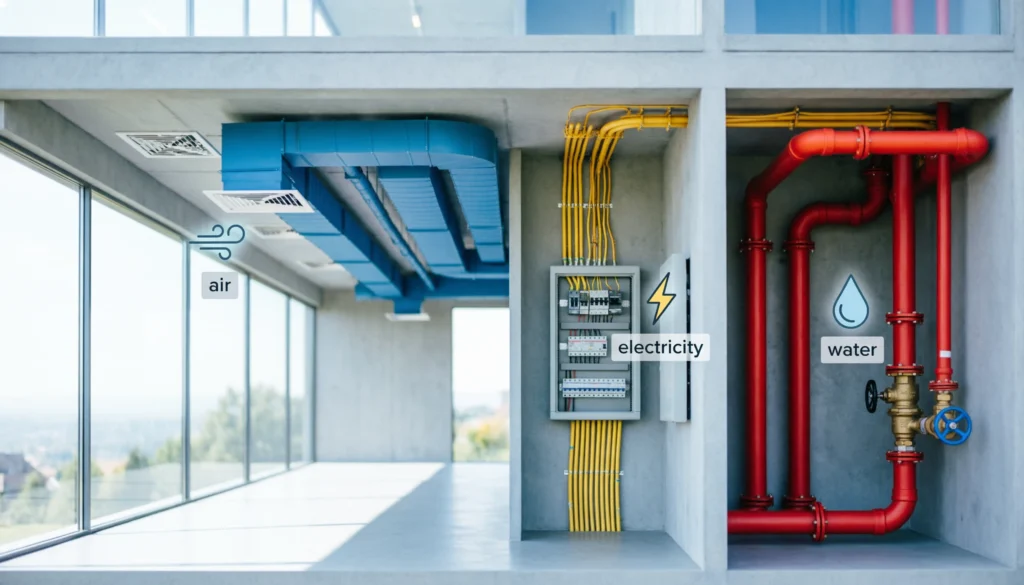
MEP in construction stands for Mechanical, Electrical, and Plumbing. It refers to the essential building systems that make a structure functional, safe, and comfortable, including heating and cooling (HVAC), electrical wiring and power systems, and water supply and drainage systems.
Imagine walking into a modern building lights turn on instantly, air conditioning keeps you cool, and clean water flows effortlessly from the tap. All of this convenience is powered by something you rarely see: MEP systems.
In construction, MEP is not just a technical term it’s the backbone of every building. Whether it’s a residential home, commercial complex, or skyscraper, MEP systems ensure everything runs smoothly behind the scenes.
If you’ve ever wondered “what does MEP mean in construction?”, this guide will break it down in a clear, friendly, and practical way so you can understand it like a pro.
What Does MEP Include in Construction?
Mechanical Systems (M)
Mechanical systems deal with temperature control and ventilation.
Key components:
- HVAC (Heating, Ventilation, Air Conditioning)
- Exhaust systems
- Elevators and escalators (in some contexts)
- Refrigeration systems
Example:
When you feel cool air in a shopping mall during summer, that’s the mechanical system working.
Electrical Systems (E)
Electrical systems power everything in a building.
Key components:
- Power supply and distribution
- Lighting systems
- Fire alarms and security systems
- Backup generators
Example:
From charging your phone to running elevators everything depends on electrical systems ⚡
Plumbing Systems (P)
Plumbing systems manage water flow and sanitation.
Key components:
- Water supply lines
- Drainage and sewage systems
- Gas pipelines
- Fire sprinkler systems
Example:
Turning on a tap or flushing a toilet plumbing makes it possible 💧
Origin and Evolution of MEP in Construction
The term MEP became widely used as construction projects grew more complex. In older buildings, systems like plumbing and electricity were simple and often installed separately.
However, with the rise of:
- Smart buildings
- Energy-efficient designs
- High-rise construction
…MEP evolved into a coordinated engineering discipline.
Today, MEP engineers work together using advanced tools like:
- Building Information Modeling (BIM)
- 3D design coordination
This ensures systems don’t clash (like pipes running into electrical conduits) and everything fits perfectly.
Why MEP Is So Important in Construction
MEP systems are not optional they are critical for functionality and safety.
Key Benefits:
- ✅ Comfort (temperature, lighting, ventilation)
- ✅ Safety (fire systems, electrical protection)
- ✅ Efficiency (energy-saving designs)
- ✅ Sustainability (eco-friendly systems)
Without proper MEP planning, even the most beautiful building would be unusable.
Real-World Usage of MEP
Here’s how “MEP” is used in real construction conversations:
Friendly Tone 😊
- “The MEP work is almost complete just final testing left.”
Neutral/Professional Tone 🏗️
- “The project requires detailed MEP coordination before construction begins.”
Negative/Dismissive Tone ⚠️
- “Poor MEP planning caused major delays in the project.”
Example Table: MEP Systems Breakdown
| Category | Full Form | Purpose | Example |
|---|---|---|---|
| Mechanical | HVAC Systems | Temperature & air control | Air conditioning |
| Electrical | Power Systems | Electricity & lighting | Wiring, panels |
| Plumbing | Water Systems | Water supply & drainage | Pipes, sewage |
MEP vs Related Construction Terms
Understanding MEP becomes easier when compared to similar terms:
MEP vs MEPF
| Term | Meaning |
|---|---|
| MEP | Mechanical, Electrical, Plumbing |
| MEPF | Mechanical, Electrical, Plumbing + Fire Protection |
👉 MEPF is a more expanded version including fire safety systems.
MEP vs HVAC
| Term | Meaning |
|---|---|
| MEP | Full building systems |
| HVAC | Only heating, ventilation, and air conditioning |
👉 HVAC is just one part of MEP (Mechanical).
MEP vs Civil Engineering
| Term | Focus |
|---|---|
| MEP | Internal systems |
| Civil | Structure (foundation, walls, roads) |
👉 Civil builds the structure; MEP makes it livable.
Alternate Meanings of MEP
While MEP mainly refers to construction, it can mean other things depending on context:
- Member of European Parliament
- Micro Electrical Panel
- Minimum Energy Performance
👉 Always check the context to understand the correct meaning.
Professional Alternatives & Related Terms
If you want to sound more formal or specific:
- Building Services Engineering
- Facility Systems Design
- Engineering Services (MEP)
- Technical Building Systems
These are often used in reports or professional documents.
Practical Tips for Understanding MEP Better
- 🔍 Think of MEP as the “life systems” of a building
- 🧠 Remember: M = Air, E = Power, P = Water
- 📐 Learn basic system layouts (helps in design understanding)
- 🏗️ Watch real construction projects for practical exposure
FAQs
1. What does MEP stand for in construction?
MEP stands for Mechanical, Electrical, and Plumbing—three essential building systems that make a building functional and safe.
2. What is MEP work in construction?
MEP work involves designing, installing, and maintaining HVAC systems, electrical wiring, and plumbing systems throughout a building.
3. What is the role of an MEP engineer?
An MEP engineer plans, designs, and coordinates building systems to ensure they are efficient, safe, and fully functional.
4. Is HVAC part of MEP?
Yes. HVAC (Heating, Ventilation, and Air Conditioning) is included in the Mechanical component of MEP.
5. Why is MEP coordination important?
Proper MEP coordination prevents system clashes, reduces construction costs, and ensures smooth installation of building systems.
6. What is the difference between MEP and EPC?
- MEP: Focuses specifically on building systems like mechanical, electrical, and plumbing.
- EPC: Stands for Engineering, Procurement, and Construction, referring to the entire project delivery process, not just building systems.
7. What software is used in MEP design?
Common tools used by MEP engineers include:
- AutoCAD – for detailed technical drawings
- Revit (BIM) – for 3D modeling and coordination
- Navisworks – for clash detection and project review
8. What is MEP maintenance?
MEP maintenance refers to the regular inspection, servicing, and repair of HVAC, electrical, and plumbing systems to ensure proper functioning and longevity.
Conclusion:
MEP in construction is more than just an acronym it’s the heartbeat of every building.
MEP Mechanical, Electrical, and Plumbing is the backbone of every functional building. From keeping you cool with HVAC, powering your devices through electrical systems, to providing clean water with plumbing, MEP ensures comfort, safety, and efficiency.
Whether you’re a student, contractor, or homeowner, understanding MEP gives you a deeper appreciation of how buildings truly work.
Discover More Related Articles:
- PFP Mean in Text: Complete Guide for Social Media Users (2026)
- Shabbat Shalom Mean in English: Usage, and Significance in 2026

Amanda Lewis is a professional content writer and word-meaning researcher who specializes in explaining definitions, slang, abbreviations, and modern language terms. She writes for WordNexy.com, where she creates clear, accurate, and reader-friendly articles to help users understand word meanings and proper usage. Her work is especially useful for students, writers, and online readers seeking quick and reliable explanations.