

In medical terms, MMI stands for Maximal Medical Improvement. It refers to the stage in a patient’s recovery where their condition has stabilized and is unlikely to improve significantly with further medical treatment.
At this point, doctors assess the patient’s permanent limitations, potential for rehabilitation, and eligibility for compensation or long-term care.
MMI is a critical term in healthcare, insurance, and workers’ compensation cases, helping professionals determine the next steps for patient management and legal or financial considerations.
Origin of MMI in Medical Terms

The term Maximal Medical Improvement (MMI) has its roots in occupational medicine and rehabilitation. It became popular in the mid-20th century as workers’ compensation and insurance systems required standardized ways to assess patient recovery and permanent disability.
- Purpose: To provide a clear endpoint in a treatment plan.
- Popularity: Widely used among physicians, physical therapists, occupational therapists, insurance adjusters, and legal professionals.
- Medical Relevance: Essential for documenting long-term outcomes, planning permanent work restrictions, and calculating disability benefits.
Understanding MMI: Usage in Healthcare
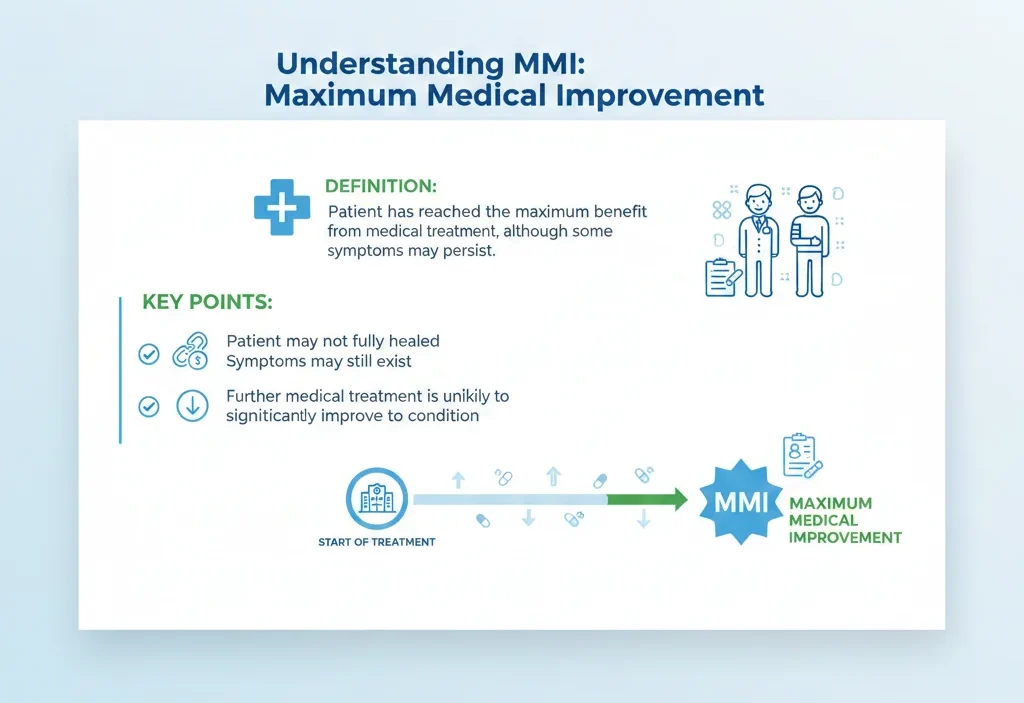
In practice, MMI indicates that a patient has reached the maximum benefit from medical treatment. This does not necessarily mean that the patient is fully healed some symptoms may persist but rather that no further medical intervention is likely to improve the condition significantly.
Key Points of MMI:
- Marks the end of active treatment for a condition.
- Helps establish permanent restrictions or disabilities.
- Used for insurance claims and legal documentation.
- Guides rehabilitation planning and long-term care decisions.
Example Contexts:
| Context | Explanation | Tone |
|---|---|---|
| Worker’s Compensation | A construction worker with a back injury reaches MMI after months of physical therapy. Insurance calculates permanent impairment based on medical reports. | Neutral/Professional |
| Orthopedic Care | A patient with a knee injury is no longer improving after surgery and rehab. MMI is declared. | Neutral |
| Patient Communication | “You’ve reached MMI, which means your condition is stable, and further therapy won’t significantly improve it.” | Friendly/Informative |
| Dismissive Example | “They said I reached MMI, but I still feel pain every day 😕.” | Slightly Negative/Frustrated |
How MMI is Determined
Medical professionals follow a structured process to determine if a patient has reached MMI:
- Clinical Evaluation – Examination of symptoms, physical capabilities, and medical history.
- Therapy Response – Assessment of improvements from physical, occupational, or medical therapy.
- Diagnostic Testing – Imaging (X-rays, MRI), lab results, or other tests showing stabilization.
- Expert Consultation – Specialists may provide opinions on long-term prognosis.
- Legal or Insurance Assessment – For workers’ compensation, official documentation may be required.
Comparison with Related Medical Terms
It’s important to understand how MMI differs from other related terms:
| Term | Meaning | Key Difference from MMI |
|---|---|---|
| Partial Recovery | Some improvement in condition | MMI indicates the maximum recovery possible, not just partial progress. |
| Cure | Complete elimination of disease | MMI does not imply a cure, only stabilization. |
| Remission | Temporary or permanent disappearance of symptoms | MMI focuses on treatment plateau, not symptom-free status. |
| Permanent Disability | Long-term functional limitation | MMI often leads to assessing permanent disability. |
Alternate Meanings of MMI
While Maximal Medical Improvement is the most common medical usage, MMI can also refer to other terms outside healthcare:
- Multiple Mini Interview – Used in medical school admissions.
- Massively Multiplayer Interaction – In gaming contexts.
- Modified Mercalli Intensity – In seismology, measuring earthquake effects.
Tip: In medical contexts, always clarify that MMI means Maximal Medical Improvement to avoid confusion.
Polite and Professional Alternatives to Saying “MMI”
Sometimes, especially with patients, MMI may sound technical or discouraging. Here are friendly ways to convey the same meaning:
- “You’ve reached the point where further medical treatment won’t significantly improve your condition.”
- “Your recovery has plateaued, and your current treatment plan has maximized benefits.”
- “We’ve reached the stage of stable improvement, and we can now focus on long-term care or lifestyle management.”
Real-World Examples of MMI
MMI is commonly used in the following scenarios:
- Workers’ Compensation – Injured employees may have benefits calculated after reaching MMI.
- Physical Therapy – Determines when a patient no longer benefits from therapy sessions.
- Surgery Follow-Up – Evaluates post-surgical recovery stability.
- Chronic Illness Management – Identifies when disease progression is stable and treatment is optimized.
Example
| Patient | Condition | Treatment | MMI Determination | Notes |
|---|---|---|---|---|
| John D. | Lower back injury | PT & pain management | After 6 months | Permanent work restrictions assigned |
| Maria S. | Knee surgery | Rehab & medications | 3 months post-op | No further improvement expected |
| Alex T. | Carpal tunnel syndrome | Surgery & exercises | 2 months | Partial symptom relief; stable function |
| Lisa R. | Shoulder tear | PT & steroid injections | 4 months | Plateau reached; chronic pain persists |
FAQs
1. How long does it take to reach MMI?
It varies based on condition, age, treatment type, and overall health. Some patients reach MMI in weeks; others may take months or even years.
2. Does MMI mean my injury is permanent?
Not necessarily permanent, but it means further treatment is unlikely to improve the condition significantly. Permanent limitations may or may not exist.
3. Can MMI change over time?
Yes, if new treatments emerge or the condition worsens, a patient may be reassessed. MMI is based on current medical knowledge.
4. Is MMI used in insurance claims?
Absolutely. Insurance companies rely on MMI to determine compensation, disability ratings, and benefits.
5. How is MMI different from a cure?
A cure implies complete healing, while MMI indicates stabilization and maximum recovery achievable.
6. Does MMI mean I stop therapy?
It often means that active therapy may no longer provide significant improvement, but maintenance exercises or lifestyle adjustments may continue.
7. Can patients disagree with MMI?
Patients can seek a second medical opinion, especially in workers’ compensation cases, if they feel their recovery is incomplete.
8. Is MMI painful?
MMI itself is not painful; it’s a medical status, though the underlying condition may still cause discomfort.
Practical Tips Related to MMI
- Keep detailed medical records to support MMI assessments for insurance or legal purposes.
- Ask your doctor about permanent restrictions and rehabilitation options after reaching MMI.
- Understand that MMI does not mean the end of symptom management; ongoing care may still be necessary.
- Use professional alternatives when communicating MMI to patients to maintain a friendly, informative tone.
Conclusion
Understanding MMI (Maximal Medical Improvement) is essential for patients, healthcare providers, and insurance professionals. It marks the stage where recovery has plateaued and helps guide decisions about permanent restrictions, benefits, and long-term care.
While it may sound technical, using clear communication and professional alternatives ensures patients understand their status and next steps.
By knowing the origin, usage, and practical implications of MMI, you can navigate medical, legal, and insurance processes confidently and make informed decisions about your health journey.
Search More Related Articles :

Sarah Williams is the passionate author behind WordNexy.com, dedicated to creating content that informs, inspires, and sparks curiosity. With a love for words and storytelling, she transforms ideas into meaningful articles that educate, entertain, and leave a lasting impression on every reader.

