Definition
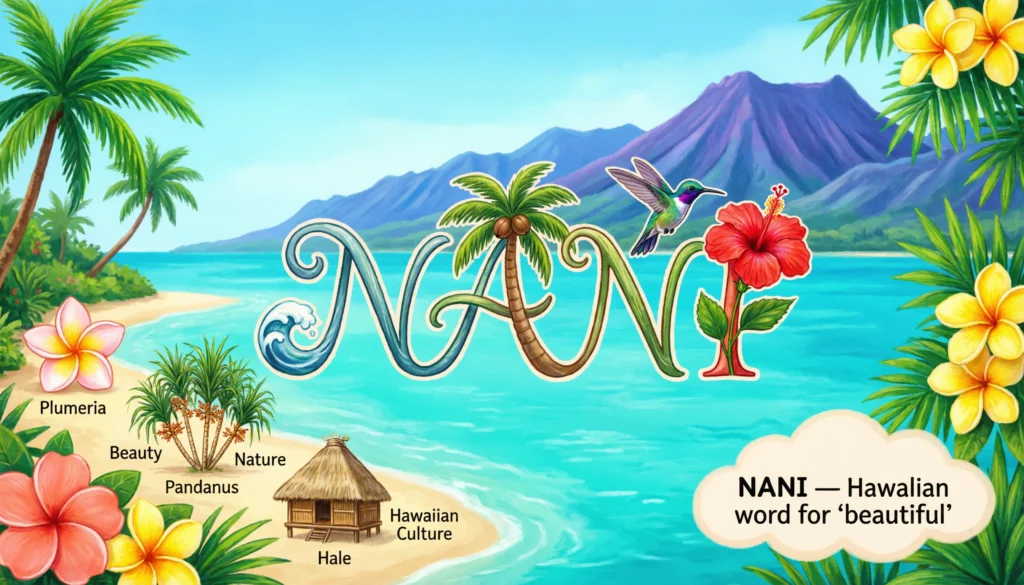
“Nani” is a Hawaiian word that means “beautiful,” “pretty,” “glorious,” or “splendid.”
It is commonly used in the Hawaiian language to describe people, nature, places, or anything considered attractive or admirable. The word often expresses appreciation for beauty in a positive, warm, and respectful tone.
For example:
“He nani kēia wahi.”
“This place is beautiful.”
Hawaiian words carry deep cultural meaning, and “nani” is one of the most beautiful examples. If you’ve ever heard someone say “Aloha ʻoe, nani!” or seen the word in Hawaiian songs, names, or travel descriptions, you might wonder: what does nani mean in Hawaiian?
The word appears everywhere in Hawaiian culture from poetry and traditional chants to everyday conversations and tourism descriptions of the islands. It’s a simple word, yet it carries warmth, admiration, and appreciation for beauty in many forms.
In this guide, we’ll explore:
- The exact meaning of nani
- Its origin and cultural significance
- How people use the word in daily conversation
- Examples with tone explanations
- Comparisons with similar Hawaiian words
- Alternative meanings
- Practical usage tips
- Answers to the most frequently asked questions
By the end, you’ll clearly understand how “nani” fits into the Hawaiian language and culture.
In Hawaiian culture, nani reflects not only physical beauty but also inner beauty, harmony, and admiration for nature.
Origin of the Word “Nani”
The word nani comes from the Hawaiian language, which belongs to the Polynesian language family. Polynesian languages share similarities across islands like Hawaii, Samoa, Tahiti, and New Zealand.
In Hawaiian:
- Nani functions primarily as an adjective
- It describes beauty, attractiveness, or splendor
- It can also be used as praise or admiration
Cultural Context
In Hawaiian culture, beauty is not limited to physical appearance. The concept of nani often reflects:
- Natural beauty (mountains, beaches, forests)
- Spiritual harmony
- Inner goodness
- Artistic expression
For example:
- Nani o Hawaiʻi → “The beauty of Hawaii”
The word appears frequently in traditional Hawaiian songs (mele), poetry, and storytelling, emphasizing respect for nature and appreciation for life.
What Does “Nani” Mean in Everyday Hawaiian Usage?
In daily conversation, nani usually means beautiful or lovely. However, depending on context, it can also mean:
- Pretty
- Attractive
- Wonderful
- Splendid
- Delightful
Common Situations Where “Nani” Is Used
People use nani to describe:
- People
- Landscapes
- Weather
- Flowers
- Music
- Cultural traditions
Example Sentences
- “He nani ka lā.”
The day is beautiful. - “He wahine nani.”
A beautiful woman. - “Nani kēia mele.”
This song is beautiful.
In all these examples, the tone is positive and appreciative.
Examples of “Nani” in Context
Here are real-life examples showing how the word works in different contexts.
| Hawaiian Phrase | English Meaning | Tone |
|---|---|---|
| He nani ka ʻāina | The land is beautiful | Admiring |
| He wahine nani | A beautiful woman | Complimentary |
| Nani kēia pua | This flower is beautiful | Appreciative |
| Nani loa! | Very beautiful! | Excited admiration |
| Nani ka ʻike | Beautiful knowledge / wisdom | Respectful |
Tone Explanation
Friendly tone 😊
- “Your dress is nani!”
- Used to compliment someone casually.
Respectful tone
- Used in cultural or poetic contexts.
Admiring tone
- Often used when describing Hawaiian landscapes.
Unlike slang in some languages, nani is always positive and respectful.
Popular Usage in Hawaiian Culture
The word nani appears widely in Hawaiian traditions.
1. Hawaiian Songs (Mele)
Many traditional songs celebrate the beauty of Hawaii using the word nani.
For example:
- “Nani Kauaʻi” celebrating the beauty of the island Kauai.
2. Place Descriptions
Tourism descriptions often use the word:
- “Nani beaches of Hawaii”
- “Nani valleys and mountains”
3. Personal Names
Some people use Nani as a name.
For example:
- The character Nani Pelekai in Disney’s film Lilo & Stitch.
The name reflects beauty, kindness, and warmth.
Comparison With Similar Hawaiian Words
Several Hawaiian words express beauty or goodness. Understanding the differences helps you use them correctly.
| Word | Meaning | Usage |
|---|---|---|
| Nani | Beautiful, splendid | Most common beauty compliment |
| Uʻi | Handsome or attractive | Often used for people |
| Maikaʻi | Good, excellent | Quality or goodness |
| Aloha | Love, compassion | Emotional connection |
Key Difference
- Nani → focuses on beauty
- Maikaʻi → focuses on goodness or quality
Example:
- “He nani ka pua.” (The flower is beautiful.)
- “Maikaʻi ka meaʻai.” (The food is good.)
Alternate Meanings of “Nani”
While nani primarily means beautiful in Hawaiian, it may have different meanings in other languages or contexts.
1. Japanese (Anime Context)
In Japanese pop culture, “nani?” means:
- “What?”
Example:
- “Nani?!” 😲
However, this is completely unrelated to the Hawaiian meaning.
2. Personal Names
“Nani” may also appear as:
- A nickname
- A shortened form of names
But in Hawaiian, its primary meaning remains beautiful or splendid.
How to Use “Nani” Correctly
If you want to use nani naturally, keep these tips in mind.
1. Use It to Compliment Beauty
You can say:
- “That sunset is nani.”
2. Use It With Hawaiian Grammar
Examples:
- He nani kēia wahi.
This place is beautiful.
3. Avoid Overusing It in Non-Hawaiian Contexts
When speaking English, it’s often better to say:
- Beautiful
- Gorgeous
- Stunning
But nani works beautifully in Hawaiian phrases.
Polite or Professional Alternatives
If you want to express beauty formally in English, consider these alternatives.
| Word | Tone |
|---|---|
| Beautiful | Neutral |
| Elegant | Formal |
| Stunning | Enthusiastic |
| Gorgeous | Friendly |
| Magnificent | Dramatic |
While nani works in Hawaiian culture, these words are more common in English communication.
Why “Nani” Is Popular Online
Searches for “what does nani mean in Hawaiian” have grown for several reasons.
1. Travel Interest
People visiting Hawaii often encounter the word in:
- Tourism guides
- Cultural experiences
- Hawaiian songs
2. Disney Influence
The popularity of Lilo & Stitch introduced many people to the name Nani.
3. Curiosity From Anime Fans
Anime viewers often hear “nani?!”, which sparks curiosity about other meanings.
FAQs
1. What does nani mean in Hawaiian?
Nani means “beautiful,” “pretty,” or “splendid” in Hawaiian. It is commonly used to describe people, places, nature, or anything visually pleasing.
2. Is nani a compliment?
Yes, nani is a positive compliment. People use it to praise someone’s appearance, a beautiful landscape, or something attractive.
3. Can nani describe people?
Yes. Nani can describe women, men, or children. For example, “He wahine nani” means “a beautiful woman.”
4. Does nani always mean beautiful?
Most of the time, yes. However, depending on context, it can also mean lovely, splendid, or wonderful.
5. Is nani used as a name?
Yes. Nani can be used as a personal name or nickname, often symbolizing beauty and kindness.
6. Is nani Hawaiian or Japanese?
Both languages use the word nani, but the meanings are different. In Hawaiian, it means beautiful, while in Japanese, it means “what?”
7. How do you pronounce nani in Hawaiian?
Nani is pronounced “NAH-nee.” Hawaiian pronunciation clearly sounds each vowel.
8. Is nani used in Hawaiian songs or culture?
Yes. The word nani appears in many Hawaiian songs, chants, and cultural expressions, often celebrating the beauty of the islands and nature.
Conclusion
The Hawaiian word nani is a simple yet meaningful term that beautifully reflects the spirit of the Hawaiian language. At its core, nani means “beautiful,” “pretty,” or “splendid,” and it’s commonly used to admire people, nature, places, and even experiences.
Whether describing a breathtaking Hawaiian sunset, a vibrant flower, or a kind person, the word expresses genuine appreciation and positivity.
Beyond its literal meaning, nani also reflects an important cultural value in Hawaii recognizing beauty in the world around us. In Hawaiian traditions, beauty is not just about appearance; it can also represent harmony, kindness, and the natural wonders of the islands.
Discover More Related Articles:
- PFP Mean in Text: Complete Guide for Social Media Users (2026)
- Shabbat Shalom Mean in English: Usage, and Significance in 2026

Sarah Williams is the passionate author behind WordNexy.com, dedicated to creating content that informs, inspires, and sparks curiosity. With a love for words and storytelling, she transforms ideas into meaningful articles that educate, entertain, and leave a lasting impression on every reader.