Definition
OEM (Original Equipment Manufacturer) in car parts refers to components that are made by the same company that manufactured the parts originally installed in a vehicle when it was built.
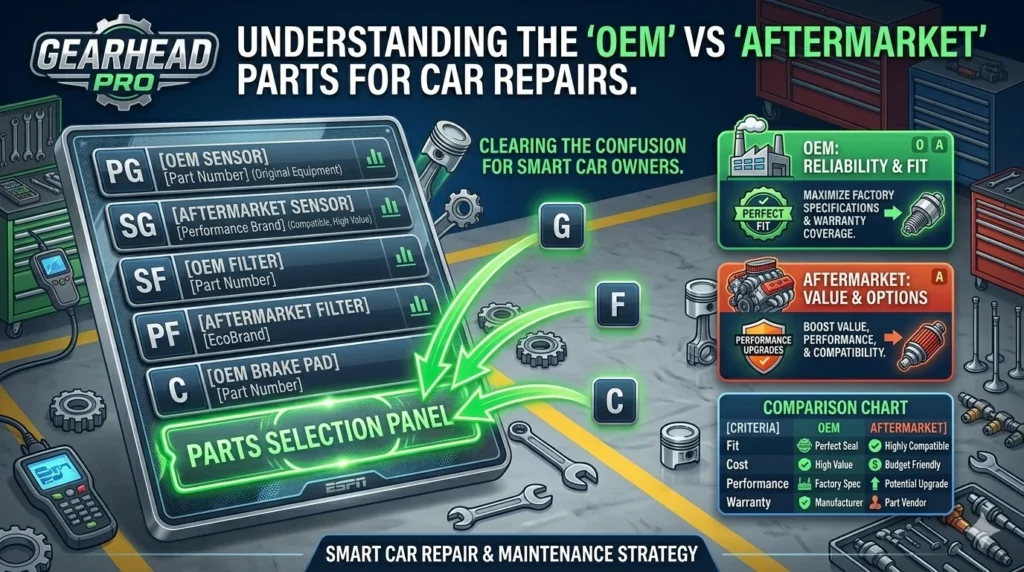
OEM parts are designed to match the car’s exact specifications, ensuring proper fit, performance, and reliability, unlike aftermarket alternatives which are made by third-party companies. ✅
Origin of OEM in Automotive Terms
What OEM Stands For
OEM stands for Original Equipment Manufacturer. ✅ In simple terms, it refers to the company that originally manufactured the parts or components used in your vehicle when it was first assembled. For example, if you buy a new Toyota Corolla, many of the parts under the hood—like brakes, alternators, or sensors—come from OEMs that supplied Toyota directly.
How the Term Became Popular
The term “OEM” started in the automotive industry decades ago. Car manufacturers relied on multiple specialized companies to produce components, and “OEM” distinguished the original suppliers from aftermarket providers. Over time, it became a standard term across all vehicle maintenance, repair, and parts sales industries.
Why It Matters Today
OEM parts are often associated with quality, reliability, and compatibility. Using OEM parts ensures that your car performs exactly as the manufacturer intended, reducing potential issues caused by incompatible aftermarket replacements.
Usage of OEM in Real-World Car Maintenance
Friendly Explanation
Think of OEM parts as the “official” gear for your car. If your Honda Civic needs a new brake pad, choosing OEM means buying the same brake pad Honda used when your car was made. It’s like wearing a custom-fit outfit rather than a generic one-size-fits-all version. 👌
Neutral Perspective
OEM parts are reliable, but they often come at a higher price than aftermarket alternatives. Mechanics or dealerships may recommend them for warranty compliance or long-term durability.
Negative/Dismissive Tone
Some people find OEM parts unnecessarily expensive. Aftermarket brands can offer similar quality at a fraction of the cost, though with varying guarantees. 💸
Examples of OEM Car Parts
Here’s a helpful table to understand OEM parts in context:
| Car Part Type | OEM Example | Aftermarket Alternative | Notes |
|---|---|---|---|
| Brake Pads | Brembo pads for BMW 3 Series | Bosch or Akebono pads | OEM ensures perfect fit and braking performance. |
| Alternator | Denso alternator for Toyota Camry | Valeo alternator | OEM may last longer but is costlier. |
| Air Filter | Mann-Filter for Mercedes-Benz | K&N aftermarket filter | OEM filters match exact airflow requirements. |
| Headlights | Philips OEM bulbs for Audi A4 | Generic LED replacement | OEM bulbs maintain original beam pattern. |
OEM vs Aftermarket: A Clear Comparison
Key Differences
| Feature | OEM Parts | Aftermarket Parts |
|---|---|---|
| Manufacturer | Original vehicle supplier | Third-party supplier |
| Price | Generally higher | Often cheaper |
| Warranty | Usually covered by car manufacturer | Varies by seller |
| Fit & Compatibility | Exact match | May require adjustment |
| Quality & Durability | High and consistent | Can vary; some may outperform OEM |
Example: If you replace your Ford F-150 battery with OEM, it will exactly match Ford’s specifications. An aftermarket battery might fit physically but differ in lifespan or performance.
Alternate Meanings of OEM
While most commonly associated with car parts, OEM can also appear in other industries:
- Electronics: OEM software or hardware pre-installed on laptops or smartphones.
- Machinery: Original components supplied by the machine manufacturer.
- Business Jargon: OEM can also refer to any company producing parts sold to another company for rebranding.
In automotive discussions, these alternate meanings rarely cause confusion because context makes it clear.
Polite or Professional Alternatives to Saying “OEM”
Sometimes, saying “OEM” directly may not resonate with every customer or reader. Polite alternatives include:
- Original Manufacturer Part
- Factory-Approved Part
- Genuine Replacement Part
These phrases convey the same meaning without relying on industry jargon.
FAQs
Q1: What is the difference between OEM and Genuine parts?
A: OEM parts are made by the original manufacturer, while “Genuine” parts often refer to the same OEM components branded for a dealership. Essentially, they’re usually identical.
Q2: Are OEM parts more expensive than aftermarket parts?
A: Yes, OEM parts generally cost more because they guarantee compatibility, quality, and often come with a warranty.
Q3: Can I use aftermarket parts instead of OEM?
A: Yes, but you should ensure the aftermarket part meets your car’s specifications. Using non-approved parts may affect warranties or performance.
Q4: How can I identify an OEM car part?
A: OEM parts usually come with the manufacturer’s branding, part numbers, and official packaging. Dealerships or official suppliers can verify authenticity.
Q5: Do OEM parts last longer than aftermarket parts?
A: Generally, yes. OEM parts are designed to match the original specifications of the vehicle, ensuring durability and proper function.
Q6: Are OEM parts necessary for older cars?
A: Not always. For older or discontinued models, aftermarket parts can be a cost-effective option if OEM parts are unavailable.
Q7: Is it okay to mix OEM and aftermarket parts in my car?
A: Yes, as long as the parts are compatible and meet performance standards. Some car owners mix for cost savings or performance improvements.
Q8: Does using OEM parts affect my car’s resale value?
A: Yes. Vehicles maintained with OEM parts are often perceived as more reliable, which can enhance resale value.
Conclusion:
In summary, OEM (Original Equipment Manufacturer) parts are the original components used in your vehicle when it was first built. They ensure proper fit, performance, and reliability, making them the safest choice for long-term maintenance and preserving your car’s value.
While aftermarket parts can be more affordable, OEM parts provide peace of mind, especially when it comes to warranty compliance and overall durability.
Practical Tip: Always compare OEM and high-quality aftermarket options, considering price, longevity, and performance. Keep part numbers handy when ordering to avoid mistakes.
Discover More Related Articles:
- PFP Mean in Text: Complete Guide for Social Media Users (2026)
- Shabbat Shalom Mean in English: Usage, and Significance in 2026

James Anderson is an experienced content writer and language researcher who focuses on explaining word meanings, definitions, slang terms, and modern expressions. He writes for WordNexy.com, where his articles are designed to provide accurate meanings, practical usage examples, and easy-to-understand explanations for readers worldwide.