Definition
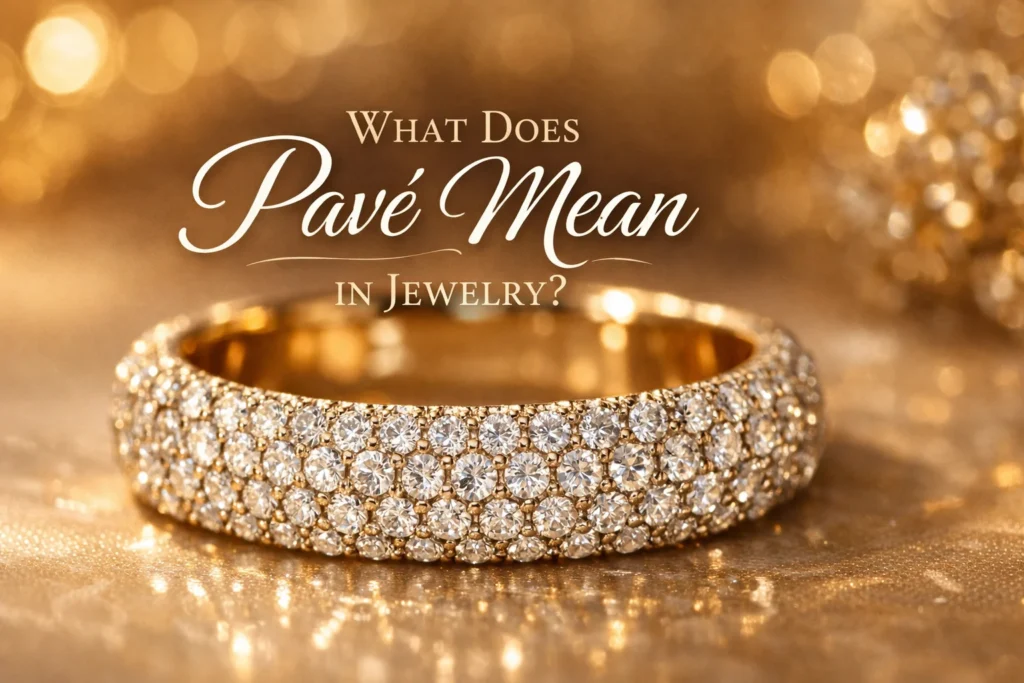
Pavé (pronounced “pa-vay”) is a jewelry setting style where many small gemstones usually diamonds are set closely together with minimal visible metal, creating a continuous surface of sparkle that looks like it’s “paved” with stones.
If you’ve ever admired a ring that seems to shimmer from every angle, chances are you were looking at pavé jewelry. This dazzling style has become a favorite in engagement rings, wedding bands, and luxury accessories because of its ability to maximize brilliance without using large stones.
The beauty of pavé lies in its subtle sophistication tiny diamonds placed so closely together that they create a seamless, glittering surface. Whether you’re shopping for fine jewelry or just curious about the term, understanding pavé can help you make smarter, more stylish choices.
Origin of Pavé: Where the Term Comes From
The word “pavé” comes from the French language, meaning “paved” or “cobblestone.”
- Think of a street paved with stones each piece tightly fitted together.
- In jewelry, the same idea applies: small diamonds are “paved” across the surface of a ring or accessory.
Historical Context
- Pavé settings date back to 18th-century Europe, where master jewelers experimented with ways to maximize sparkle.
- It gained popularity in French haute joaillerie (high jewelry) houses.
- Today, pavé is a global trend, commonly seen in engagement rings, luxury watches, and designer collections.
How Pavé Settings Work

A pavé setting involves placing small gemstones into tiny holes drilled into the metal. The stones are then held in place by small metal beads or prongs, which are barely visible.
Key Features:
- Multiple small stones (instead of one large gem)
- Minimal visible metal
- Continuous sparkle effect
- Usually set with diamonds, but can include sapphires or other gems
Types of Pavé Settings:
- Classic Pavé: Standard small diamonds set closely
- Micro Pavé: Even smaller stones, more intricate and delicate
- French Pavé: V-shaped grooves for extra brilliance and light reflection
- Scalloped Pavé: Curved edges beneath stones for a softer look
Why Pavé Jewelry Is So Popular 💎
Pavé has become a go-to style for both everyday wear and special occasions. Here’s why:
Benefits:
- ✔ Maximum sparkle without needing a large center stone
- ✔ Elegant and luxurious appearance
- ✔ Enhances center stones in rings
- ✔ Versatile design for modern and classic styles
Common Uses:
- Engagement rings
- Wedding bands
- Earrings and bracelets
- Watch bezels
Real-World Usage of “Pavé” (With Tone Examples)
The word “pavé” is commonly used in jewelry stores, product descriptions, and fashion conversations.
Friendly Tone 😊
- “I love your ring! Is that a pavé band? It sparkles so much!”
Neutral/Informative Tone
- “This engagement ring features a pavé setting with 0.50 carats of accent diamonds.”
Slightly Dismissive Tone 😅
- “It’s nice, but pavé settings can be hard to maintain.”
👉 These examples show how the term is used naturally in conversation, from admiration to practical concerns.
Pavé vs Other Jewelry Settings
| Feature | Pavé Setting | Prong Setting | Bezel Setting | Channel Setting |
|---|---|---|---|---|
| Stone Size | Small stones | Large center stone | Medium to large | Small to medium |
| Metal Visibility | Minimal | Visible prongs | Fully surrounds stone | Metal strips on sides |
| Sparkle Level | Very high ✨ | High | Moderate | Moderate |
| Durability | Moderate | High | Very high | High |
| Style | Glamorous, detailed | Classic | Modern, sleek | Clean, structured |
Pavé vs Micro Pavé: What’s the Difference?
| Feature | Pavé | Micro Pavé |
|---|---|---|
| Stone Size | Small | Extremely tiny |
| Detail Level | Moderate | Very intricate |
| Cost | Lower | Higher (more labor) |
| Appearance | Sparkly | Ultra-glittering ✨ |
👉 Tip: Micro pavé is more delicate but offers a finer, more luxurious finish.
Alternate Meanings of “Pavé”
While “pavé” is mostly used in jewelry, it can have other meanings:
- French language: “Paved” or “covered with stones”
- Architecture: Refers to cobblestone roads or surfaces
- Fashion (rare): Used metaphorically to describe something covered in embellishments
When to Choose Pavé Jewelry
Pavé is perfect if you want:
- A luxurious look on a budget
- Extra sparkle without a huge diamond
- A romantic, vintage-inspired design
- A ring that enhances a center stone
When to Avoid It:
- If you need low-maintenance jewelry
- If you prefer minimalist designs
- If you work with your hands frequently (stones may loosen over time)
Care and Maintenance Tips 🛠️
To keep your pavé jewelry shining:
- Clean regularly with mild soap and water
- Avoid harsh chemicals
- Store separately to prevent scratching
- Get professional inspections to check loose stones
Polite or Professional Alternatives
If you want to describe pavé jewelry in a more formal way:
- “Diamond-accented setting”
- “Multi-stone surface design”
- “Gem-encrusted band”
- “Fine diamond detailing”
Example Table: How Pavé Appears in Jewelry
| Jewelry Type | Pavé Usage Example | Style Impact |
|---|---|---|
| Engagement Ring | Pavé band with center diamond | Enhances brilliance |
| Earrings | Full pavé studs | High sparkle |
| Bracelet | Pavé tennis bracelet | Elegant and luxurious |
| Watch | Pavé bezel | Premium, eye-catching |
FAQs:
1. What does pavé mean in jewelry?
It refers to a setting where small stones are placed closely together to create a continuous sparkle.
2. Is pavé jewelry real diamonds?
Yes, most pavé jewelry uses real diamonds, though some pieces may use gemstones or cubic zirconia.
3. Is pavé more expensive?
It can be, due to the labor required to set many small stones.
4. Does pavé jewelry fall out easily?
Small stones can loosen over time, especially without proper care.
5. What is micro pavé?
A more detailed version of pavé using extremely tiny stones.
6. Is pavé good for engagement rings?
Yes, it enhances sparkle and adds elegance to the ring design.
7. How do you clean pavé jewelry?
Use warm water, mild soap, and a soft brush.
8. Can pavé be used with other gemstones?
Yes, sapphires, rubies, and other gems can be used.
Conclusion:
Pavé jewelry is all about maximizing sparkle and elegance. With its tightly set diamonds and minimal metal visibility, it offers a luxurious look that feels both modern and timeless.
If you love jewelry that shimmers from every angle, pavé is an excellent choice especially for engagement rings, wedding bands, and statement pieces. It enhances the beauty of a center stone while adding its own layer of sparkle.
If you love jewelry that catches the light and turns heads, pavé might just be your perfect match. ✨
Discover More Related Articles:

James Anderson is an experienced content writer and language researcher who focuses on explaining word meanings, definitions, slang terms, and modern expressions. He writes for WordNexy.com, where his articles are designed to provide accurate meanings, practical usage examples, and easy-to-understand explanations for readers worldwide.