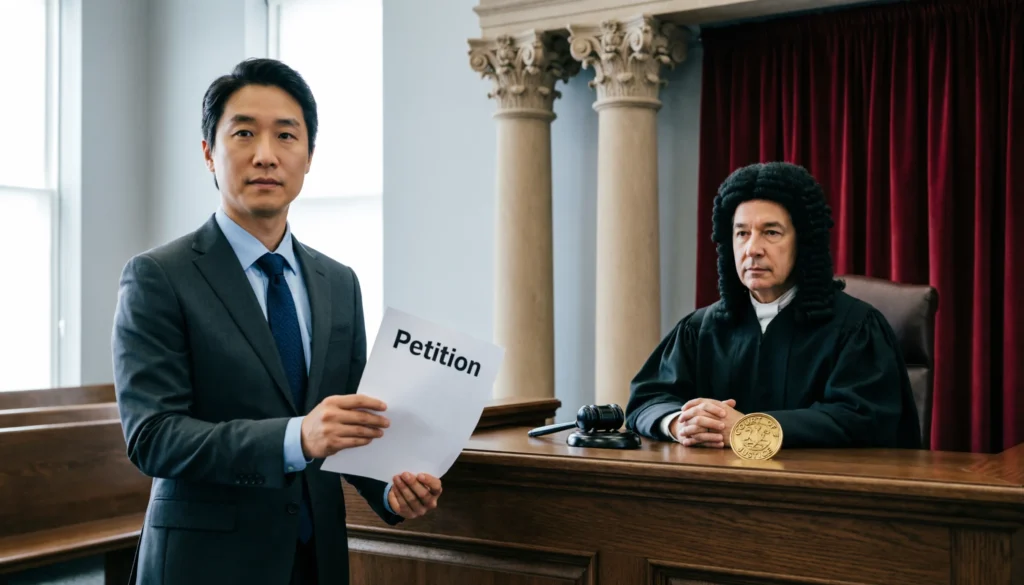
A petitioner in court is the person or party who formally asks a court to take legal action by filing a petition. The petitioner initiates a legal proceeding by requesting relief such as a divorce, appeal, name change, protection order, or judicial review.
Legal terminology can feel confusing at first glance, but some words are more straightforward than they appear. The term petitioner is one of them. Whether you’re reading a court document, learning about legal processes, or trying to understand a case, knowing what a petitioner is helps you clearly identify who started the legal action and what they are asking the court to do.
This guide explains the meaning of petitioner in court in plain language, with examples, comparisons, real-world usage, and practical tips.
What Is a Petitioner in Legal Terms?
A petitioner is the person, group, or organization that files a petition asking a court to make a legal decision or grant a specific request.
Key Characteristics
• Initiates a legal request
• Files a formal written petition
• Asks the court for relief or action
• Is opposed or answered by a respondent
Simple Example
If someone files paperwork requesting a divorce, that person is the petitioner. The other spouse becomes the respondent.
Origin and Legal Background
The word petitioner comes from a Latin root meaning “to seek” or “to request.” Historically, courts required formal written requests, called petitions, to begin many legal proceedings. Over time, legal systems standardized the terminology:
• Petition = the written request
• Petitioner = the person making the request
• Respondent = the person responding
Today, the term is widely used in civil, family, appellate, and administrative law.
Why Courts Use the Term “Petitioner”
Not all legal actions are framed as lawsuits. Many legal matters involve asking a court to issue an order rather than resolving a dispute over damages. In these situations, the person making the request is called the petitioner.
Common Situations Where “Petitioner” Is Used
• Divorce and family law cases
• Child custody requests
• Appeals to higher courts
• Protective or restraining orders
• Probate and estate matters
• Immigration petitions
• Administrative law proceedings
• Name change requests
In these cases, the focus is on requesting a legal decision rather than accusing someone of wrongdoing.
Real-World Usage in Court Contexts
Here’s how the term appears in real legal language.
Neutral Professional Usage
“The petitioner requests that the court grant custody.”
“The petitioner filed a motion for reconsideration.”
“The court reviewed the petitioner’s evidence.”
Friendly Explanation
“The petitioner is the person asking the judge for something.”
Negative or Critical Context
“The petitioner failed to provide sufficient proof.”
“The petitioner’s claim lacks legal merit.”
Everyday Meaning
A petitioner is simply the person who asks the court to act.
Common Legal Contexts Explained
Family Court
The spouse who files for divorce is the petitioner.
The other spouse is the respondent.
Appeals Court
The party asking a higher court to review a decision is the petitioner.
Protective Orders
A person requesting protection from harm files as the petitioner.
Probate Court
Someone requesting authority to manage an estate may be the petitioner.
Petitioner vs Related Legal Terms
Many people confuse “petitioner” with other courtroom roles. The comparison below clarifies the differences.
Courtroom Roles Comparison Table
| Term | Meaning | Who Starts the Action? | Common Context |
|---|---|---|---|
| Petitioner | Person requesting a legal decision | Yes | Family law, appeals, administrative law |
| Plaintiff | Person suing for damages or rights | Yes | Civil lawsuits |
| Appellant | Person appealing a decision | Yes | Appeals courts |
| Claimant | Person making a claim | Usually | Insurance or civil claims |
| Respondent | Person responding to a petition | No | Opposing party |
| Defendant | Person accused or sued | No | Civil or criminal cases |
Key Difference
A petitioner requests a court order.
A plaintiff files a lawsuit claiming harm or damages.
Petitioner vs Plaintiff: The Most Common Confusion
Although both start legal action, they are not interchangeable.
Petitioner
• Files a petition
• Requests a legal ruling
• Common in family and appellate law
Plaintiff
• Files a complaint
• Claims injury or wrongdoing
• Common in civil lawsuits
Memory Tip
Petition = Request
Plaintiff = Lawsuit
Examples of “Petitioner” in Legal Documents
Example 1: Divorce Filing
“The petitioner respectfully requests dissolution of marriage.”
Meaning: The spouse filing for divorce.
Example 2: Appeal Case
“The petitioner seeks review of the lower court’s decision.”
Meaning: The party asking a higher court to review a ruling.
Example 3: Protective Order
“The petitioner alleges harassment and requests protection.”
Meaning: The person seeking legal protection.
Tone and Context of the Term
Legal language is typically formal, but tone varies by situation.
Formal Tone
Used in court documents and rulings
Example: “The petitioner submits evidence.”
Neutral Informational Tone
Used in educational explanations
Example: “The petitioner is the person requesting court action.”
Urgent or Emotional Context
Used in emergency legal matters
Example: “The petitioner fears immediate harm.”
The tone depends on the situation rather than the word itself.
Usage Tips for Understanding Legal Documents
If you encounter the word “petitioner” in paperwork, use this simple method to understand it correctly.
Step-by-Step Interpretation
- Identify who filed the document
- Determine what they are asking the court to do
- Identify the respondent
- Look for the requested outcome
Helpful Clues in Documents
“The petitioner requests…”
“The petitioner seeks…”
“The petitioner moves the court…”
These phrases signal who initiated the legal action.
Alternate Meanings of “Petitioner”
Outside the courtroom, the word can have a broader meaning.
General Meaning
A petitioner is anyone who formally requests something from an authority.
Examples include:
• A person submitting a request to a government body
• Someone leading or signing a public petition
In legal contexts, however, the meaning specifically relates to court proceedings.
Professional or Plain Language Alternatives
Depending on context, other terms may replace petitioner.
Legal Alternatives
• Applicant
• Moving party
• Filing party
• Requesting party
Plain Language Alternatives
• Person requesting court action
• Party asking for a ruling
These alternatives are often used in simplified legal explanations.
Example Scenario Walkthrough
Situation
Jordan files paperwork asking the court to change their legal name.
Roles
Jordan = Petitioner
Court = Decision-maker
No opposing party required
Court Language
“The petitioner requests a legal name change.”
If approved, the petitioner’s request becomes a court order.
FAQs
1. What does petitioner mean in court?
A petitioner is the person who formally asks a court for a legal decision by filing a petition.
2. Is a petitioner the same as a plaintiff?
No. A petitioner requests a court order, while a plaintiff files a lawsuit seeking damages or legal remedy.
3. Who is the opposite of a petitioner?
The opposing party is usually called the respondent.
4. Is the petitioner the person who sues?
Not always. Petitioners often request legal action rather than suing for damages.
5. Can there be more than one petitioner?
Yes. Multiple parties can file a petition together.
6. Is petitioner used in criminal cases?
Rarely. Criminal cases usually use the terms defendant and prosecutor.
7. What does it mean if you are listed as a petitioner?
It means you initiated a legal request before the court.
8. Do petitioners always win the case?
No. The court reviews the request and may approve or deny it.
Conclusion
Understanding the term petitioner is essential for anyone navigating legal documents or court proceedings. A petitioner is the person who formally asks the court to take action, whether it’s filing for divorce, seeking a protective order, or appealing a decision.
Unlike a plaintiff, who sues for damages, a petitioner focuses on requesting a legal ruling or order. Knowing who the petitioner is, what they are asking for, and who the opposing party (respondent) is can make reading court papers much clearer.
By keeping these roles and terms in mind, you can confidently interpret legal documents, follow case updates, and better understand the legal process.
Discover More Related Articles:
- RSVP Meaning in English: Complete Guide with Origin and Examples (2026)
- What Does LOI Stand For in Business Transactions? (2026)

Amanda Lewis is a professional content writer and word-meaning researcher who specializes in explaining definitions, slang, abbreviations, and modern language terms. She writes for WordNexy.com, where she creates clear, accurate, and reader-friendly articles to help users understand word meanings and proper usage. Her work is especially useful for students, writers, and online readers seeking quick and reliable explanations.