Definition:
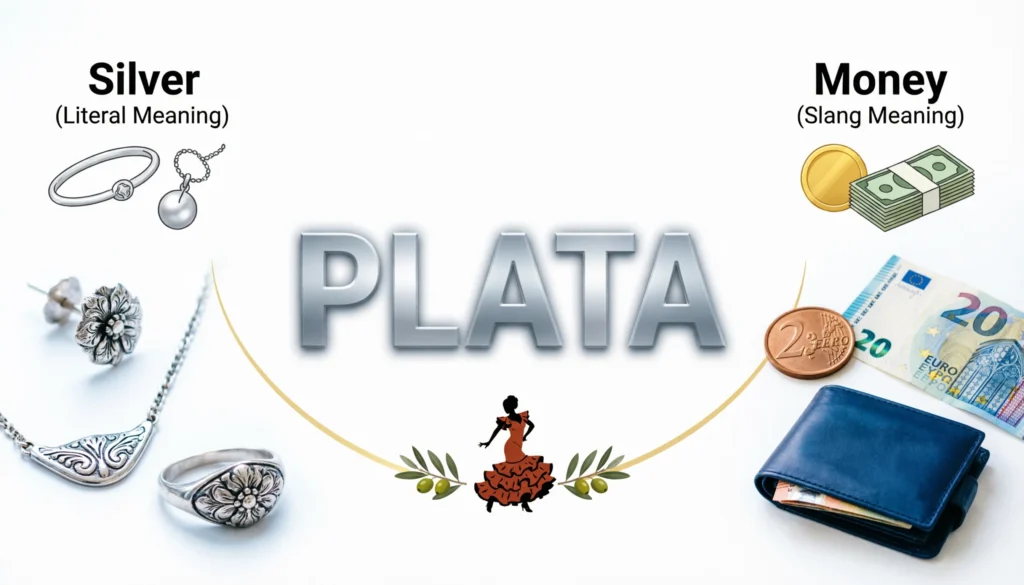
Plata is a Spanish word that literally means “silver.” In many Spanish-speaking countries, it is also used informally to mean “money.”
Literal meaning: Silver (the metal)
Common slang meaning: Money or cash
Example:
No tengo plata ahora. → “I don’t have money right now.”
If you’ve ever watched Spanish movies, listened to Latin music, or talked with Spanish speakers, you might have heard the word “plata.” Sometimes it’s used in conversations about money, sometimes about silver, and occasionally in slang contexts.
So what does it really mean? Is it formal Spanish, slang, or both?
Understanding “plata” is helpful not only for learning Spanish but also for understanding cultural expressions used across Spain and Latin America.
Let’s break down the meaning, origin, real-world usage, and examples so you can confidently understand and use the word.
The Origin of the Word “Plata”
The word plata comes from Old Spanish and Latin influences, where it originally referred to silver as a precious metal.
Historical Background
Historically, silver played a major role in trade and currency, especially during the Spanish colonial period. Because silver coins were widely used as money, the word plata gradually became associated with wealth and cash.
This shift from metal → money is similar to how English speakers sometimes say:
- “silver coins”
- “hard cash”
- “the silver standard”
Cultural Influence
In many Latin American countries, plata became everyday slang for money, similar to:
- Cash
- Bucks
- Dough
Because of this cultural shift, the word now has two widely understood meanings.
Literal Meaning of Plata: Silver
The primary dictionary meaning of plata is silver, the shiny metallic element used in jewelry, coins, and decorations.
Examples
- Compré un anillo de plata.
→ I bought a silver ring. - La cuchara está hecha de plata.
→ The spoon is made of silver. - El collar es de plata pura.
→ The necklace is made of pure silver.
Common Uses for the Literal Meaning
| Context | Example Sentence | English Meaning |
|---|---|---|
| Jewelry | Anillo de plata | Silver ring |
| Cutlery | Cubiertos de plata | Silver utensils |
| Decoration | Marco de plata | Silver frame |
| Currency (historical) | Monedas de plata | Silver coins |
Plata as Slang for Money
In many Spanish-speaking countries, plata is a casual word for money.
This slang usage is extremely common in Latin America, including:
- Mexico
- Argentina
- Colombia
- Chile
- Peru
Example Sentences
- No tengo plata para salir hoy.
→ I don’t have money to go out today. - Necesito más plata para pagar la renta.
→ I need more money to pay the rent. - Ganó mucha plata con su negocio.
→ He earned a lot of money with his business.
Tone
Using plata for money usually sounds:
- Casual
- Friendly
- Everyday conversation
It is not considered rude, but it’s more informal than some other words for money.
How Plata Is Used in Real Conversations
Spanish speakers often use plata in everyday dialogue. The tone depends on context, expression, and country.
Here are a few examples.
Friendly Tone 😊
- ¿Tienes plata para el café?
→ Do you have money for coffee? - Vamos a ahorrar plata para viajar.
→ Let’s save money to travel.
Neutral Tone
- Necesitamos más plata para el proyecto.
→ We need more money for the project.
Frustrated or Negative Tone
- Otra vez sin plata… 😒
→ Broke again…
Tone changes mainly through voice, punctuation, and context.
Expressions Using “Plata”
Many Spanish expressions include the word plata, especially when referring to wealth or money.
Common Expressions
| Expression | Meaning | Example |
|---|---|---|
| Ahorrar plata | To save money | Estoy ahorrando plata |
| Gastar plata | To spend money | Gastó mucha plata |
| Tener plata | To have money | Ella tiene plata |
| Sin plata | Without money | Estoy sin plata |
These phrases are extremely common in casual Spanish conversations.
Plata vs Other Spanish Words for Money
Spanish actually has several words for money, and their usage can vary depending on region and formality.
| Word | Meaning | Formality | Region |
|---|---|---|---|
| Dinero | Money | Neutral / standard | All Spanish-speaking countries |
| Plata | Money / silver | Informal | Mostly Latin America |
| Lana | Money (slang) | Very informal | Mexico |
| Pasta | Money (slang) | Informal | Spain |
| Billete | Bill / money | Neutral | Many regions |
Key Difference
- Dinero = standard, formal word for money
- Plata = casual everyday slang
Example comparison:
- No tengo dinero. (more neutral)
- No tengo plata. (more casual)
Regional Popularity of the Word Plata
Although understood everywhere, plata as slang for money is more popular in Latin America than in Spain.
Regional Usage
| Country | Usage |
|---|---|
| Argentina | Very common |
| Colombia | Very common |
| Chile | Very common |
| Mexico | Common |
| Spain | Less common for money |
In Spain, people often prefer pasta or simply dinero.
Alternate Meanings of Plata
While the two main meanings are silver and money, the word sometimes appears in other contexts.
1. Jewelry & Fashion
Plata often describes the material used in accessories.
Example:
Pendientes de plata → silver earrings
2. Colors
The word can also refer to a silver color or tone.
Example:
Coche color plata → silver-colored car
3. Historical Currency
In historical texts, plata may refer to silver coins used in trade and economics.
Polite or Professional Alternatives
Because plata is informal slang, it may not always be suitable in formal situations.
Here are better alternatives.
| Situation | Recommended Word |
|---|---|
| Business meeting | Dinero |
| Academic writing | Dinero |
| Banking or finance | Fondos |
| Casual conversation | Plata |
Example:
Informal:
No tengo plata.
Professional:
No tengo suficiente dinero.
Example Sentences Table
Here are practical examples showing how plata is used in different contexts.
| Spanish Sentence | English Meaning | Tone |
|---|---|---|
| No tengo plata ahora | I don’t have money right now | Casual |
| Ganó mucha plata | He earned a lot of money | Neutral |
| Compré un collar de plata | I bought a silver necklace | Literal |
| Necesito plata para viajar | I need money to travel | Casual |
| El reloj es de plata | The watch is silver | Literal |
Why “Plata” Is So Popular in Spanish
There are a few reasons this word became widely used.
1. Historical Currency
Silver coins were once a primary form of money in Spanish-speaking regions.
2. Simplicity
The word is short, easy to pronounce, and widely understood.
3. Cultural Influence
Movies, music, and everyday speech have reinforced plata as slang for money.
For example, Latin songs often include phrases like:
- hacer plata (make money)
- buscar plata (look for money)
FAQs:
- What does plata literally mean in Spanish?
Literally, plata means “silver.” It refers to the metal used in jewelry, coins, and decorative objects. - Does plata mean money?
Yes. In many Spanish-speaking countries, plata is slang for money or cash.
Example:
- No tengo plata. → “I don’t have money.”
- Is plata formal or informal?
When referring to money, plata is informal. The more neutral and formal word is dinero. - Do people in Spain say plata for money?
People in Spain understand it, but they more commonly use dinero or pasta as slang for money. - Is plata rude in Spanish?
No, plata is not rude. It’s simply casual slang used in everyday conversation. - What is the difference between dinero and plata?
- Dinero = standard word for money
- Plata = informal slang for money
Both words refer to the same concept, but plata is more casual.
- What does sin plata mean?
Sin plata means “without money” or “broke.”
Example:
- Estoy sin plata. → “I’m broke.”
- Why does plata mean money?
Because historically, silver coins were used as currency, the word plata gradually became associated with money over time.
Conclusion
In Spanish, plata has two main meanings:
- Literal meaning: Silver, the precious metal used in jewelry, coins, and decorative items.
- Slang meaning: Money or cash, especially in informal conversation in Latin America.
Understanding plata helps you navigate everyday Spanish conversations, music, movies, and cultural expressions. Remember: while it’s widely used and friendly, it’s informal, so in professional or formal contexts, use dinero instead.
So next time someone says:
“No tengo plata.”
You’ll instantly know they mean:
“I don’t have any money.”
Discover More Related Articles:
- PFP Mean in Text: Complete Guide for Social Media Users (2026)
- Shabbat Shalom Mean in English: Usage, and Significance in 2026

Amanda Lewis is a professional content writer and word-meaning researcher who specializes in explaining definitions, slang, abbreviations, and modern language terms. She writes for WordNexy.com, where she creates clear, accurate, and reader-friendly articles to help users understand word meanings and proper usage. Her work is especially useful for students, writers, and online readers seeking quick and reliable explanations.