
In the Bible, prosperity refers to more than just material wealth it signifies wholeness, success, and flourishing in all areas of life spiritually, emotionally, relationally, and financially.
Biblical prosperity emphasizes living in alignment with God’s will, experiencing peace, and being fruitful in all endeavors.
Prosperity in Scripture is not merely about riches but about God’s blessings that enable individuals and communities to thrive holistically. Understanding biblical prosperity requires exploring the context, origins, and practical application of this concept in everyday life.
The Origin of the Term “Prosperity” in the Bible
The English word “prosperity” comes from the Latin prosperitas, meaning “success, good fortune, or thriving.” In the biblical context, however, the concept is primarily conveyed through Hebrew and Greek words such as:
| Original Language | Word | Meaning |
|---|---|---|
| Hebrew | tsalach (צָלַח) | To succeed, to thrive, to flourish |
| Hebrew | shalom (שָׁלוֹם) | Peace, completeness, well-being |
| Greek | eudokia (εὐδοκία) | Goodwill, favor, blessing |
| Greek | ploutos (πλοῦτος) | Wealth, abundance |
Key insight: Prosperity in the Bible is deeply tied to obedience, faithfulness, and God’s favor, rather than personal effort alone. While modern culture often equates prosperity with money, the biblical perspective is far more holistic.
Biblical Usage of Prosperity
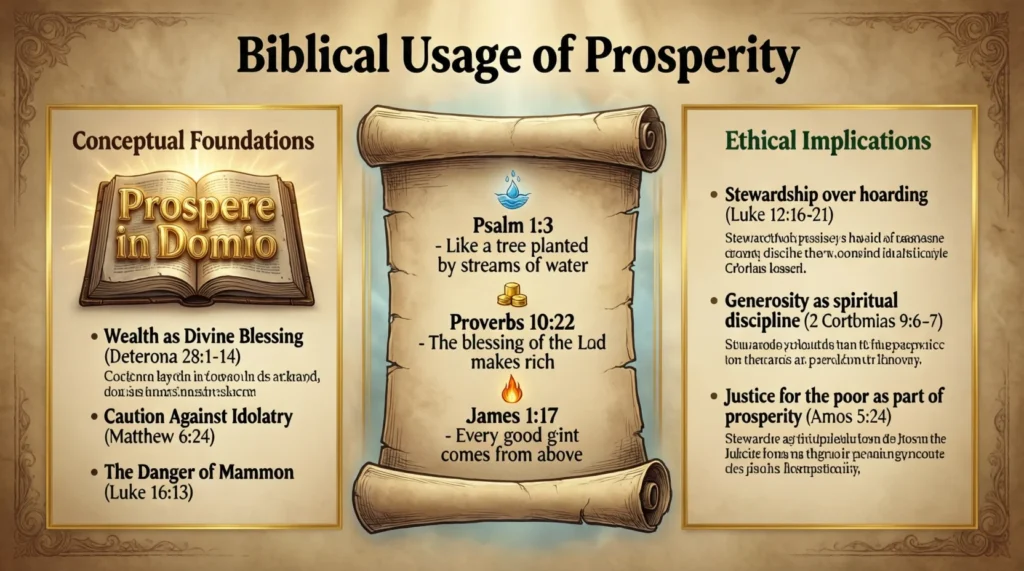
Spiritual Prosperity
Biblical prosperity often starts with spiritual growth. Deuteronomy 8:18 reminds believers that “It is God who gives you the ability to produce wealth”, linking prosperity with reliance on God. Spiritual prosperity involves:
- Growing in faith
- Developing godly character
- Being in harmony with God’s purposes
Material Prosperity
While not the ultimate goal, financial and material blessings are sometimes part of biblical prosperity. Examples include:
- Abraham’s wealth (Genesis 13:2)
- Job’s restoration (Job 42:10-12)
- Solomon’s riches and wisdom (1 Kings 3:13)
Material wealth is seen as a tool for stewardship and generosity, not selfish accumulation.
Relational Prosperity
Prosperity also encompasses healthy relationships, strong family ties, and communal harmony:
- Psalm 128:3–4 describes blessings for one’s spouse and children
- Proverbs 11:25 emphasizes generosity as a key to relational and communal flourishing
Examples of Prosperity in the Bible
| Scripture | Context | Type of Prosperity |
|---|---|---|
| Deuteronomy 28:1-14 | Obedience to God’s commands | Spiritual & Material |
| Psalm 1:1-3 | Living according to God’s law | Spiritual & Personal Growth |
| 3 John 1:2 | Prayer for health and success | Holistic (Health, Spirit, Wealth) |
| Luke 6:38 | Generosity and giving | Relational & Material |
Insight: Prosperity in the Bible is multidimensional, encompassing blessings of the spirit, mind, body, and community.
Tone and Context: How Prosperity is Portrayed
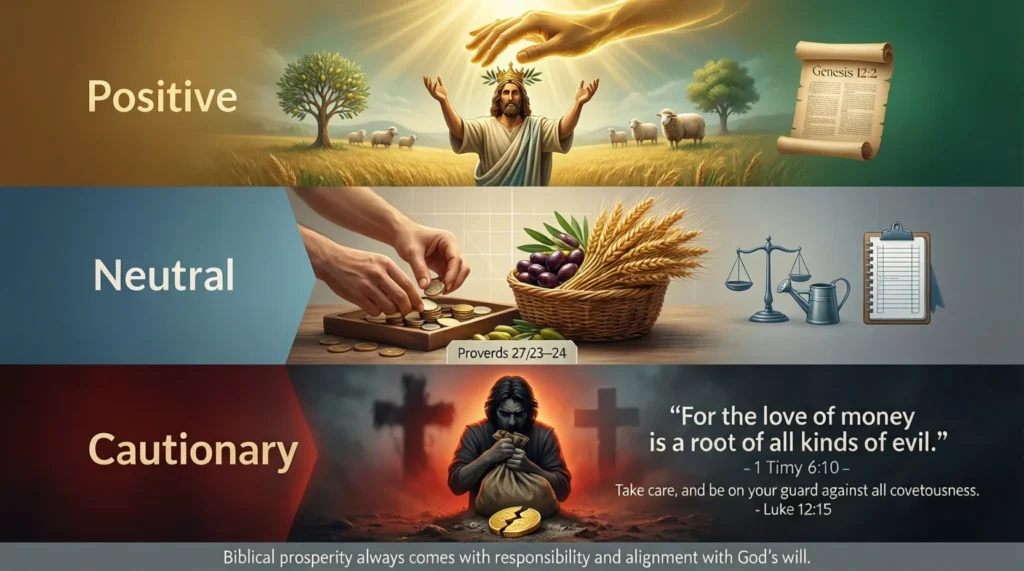
The Bible portrays prosperity in positive, neutral, and cautionary tones depending on context:
- Positive: Abraham’s blessings reflect God’s favor for obedience
- Neutral: The wise use of wealth or resources is a natural outcome of diligence
- Cautionary: Warnings against greed or idolizing wealth (1 Timothy 6:10; Luke 12:15)
Tip: Biblical prosperity always comes with responsibility and alignment with God’s will.
Comparison: Biblical Prosperity vs. Modern Prosperity
| Aspect | Biblical Prosperity | Modern Cultural Prosperity |
|---|---|---|
| Focus | Holistic flourishing (spiritual, relational, material) | Primarily financial and material success |
| Source | God’s blessings and obedience | Personal effort, investment, career growth |
| Responsibility | Stewardship, generosity, ethical living | Self-interest, accumulation, consumerism |
| Longevity | Eternal impact and spiritual well-being | Temporary or external validation |
Key takeaway: Modern definitions often limit prosperity to money and status, whereas biblical prosperity is life-encompassing and purpose-driven.
Alternate Meanings and Related Terms
- Blessing: Divine favor that brings well-being and protection
- Wealth: Material abundance, often a component of prosperity
- Success: Achieving goals aligned with God’s purpose
- Flourishing/Thriving: Living fully in accordance with God’s plan
Using synonyms like “well-being,” “fruitfulness,” or “blessing” can help contextualize biblical prosperity in teaching or writing.
Polite and Professional Alternatives
When writing or teaching about biblical prosperity, you can use terms like:
- Spiritual and material flourishing
- God-centered success
- Holistic well-being
- Fruitful living
These phrases maintain biblical integrity while remaining professional and respectful.
Practical Examples in Everyday Life
Biblical prosperity is not just theoretical it can be seen in daily life:
- Career and Finances: Using talents ethically and being generous
- Health: Maintaining physical and mental well-being as part of God’s blessing
- Relationships: Investing time and care in family and community
- Faith: Regular prayer, study, and living according to God’s Word
Example: A small business owner may experience prosperity by providing honest service, supporting employees, giving back to the community, and maintaining integrity all reflecting biblical principles.
FAQs
1. Is biblical prosperity only about money?
No. While material blessings can be part of it, biblical prosperity includes spiritual, relational, and emotional well-being.
2. Can anyone achieve prosperity according to the Bible?
Yes, anyone who seeks God, obeys His Word, and lives righteously can experience prosperity.
3. Does the Bible promise prosperity to everyone?
The Bible encourages prosperity for the faithful, but true prosperity is not always financial faithfulness may come with trials.
4. How does generosity relate to prosperity?
Generosity is key. Luke 6:38 shows that giving leads to receiving blessings in return.
5. Is prosperity a sign of God’s favor?
Often, yes. However, prosperity should not be idolized or pursued selfishly.
6. Can prosperity be spiritual only?
Absolutely. Spiritual growth, inner peace, and wisdom are all forms of prosperity.
7. How is prosperity different from success?
Success can be personal achievement, whereas prosperity encompasses success aligned with God’s will, including peace, joy, and fruitfulness.
8. What’s the ultimate goal of prosperity in the Bible?
To live a full, God-centered life that glorifies Him and blesses others.
Conclusion:
Biblical prosperity is much more than material wealth it is a holistic blessing that encompasses spiritual growth, strong relationships, emotional well-being, and wise stewardship of resources.
The Bible teaches that true prosperity comes from faithfulness, obedience, and alignment with God’s will, not simply personal effort or the pursuit of riches.
While material blessings may be a part of prosperity, the heart of biblical flourishing lies in spiritual depth, generosity, and purposeful living. By embracing these principles, believers can experience a life that is fruitful, balanced, and aligned with God’s intentions.
Search More Related Articles:

Amanda Lewis is a professional content writer and word-meaning researcher who specializes in explaining definitions, slang, abbreviations, and modern language terms. She writes for WordNexy.com, where she creates clear, accurate, and reader-friendly articles to help users understand word meanings and proper usage. Her work is especially useful for students, writers, and online readers seeking quick and reliable explanations.