

The Rapture, in biblical teaching, refers to the event in which believers in Jesus Christ are caught up to meet Him. This belief is based primarily on passages such as 1 Thessalonians 4:16–17.
Although the word “rapture” does not appear in the Bible, the concept comes from the Latin word rapturo, meaning “to seize” or “to catch up.”
What does rapture mean in the Bible?
Few biblical topics spark as much curiosity, discussion, and debate as the Rapture. Some view it as a moment of hope and rescue, others see it as a misunderstood doctrine, and many simply want to know what the Bible actually teaches about it.
Whether you have heard the term in sermons, Christian books, end times discussions, or everyday conversations, this guide explains the biblical meaning of the Rapture in a clear, friendly, and balanced way.
What Is the Rapture According to the Bible?
In Christian theology, the Rapture describes a future event when believers, both living and deceased, are gathered to Christ.
The most frequently referenced passage says that believers will be “caught up” together to meet the Lord. This phrase is central to the idea of the Rapture and describes a sudden, divine action initiated by God.
Key Elements of the Rapture Concept
- Jesus gathers believers to Himself
- Both living and resurrected believers are included
- The event is sudden and supernatural
- It is presented as a source of comfort and hope
Origin of the Word “Rapture”
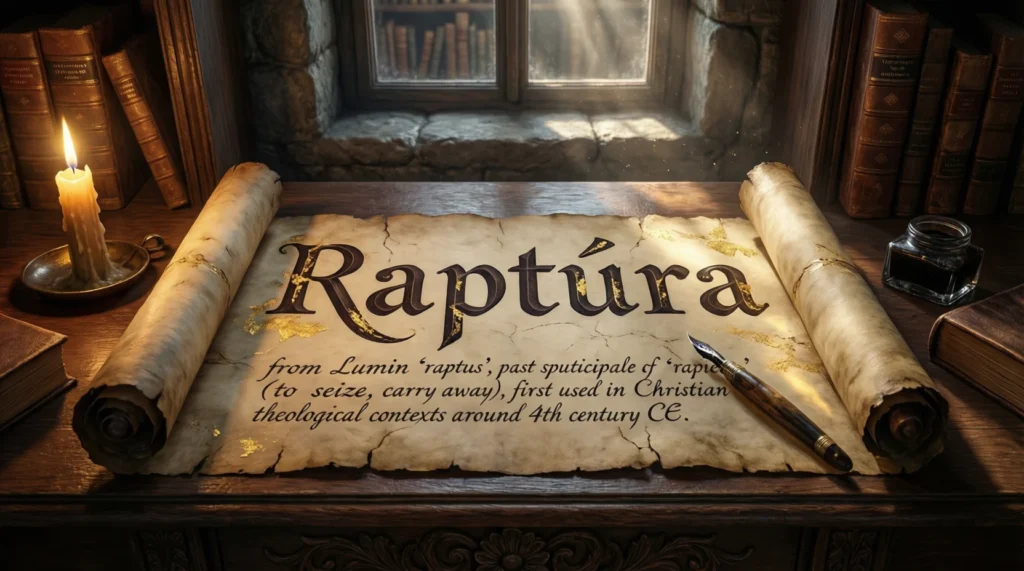
The term “rapture” does not appear in English Bible translations. Instead, it developed over time from biblical languages.
Linguistic Background
| Language | Word | Meaning |
|---|---|---|
| Greek | harpazō | To seize or snatch away |
| Latin | rapturo | To catch up |
| English | rapture | A theological term derived from Latin |
The Latin Bible translation used the word rapturo to describe believers being “caught up,” which later became the English term “rapture.”
Is the Rapture Mentioned Directly in the Bible?
The term itself is not mentioned, but the concept is drawn from several New Testament passages.
Commonly Referenced Scriptures
- 1 Thessalonians 4:16–17 focuses on believers being caught up
- 1 Corinthians 15:51–52 describes a sudden transformation
- John 14:1–3 speaks of Jesus preparing a place for believers
- Matthew 24:40–41 is often debated in relation to the Rapture
These passages form the foundation of Rapture teaching, although interpretations vary.
Why Is the Rapture So Popular in Christian Teaching?
The idea of the Rapture became especially prominent in modern Christian theology during the nineteenth and twentieth centuries.
Reasons for Its Popularity
- Emphasis on hope and deliverance
- Interest in biblical prophecy and the end times
- Influence of Christian books, sermons, and media
- Cultural exposure through films and novels
The concept resonated strongly because it highlights comfort during difficult times.
Different Christian Views on the Rapture
Not all Christians interpret the Rapture the same way. Views differ based on how biblical prophecy is understood.
Major Theological Perspectives
| View | Description |
|---|---|
| Pre-Tribulation | Believers are taken before a period of tribulation |
| Mid-Tribulation | Believers are taken midway through tribulation |
| Post-Tribulation | Believers meet Christ after tribulation |
| No Separate Rapture | Christ’s return and resurrection occur together |
Despite these differences, Christians generally agree on the return of Christ and the resurrection of believers.
What Does the Rapture Mean Spiritually?
Beyond timelines and prophecy debates, the Rapture carries spiritual meaning.
Spiritual Themes Connected to the Rapture
- Hope in Christ’s promises
- Encouragement during suffering
- Motivation for faithful living
- Assurance of resurrection and eternal life
The Bible presents this teaching as a message of comfort rather than fear.
Real World Usage of the Word “Rapture”
While rooted in theology, the word “rapture” is also used in everyday language.
Examples of Usage
| Context | Example | Tone |
|---|---|---|
| Biblical | Christians discuss the Rapture | Neutral |
| Sermon | The Rapture encourages readiness | Encouraging |
| Literature | She was filled with rapture | Positive |
| Casual | Fans were in rapture after the win | Friendly |
Alternate Meanings of “Rapture”
Outside of theology, the word “rapture” can also mean:
- Intense joy or delight
- Emotional excitement
- Deep admiration
These meanings reflect the idea of being emotionally “carried away,” rather than a biblical event.
Rapture vs Second Coming
The Rapture is often confused with the Second Coming of Christ.
Comparison Table
| Aspect | Rapture | Second Coming |
|---|---|---|
| Location | Meeting Christ in the air | Christ returns to earth |
| Audience | Believers | All people |
| Purpose | Gathering believers | Judgment and reign |
| Visibility | Sudden | Public and visible |
Some Christians believe these events are separate, while others believe they describe the same future moment from different perspectives.
Professional Alternatives to the Word “Rapture”
In academic, educational, or interfaith settings, alternative wording is sometimes preferred.
- The gathering of believers
- The resurrection and transformation
- Christ’s return for His people
- The future hope of the church
These phrases help avoid confusion while preserving the biblical meaning.
Example
| Scripture | Key Phrase | Meaning |
|---|---|---|
| 1 Thessalonians 4:17 | Caught up | Foundation of Rapture teaching |
| 1 Corinthians 15:52 | Changed | Transformation of believers |
| John 14:3 | Receive you | Christ gathering believers |
| Matthew 24:40 | One taken | Disputed interpretation |
FAQs
What does rapture mean in the Bible?
It refers to believers being caught up to meet Christ, based on New Testament passages.
Is the Rapture clearly taught in Scripture?
The idea is drawn from Scripture, though the term itself is not used.
Do all Christians believe in the Rapture?
No. Beliefs vary among denominations and theological traditions.
Is the Rapture the same as the Second Coming?
Some believe they are separate events, while others see them as one event.
Can anyone predict when the Rapture will happen?
No. The Bible teaches that the timing is unknown.
Is the Rapture meant to be frightening?
Biblically, it is presented as a message of hope and comfort.
Does the Old Testament mention the Rapture?
Not directly, though some see symbolic foreshadowing.
How should believers respond to teachings about the Rapture?
With faith, discernment, and a focus on living faithfully.
Conclusion
The Rapture is a theological concept rooted in biblical passages about Christ’s return and the gathering of believers. While interpretations differ, the central message remains the same: hope, assurance, and trust in God’s promises.
Although the word “rapture” does not appear in the Bible, the concept is clearly present in Scripture. Interpretations of the event vary among Christians, reflecting different theological perspectives and approaches to prophecy.
Despite these differences, the teaching consistently emphasizes hope and comfort rather than fear. Ultimately, the focus for believers is on faithful living and spiritual readiness, rather than trying to predict the exact timing or details of the event.
Search More Related Articles :
- RSVP Meaning in English: Complete Guide with Origin and Examples (2026)
- What Does LOI Stand For in Business Transactions? (2026)

Sarah Williams is the passionate author behind WordNexy.com, dedicated to creating content that informs, inspires, and sparks curiosity. With a love for words and storytelling, she transforms ideas into meaningful articles that educate, entertain, and leave a lasting impression on every reader.

