Definition:
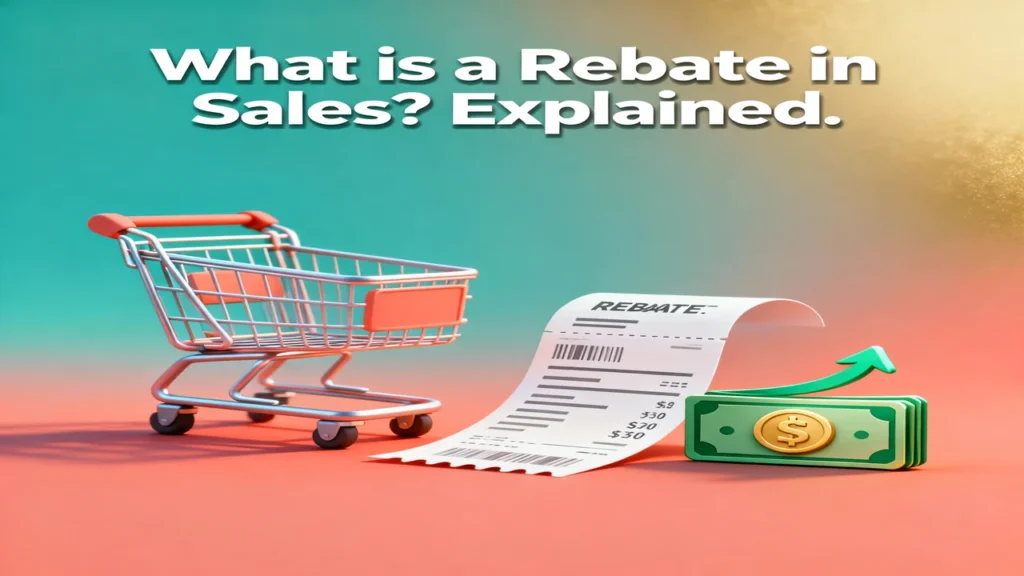
A rebate in sales is a partial refund or discount offered by a seller or manufacturer to a buyer after the purchase of a product or service.
Unlike instant discounts, rebates are typically claimed after the transaction is complete, often requiring submission of receipts or proof of purchase.
If you’ve ever bought a product and received a check, gift card, or account credit weeks later, you’ve experienced a rebate. Understanding rebates is essential for both consumers and businesses, as they affect pricing strategies, cash flow, and customer incentives.
This guide will explain what a rebate in sales means, how it works, its benefits and drawbacks, real-world examples, comparisons with similar sales terms, and tips for claiming or offering them effectively.
What a Rebate in Sales Means in Plain English
A rebate is a financial incentive offered to encourage purchases, loyalty, or brand promotion. It differs from a standard discount:
- Discount: Price is reduced at the point of sale
- Rebate: Buyer pays full price first, then claims money back afterward
Essentially, a rebate is a “buy now, get some money later” deal.
Key Features of a Rebate
- Can be offered by manufacturers or retailers
- Often requires a form, receipt, or proof of purchase
- May be delivered as a check, digital transfer, or store credit
- Usually has an expiration date or eligibility criteria
Why Companies Use Rebates
Businesses use rebates strategically to:
- Boost short-term sales without reducing listed prices
- Promote new products or clear inventory
- Collect customer data via rebate submission forms
- Encourage brand loyalty
- Make products appear competitively priced without cutting margins
Rebates are a popular marketing tool because they drive purchases while controlling costs.
Types of Rebates in Sales
1. Mail-in Rebates
- Buyer submits a form and receipt by mail
- Company processes and sends a check or credit
2. Instant Rebates
- Discount applied immediately at checkout
- Often confused with coupons, but technically processed like a rebate
3. Volume or Loyalty Rebates
- Given when a customer buys multiple items or reaches a spending threshold
- Common in B2B sales
4. Manufacturer Rebates
- Manufacturer, not the retailer, reimburses the customer
- Usually requires submission directly to the manufacturer
How Rebates Work Step by Step
- Buyer purchases the product at full price
- Buyer completes rebate form with proof of purchase
- Company reviews submission for eligibility
- Rebate is approved and processed
- Buyer receives payment, credit, or gift card
Rebates can take weeks to months to process, which is why some people forget to claim them.
Real-World Usage and Examples
- Electronics: “$50 mail-in rebate on laptops”
- Appliances: “Get a $100 rebate from the manufacturer”
- Automobiles: “$1,500 cash rebate for first-time buyers”
- Energy products: “Receive a rebate on energy-efficient appliances”
Tone Examples
Friendly / Promotional:
“Claim your $25 rebate today and save on your favorite blender! 🥤”
Neutral / Informational:
“The customer may qualify for a manufacturer rebate of $50 upon submitting a claim form.”
Negative / Warning:
“Rebates can take 6–8 weeks to process, and some claims may be denied if forms are incomplete.”
Example
| Product | Full Price | Rebate Type | Rebate Amount | Final Cost |
|---|---|---|---|---|
| Laptop | $1,000 | Mail-in rebate | $100 | $900 |
| Refrigerator | $1,500 | Manufacturer rebate | $150 | $1,350 |
| Car | $25,000 | Cash rebate | $1,500 | $23,500 |
| Smartphone | $800 | Instant rebate | $50 | $750 |
Benefits of Offering or Using Rebates
For Buyers
- Potentially lower effective cost
- Incentive to try new products
- Can receive cash, credit, or gift cards
For Sellers
- Boosts sales without lowering shelf prices
- Encourages brand loyalty
- Collects customer contact information
- Encourages repeat purchases
Limitations and Misconceptions
- Delayed reward: Rebates are not immediate unless specified
- Submission required: Many buyers forget to claim them
- Not a guaranteed discount: Some rebates are denied if paperwork is incomplete
- Accounting complexity: Businesses must track and manage rebate claims
Rebates are powerful but require attention to detail for both buyers and sellers.
Comparison With Related Sales Terms
| Term | When Discount Applied | Customer Action Required | Example |
|---|---|---|---|
| Rebate | After purchase | Submit form or proof | $50 mail-in rebate |
| Coupon | At point of sale | Present coupon | $10 off instant coupon |
| Instant Discount | At checkout | None | $25 off electronics immediately |
| Loyalty Points | After purchase or over time | Account registration | Earn points for future rewards |
Professional Ways to Describe Rebates
- Purchase rebate
- Cash-back incentive
- Manufacturer reimbursement
- Promotional rebate
These terms are commonly used in contracts, marketing, and sales documents.
Alternate Meanings
Outside sales, “rebate” can sometimes refer to:
- Partial refund of taxes or fees (e.g., energy tax rebates)
- Incentives in utilities or government programs
In sales, it always refers to post-purchase monetary incentives.
Practical Tips for Buyers
- Always read the rebate terms carefully
- Submit all required documents on time
- Keep copies of receipts and forms
- Track processing time to avoid missed deadlines
FAQs:
1. Is a rebate the same as a discount?
No. A rebate is claimed after purchase; a discount is applied immediately.
2. Are rebates only for electronics?
No. They apply to cars, appliances, software, energy products, and more.
3. How long do rebates take to process?
Typically 4–12 weeks, depending on the company.
4. Can rebates be denied?
Yes. Incomplete or late submissions may be rejected.
5. What forms of rebates exist?
Mail-in, instant, manufacturer, volume, and loyalty rebates.
6. Do rebates affect taxes?
Sometimes. Cash rebates may be taxable; check local laws.
7. Can businesses offer rebates on services?
Yes, rebates can apply to products or services.
8. Are rebates worth claiming?
Yes, if the rebate value is significant and submission is manageable.
Conclusion
A rebate in sales is a practical tool that benefits both buyers and sellers. Buyers can reduce costs or receive incentives, while sellers can boost sales and collect customer data without lowering posted prices. Understanding rebate types, processes, and requirements ensures you can take full advantage of these offers or implement them successfully in a business setting.
Discover More Related Articles:
- Concubine Mean in the Bible: History and Insights for 2026
- The Color Yellow Mean in the Bible: Light, Glory, and Faith in 2026

James Anderson is an experienced content writer and language researcher who focuses on explaining word meanings, definitions, slang terms, and modern expressions. He writes for WordNexy.com, where his articles are designed to provide accurate meanings, practical usage examples, and easy-to-understand explanations for readers worldwide.