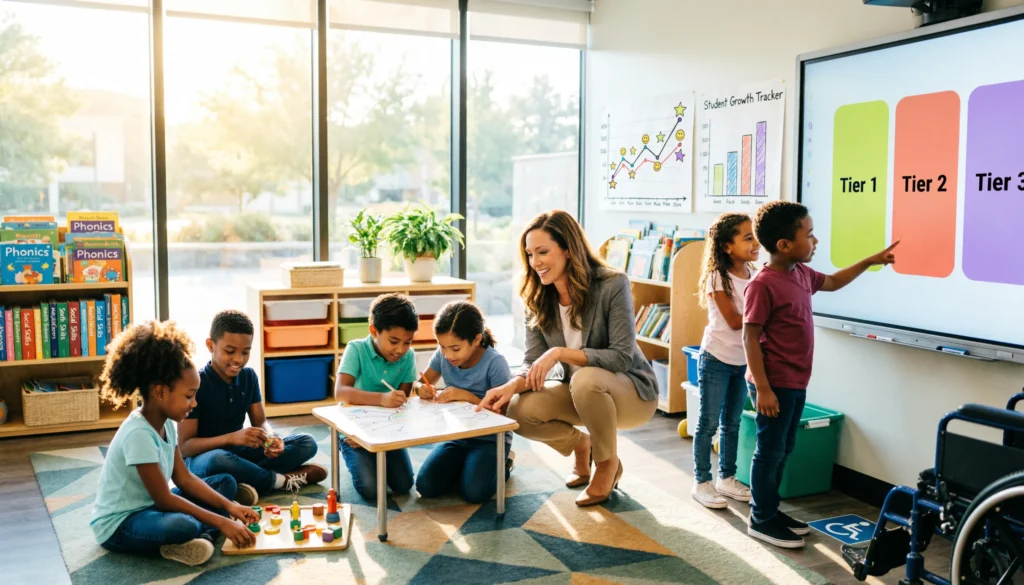
Definition:
RTI in school stands for Response to Intervention, an educational approach designed to identify students who are struggling academically or behaviorally, provide targeted support, and monitor progress to ensure success.
RTI is proactive, data-driven, and emphasizes early intervention before learning gaps widen.
Education today focuses not just on teaching, but on understanding each student’s unique needs. RTI is a cornerstone of this approach, bridging the gap between traditional instruction and personalized learning support.
Origin and Background of RTI
Response to Intervention (RTI) emerged in the United States in the early 2000s, largely as a response to the Individuals with Disabilities Education Act (IDEA) amendments of 2004. These reforms aimed to:
- Reduce unnecessary special education placements
- Identify learning difficulties early
- Implement evidence-based interventions
Originally rooted in special education, RTI quickly gained popularity across general education settings because of its proactive framework. Instead of waiting for a student to fail, RTI helps teachers provide the right support at the right time.
Key Milestones
| Year | Event |
|---|---|
| 2004 | IDEA amendments formally included RTI for identifying learning disabilities |
| 2005-2010 | Schools across the U.S. began implementing RTI frameworks |
| 2015-present | RTI has expanded into tiered behavioral and academic support models globally |
How RTI Works in Schools
RTI uses a tiered approach, typically divided into three levels:
Universal Instruction
- High-quality classroom teaching for all students
- Ongoing screening and assessments
- Focus on prevention and early detection
Targeted Interventions
- Small group instruction or support for students showing early signs of struggle
- Data collection to monitor effectiveness
- Adjustments based on student response
Intensive Interventions
- Individualized support for students with significant learning or behavioral difficulties
- Frequent progress monitoring
- Collaboration with specialists, such as school psychologists or special educators
Example in Practice:
A student struggling with reading comprehension in grade 2 may receive small-group tutoring (Tier 2). If progress is insufficient, they might receive individualized sessions with a reading specialist (Tier 3) while teachers continue monitoring Tier 1 performance for the whole class.
Benefits of RTI in Schools
RTI provides numerous advantages for both students and educators:
- Early Identification: Pinpoints learning difficulties before they become severe
- Personalized Support: Tailors interventions to individual student needs
- Data-Driven Decisions: Uses assessments to guide instruction
- Prevents Misdiagnosis: Reduces unnecessary special education placements
- Promotes Inclusive Learning: Supports students within general classrooms
Tip: Teachers often combine RTI with formative assessments to track academic growth week by week. 📊
Real-World Examples of RTI
Friendly Example:
Mrs. Khan notices that three students in her class struggle with fractions. She implements a small-group intervention with extra practice and visual aids. Over four weeks, two students improve significantly, while one receives additional one-on-one support.
Neutral Example:
A school implements RTI for all students reading below grade level. Data shows average improvement across Tier 2 groups, highlighting RTI’s effectiveness without dramatic storytelling.
Dismissive/Negative Tone Example:
Some parents complain that RTI “just labels children” without offering real solutions. While these concerns exist, proper RTI focuses on support, not stigmatization.
RTI vs. Similar Educational Terms
It’s easy to confuse RTI with other educational terms. Here’s a quick comparison:
| Term | Meaning | Difference from RTI |
|---|---|---|
| IEP | Individualized Education Program | RTI is preventive; IEP is for formally identified special education students |
| MTSS | Multi-Tiered System of Supports | MTSS is broader, covering academics, behavior, and social-emotional learning; RTI focuses mainly on academics |
| PBIS | Positive Behavioral Interventions and Supports | PBIS focuses on behavior; RTI includes both academic and behavioral tiers but is often more academic-centered |
Quick Tip: RTI often serves as the first step within MTSS frameworks. 🏫
Alternate Meanings of RTI
While in education RTI stands for Response to Intervention, other contexts use it differently:
- Right to Information (law/government)
- Radio Telephony Interface (telecommunications)
- Rapid Thermal Imaging (science/industry)
Professional Advice: In schools, always clarify the context to avoid confusion—especially with new staff or parents.
Implementing RTI in Your School
Successful RTI requires planning, communication, and collaboration:
Step 1: Screening & Assessment
- Conduct universal assessments for all students
- Identify those at risk early
Step 2: Tiered Support
- Apply Tier 1, Tier 2, and Tier 3 interventions based on data
- Regularly monitor progress
Step 3: Data-Driven Adjustments
- Document improvements or challenges
- Adjust interventions to maximize effectiveness
Step 4: Collaboration & Communication
- Teachers, specialists, and parents work together
- Keep families informed about progress
Pro Tip: Documenting RTI interventions thoroughly helps in evaluating efficacy and ensures compliance with educational standards.
Example RTI Intervention Table
| Student | Identified Need | Tier Level | Intervention | Duration | Outcome |
|---|---|---|---|---|---|
| Ayesha | Reading fluency | Tier 2 | Small-group guided reading | 4 weeks | Improved 15% |
| Bilal | Math problem-solving | Tier 3 | One-on-one tutoring | 6 weeks | Significant improvement |
| Sara | Spelling | Tier 1 | Classroom instruction | Ongoing | Meets grade-level expectations |
FAQs
1. Is RTI only for special education students?
No. RTI is designed for all students to identify struggles early, not just those in special education.
2. How often are students assessed in RTI?
Screening usually happens 3–4 times a year, while Tier 2 and Tier 3 students may be monitored weekly or biweekly.
3. Can RTI prevent learning disabilities?
RTI can’t prevent disabilities but can mitigate their impact through early intervention.
4. How long does RTI take?
It varies: Tier 2 interventions might last 4–6 weeks, while Tier 3 may extend longer depending on student progress.
5. Who implements RTI?
Classroom teachers, reading/math specialists, and sometimes school psychologists collaboratively implement RTI.
6. Does RTI replace IEPs?
No. RTI supports early intervention; IEPs are for formally identified special education students.
7. Are parents informed about RTI?
Yes. Transparent communication is critical. Schools often provide progress reports and meetings.
8. Can RTI help behavioral issues?
Yes, especially when integrated with MTSS or PBIS frameworks for behavior support.
Conclusion:
RTI is more than an educational acronym; it’s a proactive system that ensures every student gets the support they need. By combining early identification, targeted interventions, and continuous monitoring, RTI:
- Reduces learning gaps
- Supports inclusive education
- Promotes data-driven teaching
- Helps prevent unnecessary special education referrals
Practical Tip: Schools adopting RTI should prioritize collaboration, frequent progress monitoring, and flexible interventions tailored to individual student needs.
🌟 Embracing RTI means transforming classrooms into learning environments where every student can thrive.
Discover More Related Articles:

Sarah Williams is the passionate author behind WordNexy.com, dedicated to creating content that informs, inspires, and sparks curiosity. With a love for words and storytelling, she transforms ideas into meaningful articles that educate, entertain, and leave a lasting impression on every reader.