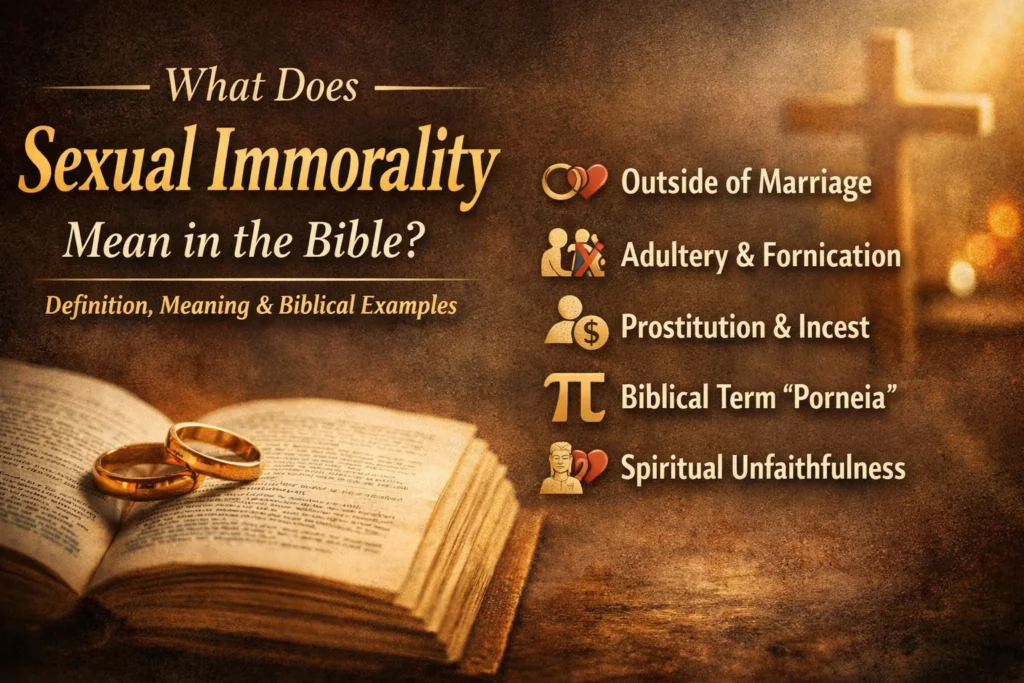
Definition
Sexual immorality in the Bible refers to any sexual behavior that occurs outside the boundaries of marriage between a husband and wife according to biblical teaching.
The phrase “sexual immorality” appears many times in the Bible and often raises questions for readers. What behaviors does it refer to? Why does the Bible speak about it so strongly?
Because of this, the concept of sexual immorality carries significant meaning in Christian theology and biblical ethics.
Understanding what the Bible means by sexual immorality helps readers interpret Scripture more clearly and see how biblical teachings approach relationships, purity, and moral conduct.
What Does Sexual Immorality Mean in the Bible?
The original Greek term often translated as sexual immorality is “porneia,” which broadly includes actions such as adultery, fornication, prostitution, and other forms of sexual activity considered sinful in biblical ethics.
In simple terms:
- Sexual immorality = sexual behavior outside God’s design for marriage
- It is frequently mentioned as something believers should avoid or flee from
- It is treated as both a moral and spiritual issue in Scripture
For example, in the New Testament, believers are encouraged to “flee from sexual immorality” and pursue holiness.
Origin and Biblical Language
The Greek Word “Porneia”
The most common biblical word translated as sexual immorality is porneia (πορνεία) in the original Greek text.
This word is the root of the modern English term “pornography.”
In biblical usage, porneia describes various types of sexual conduct considered immoral under biblical law.
Hebrew Terms in the Old Testament
In the Old Testament, similar ideas appear in Hebrew words related to unfaithfulness, adultery, and prostitution.
These terms were often used both:
- Literally – referring to sexual wrongdoing
- Symbolically – representing spiritual unfaithfulness to God
For example, prophets sometimes described idolatry as spiritual adultery.
Why the Bible Uses the Term
The Bible emphasizes sexual morality because it views sexual relationships as:
- Sacred within marriage
- Connected to covenant relationships
- Influential in spiritual life
Where Sexual Immorality Appears in the Bible
Old Testament References
Sexual morality laws appear throughout the Old Testament, particularly in the books of Leviticus and Deuteronomy.
These laws addressed behaviors such as:
- Adultery
- Incest
- Prostitution
- Sexual exploitation
The purpose was to establish ethical and social order within the community.
New Testament Teachings
The New Testament frequently warns against sexual immorality.
Some teachings emphasize that believers should:
- Avoid immoral behavior
- Honor marriage
- Practice self-control
Sexual immorality is often listed alongside other moral sins such as:
- Greed
- Idolatry
- Dishonesty
The focus is on living a holy and disciplined life.
Types of Sexual Immorality Mentioned in the Bible
Common Behaviors Included in the Term
According to traditional biblical interpretation, sexual immorality may include:
- Adultery – sexual relations with someone other than one’s spouse
- Fornication – sexual relations between unmarried people
- Prostitution – exchanging sex for money or goods
- Incest – sexual relations between close relatives
- Sexual exploitation – abuse or manipulation in sexual relationships
These behaviors are described as contrary to biblical moral teachings.
Why These Actions Are Addressed
Biblical teachings emphasize that sexual relationships should reflect:
- Commitment
- Faithfulness
- Respect
- Responsibility
Sexual immorality is seen as violating those principles.
Example Table: Sexual Immorality in Biblical Context
| Behavior | Description | Biblical Context |
|---|---|---|
| Adultery | Sexual relationship with someone other than a spouse | Considered a serious violation of marriage |
| Fornication | Sexual relations between unmarried individuals | Often included in the broader term “porneia” |
| Prostitution | Sexual activity in exchange for payment | Condemned in several passages |
| Incest | Sexual relationships among close relatives | Specifically prohibited in Old Testament law |
| Sexual exploitation | Using power or influence for sexual gain | Treated as morally wrong |
This table highlights how the Bible groups several behaviors under the umbrella of sexual immorality.
Real-World Usage of the Term
In Religious Teaching
Church leaders and theologians often use the phrase sexual immorality when discussing:
- Biblical morality
- Christian relationships
- Marriage teachings
- Spiritual discipline
In Everyday Conversations
The phrase might appear in discussions about:
- Religious values
- Faith-based lifestyle choices
- Ethical debates about sexuality
Example:
Friendly tone
“Many Christians believe the Bible teaches avoiding sexual immorality.”
Neutral tone
“The sermon discussed biblical warnings against sexual immorality.”
Critical or dismissive tone
“Some people feel the term sexual immorality is interpreted differently in modern society.”
Comparison With Related Biblical Terms
Understanding similar biblical terms can help clarify what sexual immorality means.
Sexual Immorality vs Adultery
| Term | Meaning |
|---|---|
| Sexual Immorality | Broad category covering many types of sexual sin |
| Adultery | Specific act of a married person being unfaithful |
Adultery is one type of sexual immorality, but the term is broader.
Sexual Immorality vs Lust
| Term | Meaning |
|---|---|
| Sexual Immorality | Physical sexual behavior outside marriage |
| Lust | Strong sexual desire, often considered sinful when uncontrolled |
Lust is often viewed as a heart or mindset issue, while sexual immorality involves actions.
Sexual Immorality vs Idolatry (Symbolic Use)
Sometimes the Bible uses sexual language symbolically.
| Term | Meaning |
|---|---|
| Sexual Immorality | Literal moral behavior |
| Spiritual Adultery | Metaphor for turning away from God |
In prophetic books, unfaithfulness to God is compared to adultery.
Alternate Interpretations and Discussions
Different Christian Interpretations
While most Christian traditions agree on the general concept, interpretations may vary slightly regarding:
- Dating relationships
- Cultural norms
- Application in modern society
Different denominations may emphasize different aspects of biblical teaching.
Historical Context
Biblical laws were written within ancient cultures where:
- Marriage structures were different
- Social norms were strict
- Communities were governed by religious law
Understanding the historical setting helps readers interpret the text responsibly.
Polite or Professional Ways to Discuss the Topic
Because the subject can be sensitive, it’s helpful to use respectful language.
Neutral Alternatives
Instead of saying:
- “sexual sin”
People may say:
- “biblical sexual ethics”
- “sexual conduct according to scripture”
- “moral teachings on relationships”
This approach keeps conversations respectful and thoughtful.
Practical Lessons Often Drawn From the Teaching
Many faith leaders emphasize positive principles rather than only prohibitions.
Common Lessons
- Value faithfulness in relationships
- Practice self-control
- Treat others with respect and dignity
- Honor the commitment of marriage
- Avoid behaviors that cause harm or exploitation
These principles are often presented as guidance for healthy relationships.
FAQs:
1. What does sexual immorality mean in biblical terms?
Sexual immorality generally refers to sexual activity outside the boundaries of marriage according to biblical teaching.
2. What is the Greek word for sexual immorality in the Bible?
The Greek word most often translated as sexual immorality is porneia, which refers broadly to immoral sexual behavior.
3. Is adultery considered sexual immorality in the Bible?
Yes. Adultery is one of the specific behaviors included under sexual immorality.
4. Why does the Bible warn against sexual immorality?
The Bible emphasizes sexual morality to promote faithfulness, respect, and spiritual integrity.
5. Does sexual immorality only appear in the New Testament?
No. The concept appears in both the Old and New Testaments, though the terminology may differ.
6. What is the difference between lust and sexual immorality?
Lust refers to internal desire, while sexual immorality usually refers to actions or behaviors.
7. Is sexual immorality used symbolically in the Bible?
Yes. Sometimes it is used metaphorically to describe spiritual unfaithfulness to God.
8. Do different Christian groups interpret sexual immorality differently?
Yes. While the general meaning is widely accepted, specific interpretations can vary between denominations.
Conclusion
Understanding what sexual immorality means in the Bible requires looking at both the language of Scripture and the broader moral teachings within it.
In biblical context, sexual immorality refers to sexual behavior that falls outside the moral framework established for marriage and faithful relationships. The term often translates the Greek word porneia, which includes several types of sexual conduct viewed as morally wrong in biblical ethics.
For readers studying Scripture, understanding this term helps clarify many biblical passages and offers insight into biblical perspectives on relationships and morality.
Discover More Related Articles:
- GBT Mean in Chat GPT :Explained for Students, Developers, and Users (2026)
- ASL Text Meaning: Definition and Modern Usage (2026)

James Anderson is an experienced content writer and language researcher who focuses on explaining word meanings, definitions, slang terms, and modern expressions. He writes for WordNexy.com, where his articles are designed to provide accurate meanings, practical usage examples, and easy-to-understand explanations for readers worldwide.