
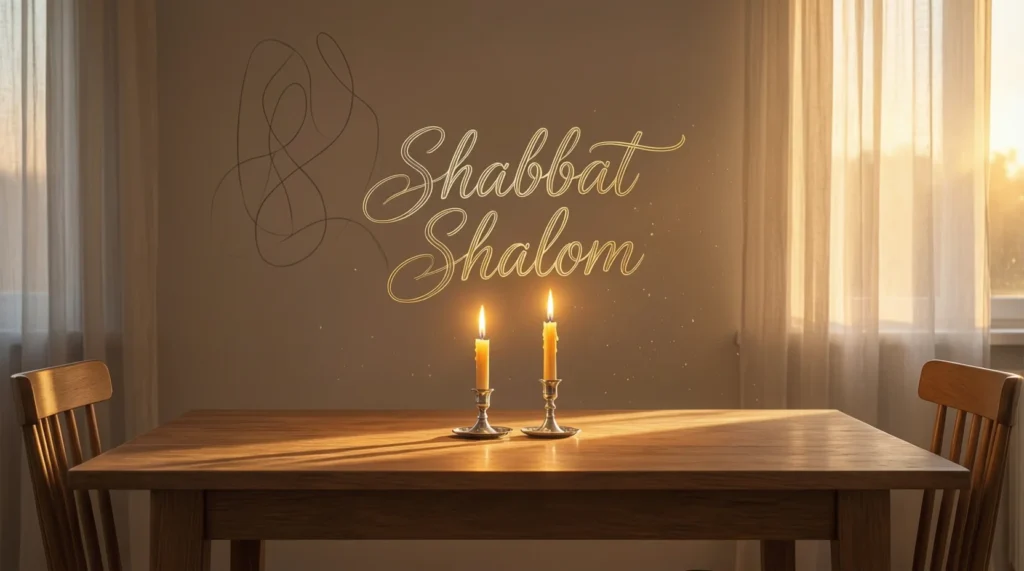
Shabbat Shalom means “Sabbath Peace” or more naturally in English, “Have a peaceful Sabbath.”
It is a traditional Hebrew greeting used to wish someone peace, rest, and well-being during Shabbat, the Jewish day of rest.
Shabbat Shalom is a phrase you may have heard in Jewish communities, movies, religious settings, or even on social media. It sounds warm, peaceful, and welcoming but what does Shabbat Shalom mean in English, and how is it actually used in real life?
In this in-depth guide, we’ll explore the meaning, origin, usage, tone, cultural significance, and modern-day relevance of Shabbat Shalom. Whether you’re learning out of curiosity, respect, faith, or conversation etiquette, this article will give you a complete, easy-to-understand explanation.
Understanding the Phrase “Shabbat Shalom”

Before diving deeper, let’s break the phrase down word by word:
- Shabbat (שַׁבָּת) → Sabbath / Day of Rest
- Shalom (שָׁלוֹם) → Peace, harmony, well-being
Together, Shabbat Shalom expresses a wish for peace, rest, and spiritual renewal during the Sabbath.
Unlike casual greetings, this phrase carries religious, cultural, and emotional meaning.
What Is Shabbat?
To fully understand Shabbat Shalom, it helps to know what Shabbat is.
What Is Shabbat in Judaism?
Shabbat is the Jewish day of rest, observed:
- From Friday sunset to Saturday night
- In remembrance of God resting on the seventh day of creation
- As a time for rest, prayer, family, and spiritual reflection
During Shabbat:
- Work is traditionally paused
- Families share meals
- Communities attend synagogue
- Technology and business are often set aside
Saying Shabbat Shalom acknowledges this sacred time.
Origin of “Shabbat Shalom”
Historical and Linguistic Roots
- Hebrew language dates back thousands of years
- Shalom appears throughout the Hebrew Bible (Tanakh)
- The phrase became widely used as a greeting and farewell related specifically to Shabbat
Cultural Evolution
Originally used in religious settings, Shabbat Shalom is now:
- Spoken in homes
- Shared in synagogues
- Written in texts, emails, and social media posts
- Used by both religious and secular Jewish communities
Its meaning has remained consistent: peace, rest, and goodwill.
How and When to Say Shabbat Shalom
Correct Timing
You can say Shabbat Shalom:
- From Friday afternoon onward
- Throughout Shabbat itself
- Often as both a greeting and a goodbye
Who Says It?
- Jewish friends, families, and communities
- Non-Jewish people wishing respect or goodwill
- Clergy, coworkers, or acquaintances in multicultural settings
It’s considered polite, respectful, and warm.
Tone and Emotional Meaning
Shabbat Shalom is almost always:
✅ Friendly
✅ Peaceful
✅ Respectful
✅ Positive
There is no negative or dismissive usage of the phrase. Unlike slang, it does not change meaning based on tone.
Real-Life Examples of Shabbat Shalom
Friendly Usage
“We’ll catch up next week. Shabbat Shalom! 😊”
Religious or Formal Context
“The rabbi greeted the congregation with Shabbat Shalom.”
Text Message Example
“Enjoy time with your family Shabbat Shalom ✨”
Workplace / Professional Courtesy
“Wishing you a restful weekend. Shabbat Shalom.”
Example
| Context | Example Sentence | Tone |
|---|---|---|
| Casual | “Have a great weekend Shabbat Shalom!” | Friendly |
| Religious | “Shabbat Shalom to all who gather here today.” | Formal |
| Text Message | “Lighting candles now. Shabbat Shalom 🕯️” | Warm |
| Professional | “Wishing you peace and rest this Shabbat.” | Polite |
Why Is Shabbat Shalom So Popular?
Key Reasons for Its Widespread Use
- Deep spiritual meaning
- Universally positive message
- Easy to say and remember
- Represents peace and rest values everyone appreciates
- Widely shared on social media every Friday
It has become a cultural bridge, even among non-Hebrew speakers.
Comparison: Shabbat Shalom vs Similar Terms
| Phrase | Meaning in English | When Used |
|---|---|---|
| Shabbat Shalom | Peaceful Sabbath | During Shabbat |
| Shalom | Hello / Goodbye / Peace | Any time |
| Gut Shabbes (Yiddish) | Good Sabbath | Informal, Ashkenazi |
| Good Shabbat | English equivalent | Casual English usage |
| Shavua Tov | Good week | After Shabbat ends |
Is There an Alternate Meaning?
No.
Shabbat Shalom has no slang or alternate meanings.
It is always:
- Literal
- Respectful
- Culturally specific
This consistency is one reason it remains meaningful across generations.
Polite and Professional Alternatives
If you’re unsure about using Hebrew terms, here are respectful alternatives:
- “Have a peaceful Sabbath”
- “Wishing you a restful Shabbat”
- “Enjoy a peaceful weekend”
- “Warm wishes for Shabbat”
These are especially useful in formal emails or professional settings.
Common Usage Tips (Do’s and Don’ts)
✅ Do:
- Use it respectfully
- Say it during the correct time (Friday–Saturday)
- Use it as a greeting or farewell
❌ Don’t:
- Use it sarcastically
- Use it outside Shabbat casually
- Treat it as slang
Shabbat Shalom in Modern Culture
Today, Shabbat Shalom appears in:
- Instagram captions
- WhatsApp messages
- Greeting cards
- Community announcements
- Movies and TV shows
It symbolizes slowing down in a fast-paced world a message that resonates globally.
FAQs
1. What does Shabbat Shalom literally mean?
It literally means “Sabbath peace.”
2. Is Shabbat Shalom religious?
Yes, but it’s also used culturally and socially.
3. Can non-Jewish people say Shabbat Shalom?
Yes, when said respectfully, it’s appreciated.
4. When should you say Shabbat Shalom?
From Friday evening to Saturday night.
5. Is Shabbat Shalom formal or casual?
It works in both settings.
6. What’s the difference between Shalom and Shabbat Shalom?
Shalom is general; Shabbat Shalom is specific to Shabbat.
7. Can I text Shabbat Shalom?
Absolutely it’s very common.
8. Is Shabbat Shalom ever inappropriate?
Only if used mockingly or outside its context.
Conclusion
In summary, Shabbat Shalom is more than just a greeting it is a heartfelt wish for peace, rest, and spiritual renewal during the Jewish Sabbath. Rooted in centuries of tradition, this phrase bridges faith, culture, and everyday life, making it meaningful for both religious and secular contexts.
Whether spoken in person, sent in a text, or shared on social media, using Shabbat Shalom thoughtfully shows respect, kindness, and cultural awareness. By understanding its meaning, timing, and tone, anyone can join in this timeless tradition and share a message of harmony and goodwill.
Search More Related Articles :
- RSVP Meaning in English: Complete Guide with Origin and Examples (2026)
- What Does LOI Stand For in Business Transactions? (2026)

Sarah Williams is the passionate author behind WordNexy.com, dedicated to creating content that informs, inspires, and sparks curiosity. With a love for words and storytelling, she transforms ideas into meaningful articles that educate, entertain, and leave a lasting impression on every reader.

