In the Bible, “sojourn” means to live temporarily in a place that is not one’s permanent home, often as a foreigner or resident stranger, while depending on God for protection, provision, and direction.
The word sojourn appears throughout the Bible, especially in the Old Testament, and it carries far more meaning than simply traveling or visiting a place. When Scripture talks about sojourning, it is describing a way of life marked by temporary residence, faith, humility, and trust in God.
From Abraham living in tents to the Israelites dwelling in Egypt, sojourning shapes some of the Bible’s most important stories. Understanding what sojourn means in the Bible helps readers grasp deeper spiritual themes such as belonging, obedience, and life as a journey rather than a destination.
What Does “Sojourn” Mean in the Bible?
In biblical terms, to sojourn means to live in a land temporarily without permanent ownership or full citizenship.
A sojourner is someone who:
- Lives among others but is not native to the land
- Stays for a limited or uncertain period
- Depends on God and the laws or kindness of the host community
In Scripture, sojourning is not accidental. It is often part of God’s plan to shape faith and character.
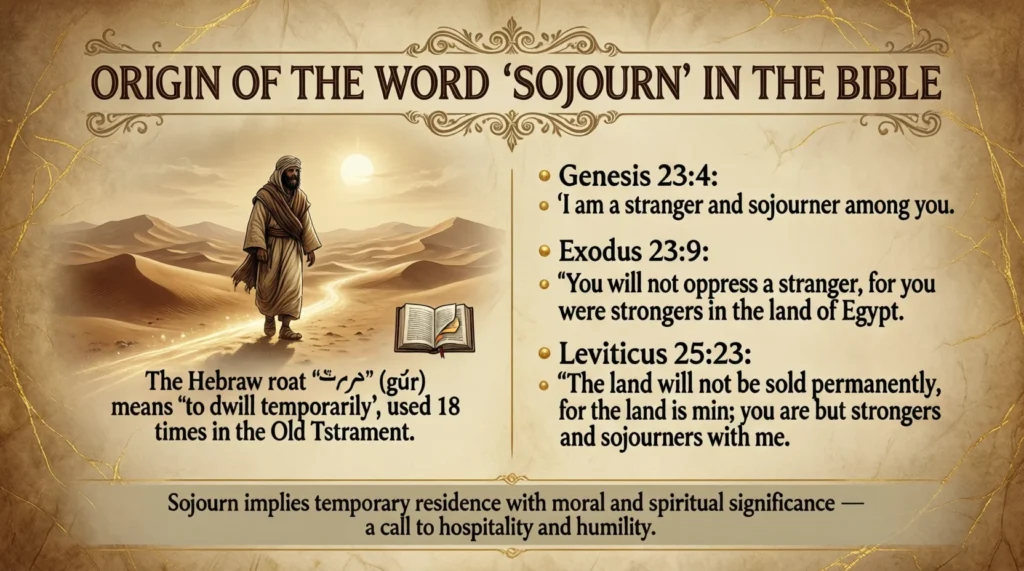
Origin of the Word “Sojourn” in the Bible
Hebrew Meaning in the Old Testament
The primary Hebrew word translated as sojourn is gûr.
This word means:
- To live temporarily
- To dwell as a stranger
- To reside without land ownership
A related Hebrew term, ger, refers to a resident foreigner who lived among the Israelites but was not ethnically Israelite.
Example from Scripture:
“I am a stranger and a sojourner with you.” (Genesis 23:4)
This shows that even God’s chosen people often lived without permanent settlement.
Greek Meaning in the New Testament
In the New Testament, Greek words such as paroikos and parepidēmos express similar ideas.
These words describe:
- A temporary resident
- A visitor passing through
- Someone living outside their true homeland
The New Testament often applies this idea spiritually to believers.
Where Is “Sojourn” Used in the Bible?
The concept of sojourning appears repeatedly in Scripture, especially in historical and legal passages.
Notable examples include:
- Abraham sojourning in Canaan and Egypt
- Jacob and his family sojourning in Egypt
- Laws commanding Israel to protect sojourners
- Believers described as strangers in the world
Sojourning is both a physical reality and a spiritual symbol.
Biblical Examples of Sojourn With Context
Abraham’s Sojourn
Abraham lived in tents and moved frequently, trusting God’s promise of a land he did not yet own.
This example reflects faith and patience.
“By faith he sojourned in the land of promise, as in a strange country.” (Hebrews 11:9)
Israel’s Sojourn in Egypt
Israel entered Egypt as temporary residents due to famine. Over time, this sojourn became long and difficult.
This example shows how a temporary stay can turn into hardship.
“The time that the children of Israel lived in Egypt was four hundred and thirty years.” (Exodus 12:40)
God’s Laws About Sojourners
God instructed Israel to treat sojourners with fairness and compassion.
“You shall love the stranger, for you were strangers in the land of Egypt.” (Deuteronomy 10:19)
This shows God’s concern for outsiders and the vulnerable.
Example
| Bible Passage | Who Is Sojourning | Location | Meaning in Context |
|---|---|---|---|
| Genesis 12:10 | Abraham | Egypt | Temporary stay during famine |
| Genesis 47:4 | Jacob’s family | Egypt | Living temporarily for survival |
| Leviticus 19:34 | Foreigners | Israel | Protected resident strangers |
| Psalm 39:12 | The Psalmist | Earth | Life viewed as temporary |
| 1 Peter 2:11 | Believers | World | Spiritual strangers |
The Spiritual Meaning of Sojourn in the Bible
Sojourning in the Bible often represents life itself.
Scripture teaches that:
- Earth is not the final home
- God’s people are passing through
- True belonging is found with God
“For here we do not have a lasting city, but we seek the one to come.” (Hebrews 13:14)
This perspective encourages humility and faith rather than attachment to worldly security.
How the Word “Sojourn” Is Used Today
While not common in everyday conversation, sojourn is still used in formal, literary, and religious contexts.
Modern examples:
- “They enjoyed a short sojourn in Italy.”
- “Her sojourn abroad influenced her worldview.”
- “The missionary’s sojourn among the villagers shaped his faith.”
The meaning remains consistent with its biblical sense of temporary residence.
Sojourn vs Similar Biblical Terms
| Term | Meaning | How It Differs |
|---|---|---|
| Sojourn | Temporary residence | Emphasizes impermanence |
| Dwell | To live in a place | Can imply permanence |
| Exile | Forced removal | Often involuntary |
| Pilgrim | Faith traveler | Focuses on spiritual journey |
| Stranger | Non native resident | Describes social status |
Alternate Meanings of Sojourn
Outside the Bible, sojourn simply means:
- A temporary stay
- A short period of residence
Biblical usage adds spiritual depth, focusing on faith, obedience, and dependence on God.
Professional Alternatives to the Word “Sojourn”
If you need simpler or more modern wording, consider:
- Temporary stay
- Short residence
- Time spent living
- Brief period abroad
However, sojourn remains the most accurate term in biblical studies.
FAQs
What does sojourn literally mean in the Bible?
It means to live temporarily as a foreigner without permanent ownership.
Is a sojourner the same as an immigrant?
No. A sojourner usually intends to stay temporarily, while an immigrant seeks permanence.
Why does the Bible focus so much on sojourners?
To teach compassion, humility, and reliance on God.
What Hebrew word means sojourn?
The main Hebrew word is gûr.
Are Christians described as sojourners?
Yes. Believers are called strangers and pilgrims in the world.
Was sojourning always voluntary?
No. Some sojourns happened due to famine, conflict, or crisis.
Is sojourning negative in the Bible?
Not necessarily. It can represent faith, growth, or testing.
What lesson does sojourning teach today?
Life is temporary, and trust should be placed in God rather than possessions.
Conclusion:
To sojourn in the Bible means far more than moving from place to place. It reflects temporary living, spiritual dependence, and hope in God’s promises.
Key takeaways:
- Sojourning highlights life’s temporary nature
- God values kindness toward outsiders
- Faith often grows during uncertain seasons
Understanding the biblical meaning of sojourn brings deeper clarity to Scripture and offers a powerful reminder that this world is not our final home.
Search More Related Articles :
- RSVP Meaning in English: Complete Guide with Origin and Examples (2026)
- What Does LOI Stand For in Business Transactions? (2026)

Amanda Lewis is a professional content writer and word-meaning researcher who specializes in explaining definitions, slang, abbreviations, and modern language terms. She writes for WordNexy.com, where she creates clear, accurate, and reader-friendly articles to help users understand word meanings and proper usage. Her work is especially useful for students, writers, and online readers seeking quick and reliable explanations.