Definition:
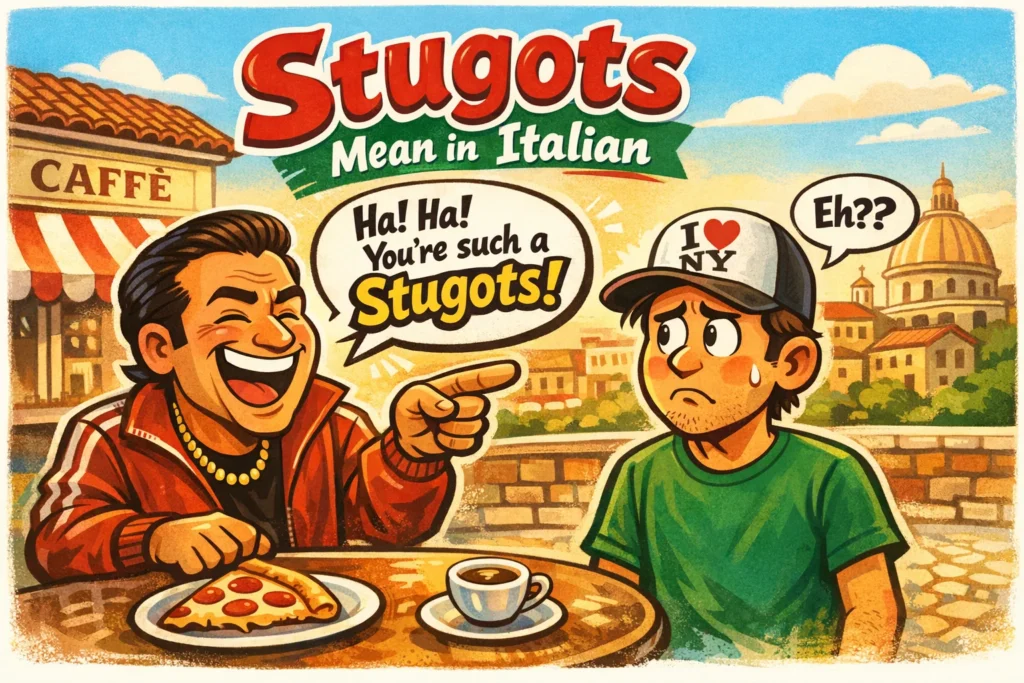
Stugots is a slang term that originated in Italian-American communities and is often used to express disrespect, disdain, or mockery. While it sounds Italian, it is actually a corruption of Italian words and is widely recognized in pop culture, especially through comedy and television.
Have you ever heard someone exclaim “stugots!” in a movie, a TV show, or even among friends, and wondered what it actually means? At first glance, it might sound Italian and that’s not entirely wrong but the story behind this word is far more colorful.
“Stugots” is a slang term that originated in Italian-American communities, often used to tease, mock, or show mild disrespect. It’s playful, humorous, and sometimes a little irreverent, making it a favorite in comedy, pop culture, and casual conversation.
In this guide, we’ll break down everything you need to know about what “stugots” means, where it comes from, how it’s used, and even polite alternatives you can use in professional settings. By the end, you’ll not only understand this quirky slang term but also know exactly how to use it (or avoid it!) in context.
Origin of “Stugots”
“Stugots” is not a formal Italian word. Its roots are tied to Italian-American slang, primarily from communities in New York and New Jersey. It gained popularity in the 20th century through pop culture, notably in comedy and shows that depicted Italian-American life.
- Italian Origins: The term is believed to come from the Italian word “stugazzo” or “stronzio”, both of which can carry vulgar or crude meanings. However, it has been Anglicized into “stugots” for easier pronunciation in English-speaking environments.
- Pop Culture Popularity: Many people recognize “stugots” from shows like The Sopranos or comedy sketches featuring Italian-American characters, where it is used humorously or as a mild insult.
In essence, “stugots” is more Americanized slang than authentic Italian. It’s a great example of how languages evolve in immigrant communities.
How “Stugots” Is Used
The meaning of “stugots” depends heavily on context and tone. Generally, it conveys:
- Disrespect or mockery: To call someone “stugots” can imply that they are foolish or not to be taken seriously.
- Humor: Often used in jokes, playful teasing, or comedic skits.
- Dismissive tone: It can express contempt or frustration without being overtly offensive.
Tone Variations:
| Tone | Meaning/Use | Example Sentence |
|---|---|---|
| Friendly | Playful teasing among friends | “You forgot your wallet again, stugots! 😂” |
| Neutral | Mild insult or mockery | “He thinks he’s tough, but he’s a stugots.” |
| Negative/Dismissive | Strong contempt, disrespect | “Don’t listen to him—he’s just a stugots.” |
Examples of “Stugots” in Context
Here’s how you might encounter the word in real-world scenarios:
- Friendly/Playful:
“Come on, stugots! You can’t mess up the order again!”
(Used among friends jokingly.) - Neutral/Amusing:
“Tony thinks he’s the boss, but he’s a stugots.”
(Expressing light-hearted mockery.) - Negative/Dismissive:
“I don’t trust him. He’s a real stugots.”
(Used in a more serious or critical tone.)
Notice how the context and tone dramatically affect how “stugots” is perceived.
Comparison with Related Terms
Several Italian or Italian-American slang terms share similarities with “stugots,” though subtle differences exist:
| Term | Meaning | Usage Context |
|---|---|---|
| Stugazzo | Crude or vulgar expression (Italian origin) | Less common in English, more authentic Italian |
| Stronzo | Literally “asshole,” vulgar insult | Stronger insult than “stugots” |
| Schmo | Fool, simpleton (Yiddish/Italian-American) | Lighthearted teasing, often humorous |
| Goomba | Italian-American slang for a friend or mobster | Friendly or neutral; often affectionate |
Compared to these terms, “stugots” is milder than stronzo but more playful than schmo.
Alternate Meanings and Nuances
While primarily used as slang for mockery or insult, “stugots” can occasionally carry subtle secondary meanings:
- Literal interpretation: Some suggest it could relate to male anatomy in its original Italian form but in everyday usage, this is rarely the focus.
- Comedic exaggeration: Often exaggerated for humor in movies or skits.
This versatility makes “stugots” a flexible term in casual conversation, especially in comedy.
Polite or Professional Alternatives
If you want to convey a similar sentiment without slang or rudeness, consider these options:
- Silly person / joker – neutral and friendly
- Fool / silly goose – playful, non-offensive
- Unreliable person / irresponsible – formal and descriptive
These can replace “stugots” in writing, professional settings, or polite conversation.
Usage Tips
- Context matters: Avoid using “stugots” in formal settings or with people who may take offense.
- Tone is key: The word can be playful or insulting depending on your delivery.
- Pop culture awareness: Many people recognize the word through media, so referencing it humorously can strengthen cultural connection.
- Not authentic Italian: Use it as Italian-American slang rather than standard Italian.
Example Table: “Stugots” Usage Across Tones
| Tone | Example Dialogue | Interpretation |
|---|---|---|
| Friendly | “Hey stugots, save me a slice of pizza!” | Light teasing among friends |
| Neutral | “Don’t be a stugots, listen to the plan.” | Mild criticism or instruction |
| Negative/Dismissive | “Ignore him, he’s a stugots.” | Disdain or contempt |
| Comedic/Exaggerated | “This stugots thinks he’s a chef!” | Humorously mocking |
FAQs
- Is “stugots” a real Italian word?
No, it is Italian-American slang derived from Italian but not used in Italy in everyday language. - Is “stugots” offensive?
It can be, depending on tone. Often it is humorous or playful, but context matters. - Can I use “stugots” in professional settings?
No, it is informal slang best reserved for casual conversation or comedic contexts. - What is the origin of “stugots”?
It comes from Italian-American communities, influenced by Italian words like “stugazzo” or “stronzio.” - How popular is “stugots” today?
It remains popular in pop culture, especially in TV shows and comedy depicting Italian-American life. - Are there polite alternatives to “stugots”?
Yes, phrases like “silly person,” “joker,” or “fool” work well. - Is it used only by men?
No, it can be used to tease or mock anyone, regardless of gender. - Does it appear in media?
Yes, it is commonly heard in shows like The Sopranos and Italian-American comedy sketches.
Conclusion:
“Stugots” is more than just a quirky word it’s a window into Italian-American culture, humor, and language evolution. While it sounds Italian, its true identity lies in playful slang, often used to tease, mock, or express mild disdain depending on context and tone.
By understanding its origins, nuances, and proper usage, you can confidently recognize and use “stugots” in the right context, whether for humor, casual chat, or cultural references.
Discover More Related Articles:
- A Spread Mean in Sports Betting: How to Read and Use the Spread in 2026
- Exhortation Mean in the Bible: Encouragement Through Scripture in 2026

James Anderson is an experienced content writer and language researcher who focuses on explaining word meanings, definitions, slang terms, and modern expressions. He writes for WordNexy.com, where his articles are designed to provide accurate meanings, practical usage examples, and easy-to-understand explanations for readers worldwide.