Definition
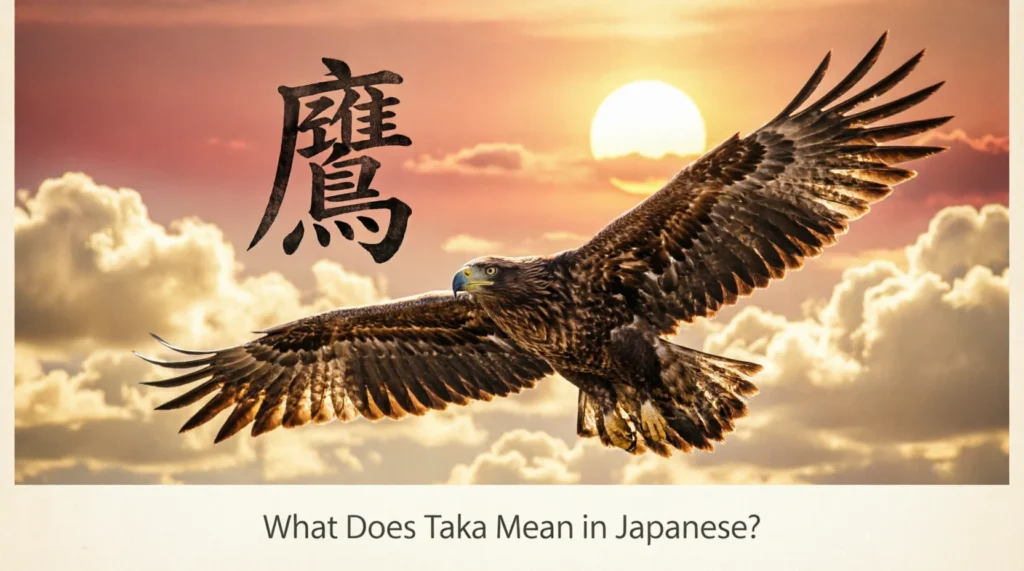
“Taka” (鷹) in Japanese most commonly means “hawk,” referring to a bird of prey.
It can also appear in names, cultural symbolism, and less commonly as slang or alternate readings depending on context.
If you’ve come across the word “taka” in anime, Japanese names, or even online conversations, you might be wondering what exactly does it mean?
Here’s the thing: Japanese words often have multiple meanings depending on context, kanji (characters), and pronunciation. And taka is one of those fascinating words that can shift meaning depending on how it’s used.
In this guide, we’ll break it all down in a clear, friendly, and practical way so whether you’re learning Japanese, writing content, or just curious, you’ll fully understand what “taka” means in Japanese, how it’s used, and how to use it correctly yourself.
🏯 What Does “Taka” Mean in Japanese?
The most widely accepted meaning of taka is:
- 鷹 (taka) → hawk
🔎 Why is this important?
In Japanese culture, hawks symbolize:
- Strength 💪
- Sharp vision 👁️
- Intelligence 🧠
- Nobility 👑
They are often associated with samurai values and success, making the word feel powerful and positive.
📌 Example:
- 鷹が空を飛んでいる。
Taka ga sora o tonde iru.
👉 “A hawk is flying in the sky.”
2. 👤 “Taka” in Japanese Names

5
“Taka” is very common in Japanese names, especially for males.
🧾 It can come from different kanji:
| Kanji | Meaning | Usage |
|---|---|---|
| 鷹 | Hawk | Strong, noble |
| 高 | Tall / High | Ambitious |
| 貴 | Precious / Valuable | Respectful |
| 孝 | Filial piety | Traditional virtue |
📌 Examples:
- Takahiro (高広) → “wide and noble”
- Takashi (隆 / 孝 / 貴) → “prosperous” or “respected”
- Taka (nickname) → Short form of longer names
👉 Important: The meaning changes depending on the kanji used!
3. 💬 “Taka” in Modern Usage or Slang
Unlike some Japanese words, “taka” is not commonly used as slang in everyday conversation.
However, you may see it:
- As a username or nickname
- In anime, manga, or gaming
- As part of fictional group names
🎮 Example:
In anime, a group or character might be named “Taka” to symbolize:
- Power ⚔️
- Leadership 👑
- Sharp instincts 🦅
📊 Example Usage Table
| Context | Japanese | Meaning | Tone |
|---|---|---|---|
| Nature | 鷹 (taka) | Hawk | Neutral |
| Name | 高 / 貴 / 孝 | High / Noble / Valuable | Positive |
| Nickname | Taka | Short name | Friendly |
| Symbolism | 鷹 | Strength / Power | Strong |
🧠 Origin and Cultural Significance
🏹 Historical Roots
The word taka has deep roots in Japanese history.
- Falconry (鷹狩り / takagari) was popular among samurai and nobles
- Hawks were used for hunting and sport
- Owning a hawk was a symbol of status and discipline
🏯 Cultural Meaning
In traditional beliefs:
- A hawk represents good fortune
- Seeing a hawk in dreams is considered lucky
- It reflects focus and determination
🆚 Comparison with Related Japanese Words
Understanding similar words helps avoid confusion.
| Word | Meaning | Difference |
|---|---|---|
| 鷹 (taka) | Hawk | Strong, noble bird |
| 鳥 (tori) | Bird | General term |
| 鷲 (washi) | Eagle | Larger, more powerful bird |
| 鳩 (hato) | Pigeon | Peaceful, gentle |
👉 Tip: Use taka only when referring specifically to a hawk, not birds in general.
🔄 Alternate Meanings of “Taka”
Although less common, taka can have other meanings depending on context:
1. 💰 Not Japanese, but Confusing
- In Bangladesh, “taka” is the currency
👉 Not related to Japanese at all!
2. 🔊 Sound or Phonetic Use
Sometimes used in:
- Music beats (like “ta-ka ta-ka”)
- Creative writing or sound effects
💡 Usage Tips (Very Important)
✅ When to Use “Taka”
- Talking about a hawk
- Referring to a Japanese name
- Symbolizing strength or nobility
❌ When NOT to Use It
- As everyday slang (it’s not common)
- To mean general “bird”
- Without knowing the correct kanji in names
😊 Tone & Context Examples
🟢 Friendly Tone
- “Your name Taka sounds so cool! 😄”
⚪ Neutral Tone
- “Taka means hawk in Japanese.”
🔴 Strong / Symbolic Tone
- “He’s like a taka—focused and powerful.”
🗣️ Polite or Professional Alternatives
If you want to sound more formal:
- Instead of: “Taka means hawk”
- Say: “The Japanese term ‘taka’ refers to a hawk, a bird often associated with strength and nobility.”
❓ FAQs
1. What does “taka” literally mean in Japanese?
It literally means “hawk” (鷹).
2. Is “taka” a common Japanese word?
Yes, but it’s mainly used in names and cultural references, not in everyday conversation.
3. Is “taka” used in anime?
Yes! It’s often used for character names or group names to represent strength and power.
4. Does “taka” have multiple meanings?
Yes. Its meaning can change depending on the kanji used, especially in names.
5. Is “taka” a male or female name?
It is mostly male, but it can be unisex depending on the context.
6. Is “taka” slang in Japanese texting?
No, it is not commonly used as slang in Japanese.
7. What does “taka” mean in Japanese culture?
It symbolizes power, focus, intelligence, and high status.
8. How do you pronounce “taka”?
It is pronounced TAH-kah, with two clear syllables.
🧾 Conclusion
In simple terms, “taka” in Japanese most commonly means “hawk” (鷹) a powerful symbol of strength, sharp vision, and nobility. While it’s not widely used in everyday conversation, it appears frequently in names, cultural references, and anime, where it often represents leadership and focus.
The meaning of “taka” can also change depending on the kanji used, especially in names, giving it deeper and more personalized interpretations.
If you remember one thing, let it be this:
“Taka” is a powerful word rooted in tradition, representing sharp vision, strength, and high status in Japanese culture.
Discover More Related Articles:
- A Spread Mean in Sports Betting: How to Read and Use the Spread in 2026
- Exhortation Mean in the Bible: Encouragement Through Scripture in 2026

James Anderson is an experienced content writer and language researcher who focuses on explaining word meanings, definitions, slang terms, and modern expressions. He writes for WordNexy.com, where his articles are designed to provide accurate meanings, practical usage examples, and easy-to-understand explanations for readers worldwide.