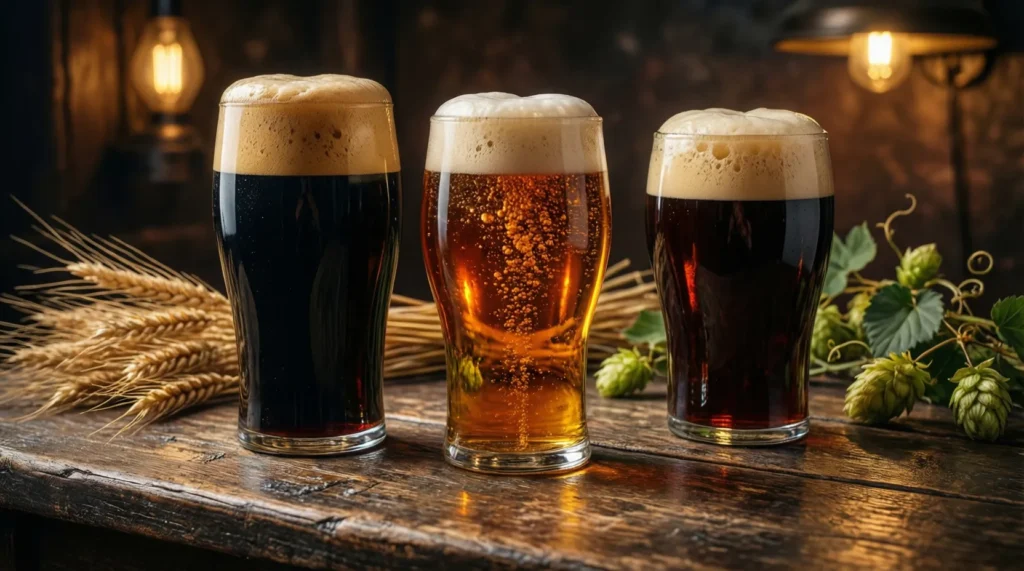
In beer terminology, imperial refers to a style or version of a beer that is stronger in alcohol content, flavor, and body than its standard counterpart. Imperial beers usually have a higher alcohol by volume and richer, more intense characteristics.
When you pick up a bottle of beer and see the word “The Meaning of Imperial in Beer” on the label, you might wonder what it really means. Is it about strength, style, or just a fancy marketing term? In the world of craft beer, imperial signals boldness, higher alcohol content, and richer flavor.
These beers are designed to stand out, offering a more intense and memorable experience than their standard counterparts.
If you have ever picked up a beer bottle labeled imperial and wondered what it actually means, you are not alone. This term appears often in craft beer and specialty brews, and understanding it can completely change how you choose and enjoy beer.
From the famous Russian Imperial Stout to modern imperial IPAs, these brews have a fascinating history and a unique place in beer culture. Understanding what imperial means can help you choose the right beer, appreciate complex flavors, and enjoy every sip with confidence.
Origin of the Term Imperial in Beer
The word imperial in beer comes from history rather than modern marketing. It dates back to the eighteenth and nineteenth centuries when breweries created stronger beers for royalty and imperial courts.
One of the earliest and most famous examples is the Russian Imperial Stout. English brewers made these beers specifically for the Russian royal family. To survive long sea journeys, the beers were brewed with higher alcohol content and stronger flavors. These qualities also made them luxurious and memorable.
Over time, the term imperial became associated with beers that were powerful, rich, and premium. Today, brewers use it to signal a beer that goes beyond the standard version.
Usage of Imperial in Modern Beer
In modern beer culture, imperial means the beer is more intense in nearly every way. It usually has more alcohol, stronger flavor, and a fuller mouthfeel.
Common characteristics of imperial beers include the following.
Higher alcohol content, often seven percent or higher
Fuller and heavier body
More pronounced malt or hop flavors
Longer lasting finish and aroma
Better aging potential for some styles
When you see imperial on a label, it is a signal that the beer is designed to be savored rather than casually consumed.
Examples
The table below shows popular imperial beer styles and what makes them special.
| Beer Style | Typical Alcohol Content | Common Flavor Notes | Drinking Experience |
|---|---|---|---|
| Imperial Russian Stout | Nine to twelve percent | Chocolate, coffee, roasted malt | Rich and warming |
| Imperial IPA | Seven to ten percent | Citrus, pine, strong hops | Bold and bitter |
| Imperial Porter | Eight to ten percent | Caramel, cocoa, dark malt | Smooth and heavy |
| Imperial Pilsner | Six to eight percent | Crisp, slightly sweet | Strong but clean |
| Imperial Wheat Ale | Seven to nine percent | Fruity, spicy, smooth | Bright yet powerful |
Examples
Friendly tone
This imperial stout is rich and warming and perfect for slow sipping on a cold evening.
Neutral tone
The imperial IPA has a higher alcohol content and a stronger hop profile than a regular IPA.
Negative or dismissive tone
Some drinkers find imperial beers too heavy for casual or daytime drinking.
Comparison With Related Beer Terms
Imperial is often confused with other beer terms. Here is how it compares.
Double
Double beers are similar in strength and are often used interchangeably with imperial. However, double focuses more on increased ingredients, while imperial emphasizes strength and richness.
Strong
Strong simply means higher alcohol content. It does not always indicate complexity or a specific brewing style like imperial does.
Extra Strong
This is mainly a marketing term and does not follow consistent brewing standards. Imperial is more widely recognized in craft beer culture.
Session
Session beers are the opposite of imperial beers. They are lower in alcohol and meant for longer drinking sessions.
Alternate Meanings of Imperial
Outside of beer, imperial has other meanings.
Outside of beer, the British imperial measurement system is another meaning of imperial.
In historical contexts, imperial often describes something related to emperors or empires.
For branding purposes, imperial can suggest premium quality or luxury.
In beer, however, imperial almost always refers to strength, richness, and intensity.
Polite and Professional Alternatives
If you want to avoid using the word imperial, especially in menus or formal writing, you can use these alternatives.
High alcohol content
Full bodied
Bold or robust
Special reserve
Extra rich
Example sentence
This full bodied stout delivers a deep and satisfying flavor experience.
FAQs
What is an imperial beer
An imperial beer is a stronger and more flavorful version of a standard beer style.
Why are some beers called imperial
The term comes from beers originally brewed for royalty and imperial courts.
How strong are imperial beers
Most imperial beers range from seven percent alcohol and higher.
Is imperial the same as double
They are similar but not identical. Imperial often emphasizes richness and tradition.
Can any beer style be imperial
Many styles can be imperial, especially stouts, porters, IPAs, and wheat beers.
How should imperial beers be consumed
They are best enjoyed slowly to appreciate their complex flavors.
Are imperial beers always bitter
No. Some are bitter, while others are sweet, malty, or smooth.
Can imperial beers be aged
Yes. Many imperial stouts and porters improve with time.
Conclusion
Understanding what imperial means in beer helps you choose the right brew for the right moment. Imperial beers are stronger, richer, and more complex than standard versions. They have historical roots, bold flavors, and are best enjoyed slowly.
If you enjoy deep flavors and powerful beer experiences, imperial beers are worth exploring. Just remember that their strength calls for moderation and appreciation.
Search More About

Sarah Williams is the passionate author behind WordNexy.com, dedicated to creating content that informs, inspires, and sparks curiosity. With a love for words and storytelling, she transforms ideas into meaningful articles that educate, entertain, and leave a lasting impression on every reader.