Definition
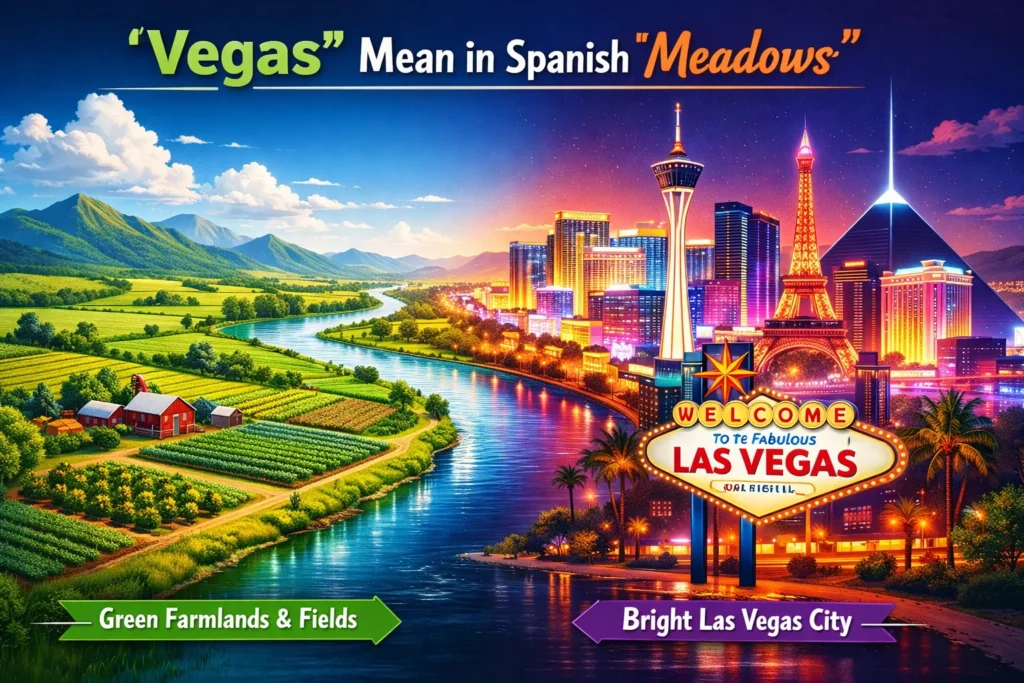
“Vegas” in Spanish is the plural form of “vega,” which means fertile plains, meadows, or lowlands especially land near a river that is rich and suitable for agriculture.
Have you ever wondered what “Vegas” really means in Spanish? While most people instantly think of neon lights, casinos, and the bustling streets of Las Vegas, the original Spanish word tells a very different story 🌿. In Spanish, “vegas” refers to fertile plains or meadows, often found near rivers where the soil is rich and ideal for farming.
This meaning takes us back to nature, agriculture, and geography, long before the city in Nevada made the term famous worldwide. Understanding the word “vegas” not only gives insight into the Spanish language but also connects us to the historical and natural roots behind the names we use today.
🌄 Understanding “Vegas” in Spanish
If you’ve ever wondered “what does vegas mean in Spanish,” the answer is surprisingly simple and deeply connected to nature.
In Spanish, “vegas” refers to multiple fertile lands or plains, typically located near rivers where the soil is rich and ideal for farming. These areas are often green, lush, and full of life 🌿.
👉 Think of:
- Meadows with fresh grass
- River valleys with crops growing
- Lowlands that flood occasionally and enrich the soil
So, while many people associate “Vegas” with bright lights and casinos, the original Spanish meaning is peaceful, natural, and agricultural.
🧠 Word Breakdown: Vega vs. Vegas
| Word | Language | Meaning | Usage |
|---|---|---|---|
| Vega | Spanish | A fertile plain or meadow | Singular form |
| Vegas | Spanish | Multiple fertile plains | Plural form |
| Vegas (English context) | English | Short for Las Vegas | Place name |
📜 Origin of the Word “Vegas”
The word “vega” comes from Vulgar Latin (a form of spoken Latin), and over time it became part of standard Spanish vocabulary.
Historical Roots:
- Derived from agricultural terminology
- Used to describe river-fed fertile land
- Common in Spain and Latin America
In older times, identifying “vegas” was important because:
- These lands were essential for farming 🌾
- Communities depended on them for survival
- They were considered valuable and productive areas
🌎 Why Is “Vegas” So Popular?

The global popularity of the word “Vegas” mostly comes from the famous city:
👉 Las Vegas (Nevada, USA)
The full Spanish name “Las Vegas” literally means “The Meadows.”
Why this name?
- Early explorers found green, grassy areas with water sources in the desert
- These areas looked like fertile meadows (“vegas”)
- So they named the region accordingly
Over time, the name stuck—and now “Vegas” is widely used as a nickname for the city.
💬 Real-World Usage of “Vegas” in Spanish
Unlike slang terms, “vegas” is a literal, descriptive word in Spanish.
✅ Neutral Usage (Most Common)
- “Las vegas del río son muy fértiles.”
→ The river plains are very fertile.
🌿 Descriptive / Nature Context
- “Cultivan maíz en las vegas cercanas.”
→ They grow corn in the nearby fertile lands.
🧭 Geographic Context
- Used in maps, agriculture, and environmental discussions
👉 Tone: Always neutral and descriptive (not emotional or slang-based).
✨ Example Sentences Table
| Spanish Sentence | English Translation | Context | Tone |
|---|---|---|---|
| Las vegas del valle son verdes | The valley plains are green | Nature | Neutral |
| Las vegas producen buena cosecha | The plains produce good crops | Farming | Positive |
| Vivimos cerca de las vegas | We live near the plains | Location | Neutral |
| Las vegas se inundan a veces | The plains flood sometimes | Geography | Informative |
🔍 Is “Vegas” Used as Slang?
No “vegas” is not slang in Spanish.
However, in English, “Vegas” is:
- A nickname for Las Vegas
- Used casually in conversation
Example (English Slang Style):
- “I’m going to Vegas this weekend! 🎰”
→ Refers to Las Vegas, not farmland
🔄 Comparison With Related Spanish Words
| Word | Meaning | Difference from “Vegas” |
|---|---|---|
| Prado | Meadow | Smaller, grassy area |
| Campo | Countryside/field | More general |
| Llanura | Plain | Broader and not necessarily fertile |
| Valle | Valley | Refers to shape, not fertility |
👉 Key Insight:
“Vegas” specifically emphasizes fertility and proximity to water, which makes it unique.
🧾 Alternate Meanings of “Vegas”
While the primary meaning is agricultural, here are other uses:
1. Place Names
- Found in many Spanish-speaking regions
- Example: Towns or areas named “Las Vegas”
2. Cultural/Global Meaning
- Refers to Las Vegas city in everyday English
3. Rare Contexts
- Occasionally used metaphorically for lush areas
💼 Polite or Professional Alternatives
If you’re writing or speaking formally, you might use:
- “Tierras fértiles” → Fertile lands
- “Llanuras agrícolas” → Agricultural plains
- “Zona de cultivo” → Farming area
These sound more technical or academic.
📚 Usage Tips for Learners
✔ Use “vegas” when talking about:
- Agriculture 🌾
- Geography 🌍
- Nature 🌿
❌ Avoid using it as slang it’s not casual in Spanish.
✔ Remember:
- “Vegas” = plural
- “Vega” = singular
❓ FAQs
1. What does “vegas” literally mean in Spanish?
It means fertile plains or meadows, especially near rivers.
2. Is “vegas” a slang word?
No, it is a standard Spanish word, not slang.
3. Why is Las Vegas called “Las Vegas”?
Early explorers found green meadows in the desert and named it “The Meadows.”
4. What is the singular form of “vegas”?
The singular form is vega.
5. Does “vegas” always refer to farmland?
Mostly yes—it refers to fertile land, often used for agriculture.
6. Is “vegas” used in modern Spanish?
Yes, especially in geography, farming, and environmental discussions.
7. What is the difference between “vega” and “valle”?
- Vega = fertile land
- Valle = valley (shape of land)
8. Can “vegas” mean Las Vegas city?
Only in English contexts; in Spanish, it refers to fertile plains.
🧾 Conclusion:
In Spanish, “vegas” carries a peaceful and natural meaning fertile plains or meadows, often near rivers, ideal for agriculture 🌿. While the word may evoke images of neon lights and casinos for English speakers, its original Spanish roots are deeply connected to nature, farming, and geography.
Understanding the distinction between vega (singular) and vegas (plural), as well as how it differs from related terms like valle or prado, can help you use the word correctly in conversation or writing.
Whether you’re exploring Spanish vocabulary, studying geography, or just curious about the origin of Las Vegas’ name, “vegas” reminds us of fertile lands, history, and the beauty of language.
Discover More Related Articles:
- OEM Mean in Car Parts: Here’s Why OEM Could Be the Right Choice in 2026
- Reconciliation Mean in the Bible: A Complete Christian Guide in 2026

James Anderson is an experienced content writer and language researcher who focuses on explaining word meanings, definitions, slang terms, and modern expressions. He writes for WordNexy.com, where his articles are designed to provide accurate meanings, practical usage examples, and easy-to-understand explanations for readers worldwide.