Definition
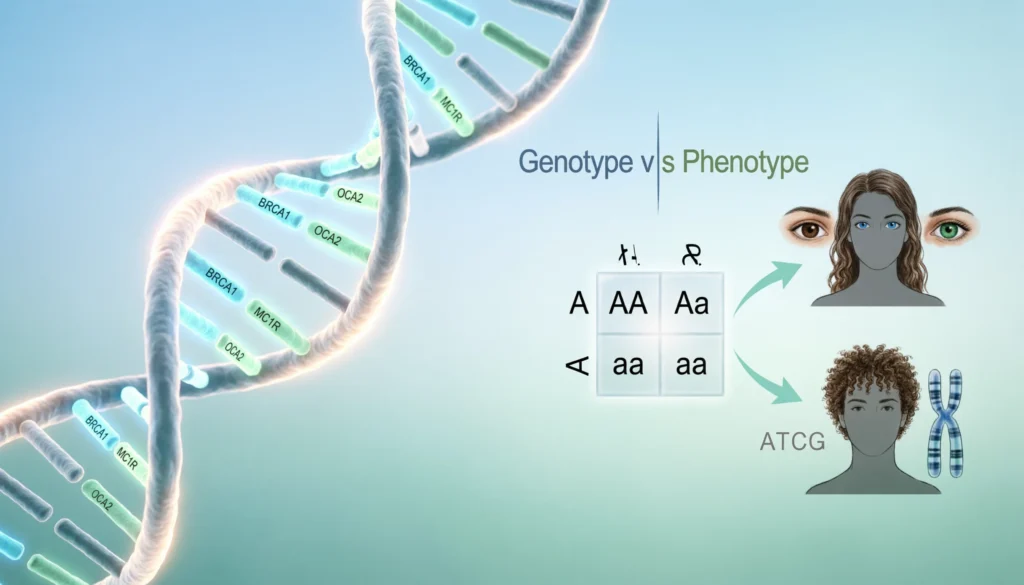
Genotype in biology refers to the genetic makeup of an organism, specifically the combination of genes or alleles it inherits from its parents. It determines potential traits, although not all genetic traits are visibly expressed.
Have you ever wondered why siblings can look so different even though they share the same parents? Or why some traits skip generations entirely? The answer lies deep within biology, in a concept called genotype.
Your genotype is like a hidden instruction manual written in DNA. It carries the blueprint for everything from your eye color to your susceptibility to certain diseases. But here’s the twist: not everything in your genotype shows up on the outside.
In this guide, we’ll break down what genotype means in biology, how it works, real-life examples, comparisons with related terms, and why it matters in science, medicine, and everyday life.
🧬 What Is Genotype?
In simple terms:
- Genotype = your genetic code (DNA instructions)
- It consists of alleles (different versions of a gene)
- It determines what traits you can have not always what you do have
For example:
If a person has one gene for brown eyes and one for blue eyes, their genotype includes both but their visible eye color depends on dominance.
🧬 Origin and Scientific Background
The term genotype comes from:
- “Gene” – the basic unit of heredity
- “-type” – meaning category or classification
It was first introduced in the early 20th century by Danish botanist Wilhelm Johannsen, who wanted to distinguish between:
- Genotype (genetic makeup)
- Phenotype (physical traits)
Since then, genotype has become a cornerstone concept in:
- Genetics
- Evolutionary biology
- Medicine and genetic testing
🌍 Why Genotype Is Important in Real Life
Genotype isn’t just a textbook term—it has real-world impact:
🧬 In Medicine
- Helps identify genetic diseases (e.g., cystic fibrosis)
- Guides personalized treatments (precision medicine)
🧬 In Agriculture
- Used to breed stronger, disease-resistant crops
🧬 In Forensics
- DNA profiling helps solve crimes
🧬 In Everyday Life
- Explains inherited traits like:
- Hair type
- Height potential
- Blood group
🧬 Types of Genotypes
Genes come in pairs, and their combinations form different genotypes:
| Genotype Type | Meaning | Example |
|---|---|---|
| Homozygous Dominant (AA) | Two dominant alleles | Brown eyes (BB) |
| Homozygous Recessive (aa) | Two recessive alleles | Blue eyes (bb) |
| Heterozygous (Aa) | One dominant + one recessive | Brown eyes (Bb) |
🧬 Example Table: Genotype vs Phenotype
| Genotype | Trait (Phenotype) | Explanation |
|---|---|---|
| BB | Brown eyes | Dominant trait expressed |
| Bb | Brown eyes | Dominant allele hides recessive |
| bb | Blue eyes | Only recessive trait present |
👉 This shows how genotype determines possibilities, while phenotype shows the result.
🧬 Real-Life Examples of Genotype
Here are some relatable examples:
🧑 Example 1: Eye Color
- Genotype: Bb
- Phenotype: Brown eyes
- Tone: Neutral scientific explanation
🧑🦱 Example 2: Hair Type
- Genotype: Curly + straight gene
- Phenotype: Wavy hair
- Tone: Friendly, everyday explanation 😊
🧬 Example 3: Genetic Disorder
- Genotype: Two recessive disease alleles
- Phenotype: Disease appears
- Tone: Serious/medical context
🧬 Genotype vs Phenotype: Key Differences
This is one of the most searched comparisons let’s simplify it:
| Feature | Genotype | Phenotype |
|---|---|---|
| Meaning | Genetic makeup | Physical appearance |
| Visibility | Hidden (DNA) | Visible traits |
| Example | Bb | Brown eyes |
| Affected by environment? | No | Yes |
👉 Quick Tip:
- Genotype = what you have
- Phenotype = what you see
🧬 How Genotype Works
Genes come in pairs one from each parent.
- Each gene has versions called alleles
- Some alleles are dominant
- Others are recessive
Example:
- Parent 1: B (brown)
- Parent 2: b (blue)
Child genotype = Bb → Brown eyes (because B dominates)
🧬 Popularity and Modern Use
Today, the word genotype is widely used in:
- Biology classrooms
- Medical research papers
- DNA testing services (like ancestry kits)
It has also become more popular due to:
- Genetic testing trends
- Personalized healthcare
- Increased awareness of inherited diseases
🧬 Related Terms and Comparisons
Here are commonly confused terms:
| Term | Meaning | Difference |
|---|---|---|
| Genotype | Genetic makeup | Hidden DNA |
| Phenotype | Physical traits | Visible result |
| Allele | Gene variant | Part of genotype |
| Genome | Entire DNA set | Bigger than genotype |
🧬 Are There Alternate Meanings of Genotype?
In most contexts, genotype strictly refers to genetics. However:
- In virology, it may refer to genetic variants of viruses
- In research, it can describe specific gene patterns
But overall, the meaning stays within biology and genetics.
🧬 Polite or Professional Alternatives
If you want to avoid technical jargon in casual conversation, you can say:
- “Genetic makeup” (most common alternative)
- “DNA profile”
- “Inherited traits”
👉 Example:
Instead of saying “His genotype includes recessive alleles”
You can say:
👉 “His genetic makeup carries hidden traits.”
❓ FAQs:
1. What is a genotype in simple words?
It is the genetic makeup of an organism the genes inherited from parents.
2. What is the difference between genotype and phenotype?
Genotype is DNA-based; phenotype is the visible trait.
3. Can two people have the same genotype?
Yes, identical twins have the same genotype.
4. Does genotype always determine phenotype?
Not always environment can influence phenotype.
5. What is an example of genotype?
Bb (one dominant, one recessive allele).
6. What are alleles in genotype?
Different versions of a gene (e.g., B and b).
7. Why is genotype important?
It helps predict traits, diseases, and inheritance patterns.
8. Can genotype change over time?
Generally no, but mutations can occur.
🧾 Conclusion:
In biology, genotype refers to the genetic blueprint that determines the traits an organism can inherit. While it remains hidden within DNA, it plays a crucial role in shaping everything from physical characteristics to health outcomes.
Whether you’re studying biology or just curious about genetics, knowing about genotype helps you see how traits are passed down and why everyone is uniquely different.
Discover More Related Articles:
- OEM Mean in Car Parts: Here’s Why OEM Could Be the Right Choice in 2026
- Reconciliation Mean in the Bible: A Complete Christian Guide in 2026

Sarah Williams is the passionate author behind WordNexy.com, dedicated to creating content that informs, inspires, and sparks curiosity. With a love for words and storytelling, she transforms ideas into meaningful articles that educate, entertain, and leave a lasting impression on every reader.