Definition:
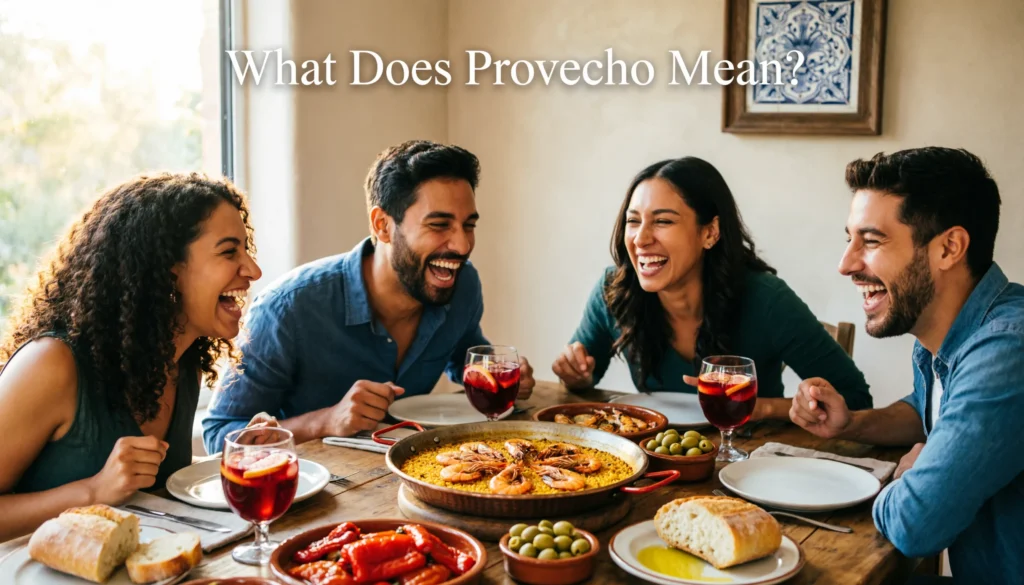
“Provecho” in Spanish means “enjoy your meal” or “may it benefit you.” It’s a polite expression used before or during eating to wish someone a pleasant dining experience similar to “bon appétit” in English or French.
If you’ve ever been in a Spanish-speaking country or watched Spanish-language shows, you’ve probably heard someone say “¡Buen provecho!” right before eating. It’s one of those small but meaningful phrases that reflects warmth, politeness, and culture all at once.
But what exactly does “provecho” mean in Spanish? Is it just about food, or does it go deeper?
In this complete guide, you’ll learn the meaning of provecho, its origin, how native speakers use it in real life, tone variations, and how it compares to similar phrases. By the end, you’ll know exactly when and how to use it naturally.
Origin and Meaning of “Provecho”
The word “provecho” comes from the Spanish verb “aprovechar,” which means to benefit from, to take advantage of, or to make good use of something.
Literal Meaning
- Provecho = Benefit / Advantage / Gain
So when someone says:
- “¡Buen provecho!”
They’re literally wishing you:
👉 “Good benefit” from your food
Over time, this evolved into a cultural expression meaning:
👉 “Enjoy your meal”
Popularity and Cultural Importance
“Provecho” (especially “¡Buen provecho!”) is widely used across Spanish-speaking countries, including:
- Mexico 🇲🇽
- Spain 🇪🇸
- Argentina 🇦🇷
- Colombia 🇨🇴
- Peru 🇵🇪
Why It Matters
Unlike in some English-speaking cultures, where people might not always say anything before eating, “provecho” is deeply rooted in etiquette and social interaction.
It’s used:
- At the table with family
- In restaurants
- Even when walking past strangers who are eating
👉 Yes, in many cultures, it’s polite to say “¡Buen provecho!” to strangers eating nearby!
How “Provecho” Is Used in Real Life
1. Before Eating (Most Common)
- “¡Buen provecho!” 😊
👉 Enjoy your meal!
2. While Someone Is Eating
- “Provecho” or “¡Buen provecho!”
👉 A friendly acknowledgment
3. Passing by Someone Eating
- “Provecho” 👋
👉 A polite social gesture
Common Variations of “Provecho”
| Phrase | Meaning | Usage Context |
|---|---|---|
| ¡Buen provecho! | Enjoy your meal | Standard and most common |
| Provecho | Enjoy | Casual, shorter version |
| Que aproveche | May it benefit you | More formal or Spain usage |
| Buen provecho a todos | Enjoy your meal everyone | Group setting |
Examples with Context and Tone
Friendly Tone 😊
- “¡Buen provecho, amigos!”
👉 Warm and welcoming - “Provecho 😄”
👉 Casual and friendly
Neutral Tone 🙂
- “Buen provecho.”
👉 Polite and standard - “Que aproveche.”
👉 Slightly formal but normal
Playful Tone 😋
- “¡Buen provecho! That looks delicious!”
👉 Adds excitement and friendliness
Rare Negative or Dismissive Use ⚠️
“Provecho” is almost always positive. However, tone matters:
- Saying it sarcastically 😏
👉 Could sound mocking (rare and context-dependent)
When Should You Use “Provecho”?
✔️ Use It When:
- Someone is about to eat
- You are starting a meal with others
- Passing by people who are eating (in many cultures)
❌ Avoid Using It When:
- In very formal business emails
- In non-food contexts
- With inappropriate tone or sarcasm
Comparison with Similar Expressions
| Phrase | Language | Meaning | Usage |
|---|---|---|---|
| Buen provecho | Spanish | Enjoy your meal | Everyday use |
| Bon appétit | French | Enjoy your meal | Formal or fancy tone |
| Enjoy your meal | English | Enjoy eating | Neutral |
| Dig in! | English | Start eating | Informal |
Key Difference
- “Buen provecho” emphasizes benefit and appreciation of food
- “Bon appétit” focuses more on appetite and pleasure
Alternate Meanings of “Provecho”
While commonly used in dining, “provecho” can also mean:
1. Benefit or Advantage
- “Sacar provecho”
👉 To take advantage of something
Example:
- “Debes sacar provecho de esta oportunidad.”
👉 You should take advantage of this opportunity.
2. Profit (Less Common)
- Used in economic or business contexts
👉 Refers to gain or usefulness
Polite and Professional Alternatives
If you want to sound more formal or appropriate in professional settings:
Instead of “Provecho,” say:
- “Que disfrutes tu comida”
👉 May you enjoy your meal - “Espero que disfruten la comida”
👉 I hope you enjoy the food - “Buen apetito” (less common but understandable)
Practical Usage Tips
- ✔ Always smile when saying “¡Buen provecho!” 😊
- ✔ Use it naturally—it’s a cultural habit
- ✔ Don’t overthink grammar it’s simple and universal
- ✔ Match tone to situation (formal vs casual)
Example Conversation Table
| Situation | Spanish Phrase | English Meaning | Tone |
|---|---|---|---|
| Dinner with family | ¡Buen provecho! | Enjoy your meal | Friendly |
| Restaurant server | Buen provecho | Enjoy your meal | Polite |
| Walking past coworkers eating | Provecho | Enjoy | Casual |
| Formal dinner | Que aproveche | Enjoy your meal | Formal |
| Group setting | Buen provecho a todos | Enjoy everyone | Warm |
FAQs:
- What does “provecho” mean in Spanish?
It means benefit or enjoyment, and is most commonly used in the phrase “¡Buen provecho!” to say enjoy your meal. - Is “provecho” polite?
Yes, it is considered very polite and culturally respectful in Spanish-speaking countries. - Can I say “provecho” to strangers?
Absolutely! In many Spanish-speaking cultures, saying provecho to strangers who are eating is normal and appreciated. - What’s the difference between “provecho” and “buen provecho”?
- Provecho → casual, short version
- Buen provecho → full, standard expression used more commonly
- Is “provecho” used in Spain and Latin America?
Yes, it’s widely used in both regions, though “que aproveche” is more common in Spain. - Can “provecho” be used outside food context?
Yes, though less commonly. In other contexts, it can mean benefit or advantage. - Is “provecho” similar to “bon appétit”?
Yes, both phrases mean enjoy your meal, but they come from different languages and reflect distinct cultural tones. - Should I use “provecho” in formal writing?
No, it is better suited for spoken or casual social situations rather than formal writing.
Conclusion
“Provecho” is a simple yet meaningful word in Spanish that goes beyond just food it reflects politeness, culture, and social warmth. Saying “¡Buen provecho!” is a friendly way to wish someone enjoyment and benefit from their meal. Remember:
- Use “provecho” or “¡Buen provecho!” when dining with friends, family, or even strangers.
- Match your tone to the situation: casual, friendly, or formal.
- Outside meals, it can also mean benefit or advantage, though this is less common.
By using “provecho” correctly, you’ll sound natural, respectful, and culturally aware in any Spanish-speaking setting.
Discover More Related Articles:
- OEM Mean in Car Parts: Here’s Why OEM Could Be the Right Choice in 2026
- Reconciliation Mean in the Bible: A Complete Christian Guide in 2026

Sarah Williams is the passionate author behind WordNexy.com, dedicated to creating content that informs, inspires, and sparks curiosity. With a love for words and storytelling, she transforms ideas into meaningful articles that educate, entertain, and leave a lasting impression on every reader.