Definition:
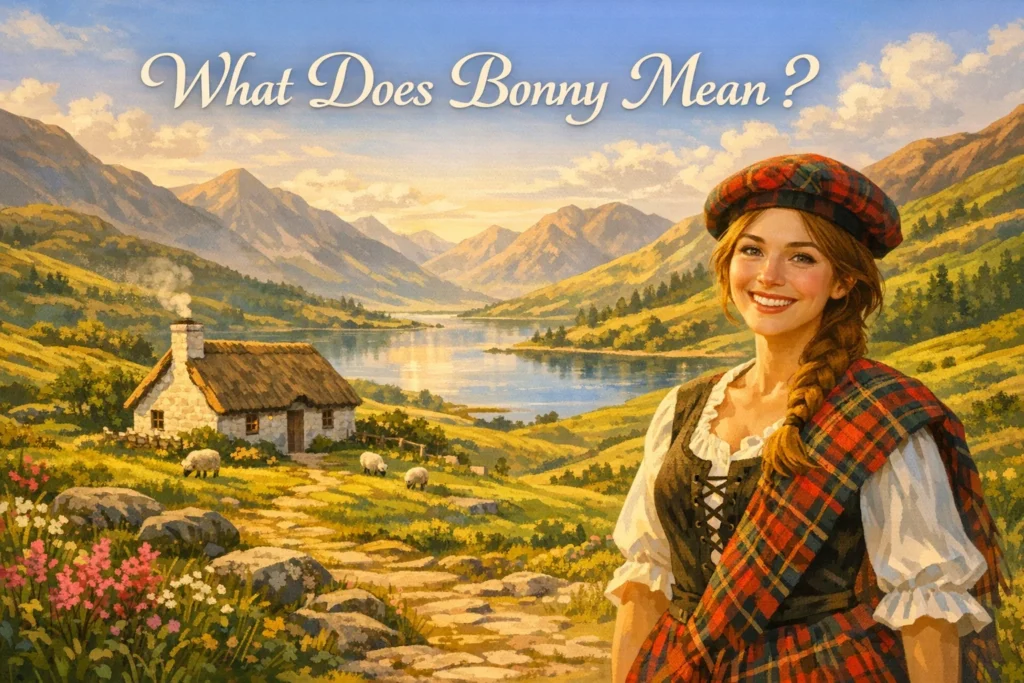
“Bonny” (also spelled “bonnie”) is a Scottish word meaning attractive, beautiful, charming, or pleasant. It’s often used to describe people, places, or things in a warm and affectionate way.
Ever heard someone say “She’s a bonny lass” or “What a bonny view!” and wondered what it actually means? The word “bonny” is one of those charming Scottish expressions that carries warmth, admiration, and a touch of cultural richness.
Whether you’ve come across it in literature, songs, or everyday conversation, “bonny” isn’t just about beauty—it’s about a deeper, heartfelt appreciation. In this guide, we’ll break down everything you need to know about this lovely Scottish word, from its origins to real-world usage, examples, and even how it compares to similar terms.
Origin of “Bonny”
The word “bonny” (or “bonnie”) has roots that go beyond Scotland, although it’s now strongly associated with Scottish culture.
Etymology Breakdown:
- Derived from the French word “bon” meaning good
- Entered Middle English as “bonnie”
- Became widely used in Scots language and dialects
Historical Context:
- Popularized in Scottish poetry and folk songs
- Frequently used in traditional phrases like:
- “Bonnie Scotland”
- “My bonnie lies over the ocean”
Over time, the word evolved to specifically convey beauty with affection, rather than just general “goodness.”
What Does “Bonny” Mean in Scottish Today?
In modern Scottish usage, “bonny” typically means:
- Beautiful 👩
- Pretty 🌸
- Attractive 😍
- Charming 😊
- Pleasant or delightful 🌄
It’s a positive, affectionate word—often used in a friendly or admiring tone.
How “Bonny” Is Used in Real Life
1. Describing People
- “She’s a bonny lass.”
→ She’s a beautiful or lovely young woman. - “He’s a bonny wee boy.”
→ He’s a cute little boy.
2. Describing Places
- “What a bonny village!”
→ What a beautiful or charming place.
3. Describing Objects or Things
- “That’s a bonny dress.”
→ That’s a lovely or attractive dress.
Tone and Context of “Bonny”
The tone of “bonny” is almost always positive, but the feeling can vary slightly depending on context.
Tone Variations:
| Tone Type | Meaning/Feeling | Example |
|---|---|---|
| Friendly 😊 | Warm, casual admiration | “You look bonny today!” |
| Affectionate ❤️ | Loving or endearing | “My bonny child” |
| Poetic 🎶 | Romantic or artistic | “Bonny hills and valleys” |
| Playful 😉 | Lighthearted compliment | “That’s a bonny hat!” |
👉 There’s no negative or sarcastic meaning attached to “bonny” in standard usage.
Common Phrases with “Bonny”
Here are some well-known expressions:
- Bonny lass → Pretty girl
- Bonny lad → Handsome boy
- Bonny Scotland → Beautiful Scotland
- Bonny baby → Cute baby
- Bonny view → Lovely scenery
Example Sentences
Friendly Tone:
- “That’s a bonny smile you’ve got 😊”
- “Your garden looks really bonny this year!”
Romantic Tone:
- “She walked through the bonny fields at sunset.”
Casual Conversation:
- “We visited a bonny little café by the lake.”
“Bonny” vs Similar Words
Let’s compare “bonny” with other commonly used words for beauty:
| Word | Meaning | Tone/Usage |
|---|---|---|
| Bonny | Beautiful, charming | Warm, Scottish, affectionate |
| Pretty | Attractive (usually for women) | Common, neutral |
| Beautiful | Very attractive | Formal, strong |
| Cute | Adorably attractive | Casual, youthful |
| Lovely | Pleasant or delightful | Friendly, soft |
👉 Key Difference:
“Bonny” feels more cultural and heartfelt, often tied to Scottish identity.
Is It “Bonny” or “Bonnie”?
Good question! Both spellings exist.
- Bonny → More common in general English usage
- Bonnie → Traditional Scottish spelling
👉 Example:
- “Bonnie lass” is more authentic to Scottish dialect.
Popularity of “Bonny”
While not used everywhere in everyday speech, “bonny” remains:
- Popular in Scotland and Northern England
- Frequently seen in literature and songs
- Used globally by people who enjoy Scottish culture or expressions
Cultural Impact:
- Appears in folk songs like “My Bonnie Lies Over the Ocean”
- Used in tourism to describe Scotland’s landscapes
Alternate Meanings of “Bonny”
Although primarily meaning beautiful, “bonny” can occasionally imply:
- Healthy or cheerful (in older usage)
- Good-natured or pleasant personality
👉 Example:
- “A bonny spirit” → A kind and cheerful nature
When Should You Use “Bonny”?
Great Situations:
- Complimenting someone politely
- Describing nature or scenery
- Writing creatively or poetically
Avoid Using When:
- Writing formal business communication
- Speaking in contexts where regional slang may confuse people
Polite or Professional Alternatives
If you’re in a formal setting, you might want to use:
- Attractive
- Charming
- Pleasant
- Beautiful
- Appealing
👉 Example:
- Instead of: “It’s a bonny place”
- Say: “It’s a beautiful and charming place”
Example Table: “Bonny” in Different Contexts
| Context | Sentence Example | Meaning |
|---|---|---|
| Person | “She’s a bonny lass” | Beautiful girl |
| Child | “What a bonny baby!” | Cute baby |
| Nature | “A bonny landscape” | Lovely scenery |
| Object | “That’s a bonny ring” | Attractive item |
| Emotion | “A bonny smile” | Warm, pleasant smile |
FAQs:
1. What does “bonny” mean in Scottish slang?
It means beautiful, attractive, or charming, often used affectionately.
2. Is “bonny” a compliment?
Yes, it’s a positive and warm compliment.
3. Can “bonny” describe men?
Yes! While often used for women, it can describe men or boys too (e.g., “bonny lad”).
4. Is “bonny” still used today?
Yes, especially in Scotland and regional dialects.
5. What’s the difference between “bonny” and “bonnie”?
They mean the same thing—“bonnie” is just the traditional Scottish spelling.
6. Is “bonny” formal or informal?
It’s informal and conversational, sometimes poetic.
7. Can “bonny” describe places?
Absolutely. It’s commonly used for beautiful landscapes or scenery.
8. Is “bonny” used in English outside Scotland?
Yes, but less commonly. It’s often used for stylistic or cultural effect.
Conclusion
The word “bonny” is more than just another way to say “beautiful.” It carries a sense of warmth, charm, and cultural identity, deeply rooted in Scottish language and tradition.
In everyday use, “bonny” is a friendly, positive compliment that feels natural in casual conversation and especially fitting in creative or cultural contexts. While it may not suit formal writing, it’s perfect for adding personality and a touch of Scottish flair to your language.
👉 If you want to sound a little more expressive or culturally rich, slipping “bonny” into your vocabulary is a lovely place to start.
Discover More Related Articles:

Sarah Williams is the passionate author behind WordNexy.com, dedicated to creating content that informs, inspires, and sparks curiosity. With a love for words and storytelling, she transforms ideas into meaningful articles that educate, entertain, and leave a lasting impression on every reader.