Definition
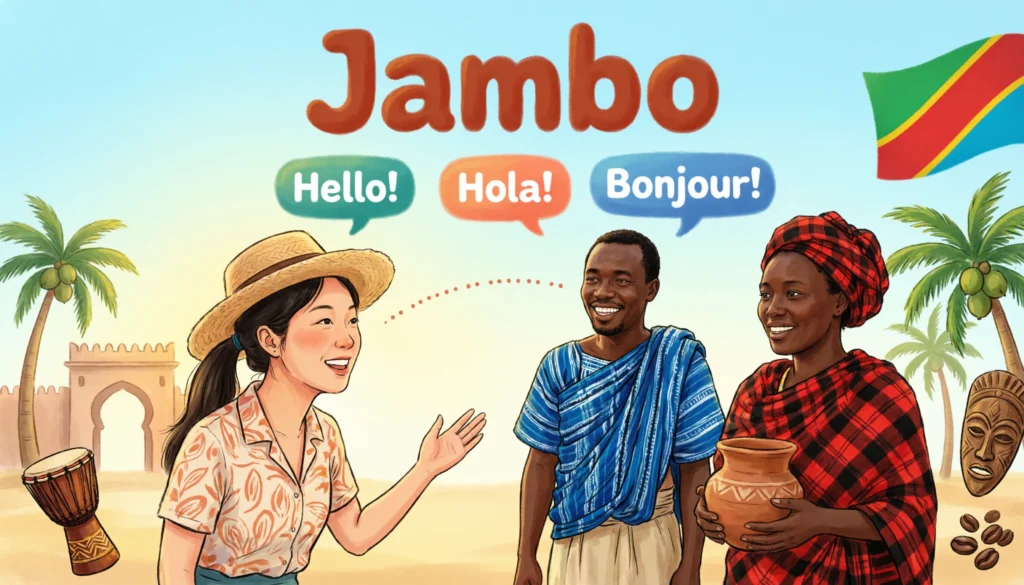
“Jambo” is a Swahili greeting that means “hello” or “hi.” It is commonly used to greet someone in a friendly way, especially by tourists or in formal interactions. The typical response to “jambo” is “sijambo,” which means “I am fine” or “I have no problems.”
In everyday conversation across East Africa, particularly in Kenya and Tanzania, people often prefer the more casual greeting “mambo.” However, “jambo” remains one of the most recognizable Swahili words around the world.
Understanding the Meaning of “Jambo” in Swahili
If you’ve ever visited East Africa, watched travel shows, or learned basic Swahili greetings, you’ve probably heard the word jambo. It’s one of the most famous Swahili expressions and is widely taught as the standard way to say “hello.”
However, the real story behind jambo is more interesting than most people realize.
While it technically means hello, native Swahili speakers often use other greetings more frequently in daily life. Still, jambo remains a polite, friendly greeting that instantly signals goodwill and respect.
Because of its simplicity and universal recognition, it has become a cultural bridge word between Swahili speakers and visitors from around the world.
The Origin of the Word “Jambo”
The word jambo comes from Swahili language, a Bantu language widely spoken across East Africa.
Swahili itself developed from a mix of African Bantu languages and influences from Arabic, Persian, Portuguese, and English due to centuries of trade along the East African coast.
Linguistic Roots
In Swahili grammar:
- Jambo literally means “matter,” “thing,” or “issue.”
- When used as a greeting, it is short for a longer phrase.
The greeting structure works like this:
| Phrase | Meaning |
|---|---|
| Hujambo? | Do you have any issues? / Are you well? |
| Sijambo | I have no issues / I am fine |
| Jambo | Hello / Hi (short greeting form) |
Over time, jambo evolved into a simple greeting used mainly with visitors, in formal settings, or in language lessons.
Where “Jambo” Is Most Commonly Used
The greeting is most associated with East African countries such as:
- Kenya
- Tanzania
- Uganda
Swahili is spoken by over 100 million people across Africa, making it one of the most widely used languages on the continent.
However, usage varies depending on region and social context.
Tourist vs Native Usage
| Context | Common Greeting |
|---|---|
| Tourists greeting locals | Jambo |
| Formal greeting | Hujambo |
| Casual conversation | Mambo |
| Friendly youth slang | Mambo vipi |
This explains why many visitors learn “jambo,” while locals often say “mambo” instead.
How “Jambo” Is Used in Real Conversations
Even though it is simple, jambo can still appear in several contexts.
1. Greeting Someone Politely
Example:
Person A: Jambo!
Person B: Sijambo!
Meaning:
- Hello!
- I am fine!
Tone: Friendly 😊
2. Greeting Tourists or Visitors
Many locals working in tourism use jambo because it is widely recognized.
Example:
Hotel staff: Jambo! Welcome to Kenya.
Tone: Professional and welcoming
3. Learning Swahili Basics
Language courses often start with jambo because it is easy to pronounce and remember.
Example:
Teacher: Today we learn greetings. First word: jambo.
Tone: Educational
Tone and Context of “Jambo”
The tone of jambo is almost always friendly or neutral.
Unlike slang greetings, it does not carry sarcasm or negativity.
Tone Guide
| Tone | Meaning |
|---|---|
| Friendly | Hello 😊 |
| Neutral | Formal greeting |
| Welcoming | Used in hospitality |
| Educational | Used in language lessons |
It is rarely used sarcastically or aggressively.
Examples of “Jambo” in Sentences
Here are some realistic conversation examples showing how the word works.
Friendly Greeting
Jambo rafiki!
Hello, my friend!
Tourist Interaction
Jambo! Karibu Tanzania.
Hello! Welcome to Tanzania.
Basic Dialogue
A: Jambo!
B: Sijambo, asante. Na wewe?
A: Nzuri!
Translation:
- Hello!
- I’m fine, thank you. And you?
- Good!
“Jambo” vs Similar Swahili Greetings
While jambo is widely recognized, several other greetings are more common among native speakers.
Greeting Comparison Table
| Greeting | Meaning | Usage |
|---|---|---|
| Jambo | Hello | Formal or tourist greeting |
| Hujambo | Are you well? | Formal conversation |
| Mambo | What’s up? | Casual greeting |
| Habari | How are things? | Everyday greeting |
| Shikamoo | Respectful greeting to elders | Formal respect |
Among these, habari and mambo are heard more frequently in daily conversations.
Why “Jambo” Became Famous Worldwide
Several factors helped make jambo internationally recognizable.
1. Tourism
Millions of travelers visiting East Africa learn jambo as their first Swahili word.
Safari guides, hotels, and tour operators often use it to welcome guests.
2. Music and Pop Culture
The famous song Jambo Bwana helped popularize the greeting globally.
The song’s chorus includes:
“Jambo, jambo bwana
Habari gani?”
This catchy tune introduced the greeting to audiences around the world.
3. Language Education
Swahili courses frequently start with jambo because it’s:
- Easy to pronounce
- Easy to remember
- Friendly and welcoming
Alternate Meanings of “Jambo”
Although it usually means hello, the word jambo has other meanings in Swahili depending on context.
Other Meanings
| Meaning | Context |
|---|---|
| Matter | General discussion |
| Thing | Referring to an object |
| Issue | Talking about problems |
Example:
Kuna jambo muhimu.
There is an important matter.
So while jambo can be a greeting, its literal meaning is closer to “thing” or “matter.”
Polite Alternatives to “Jambo”
In many situations, other greetings may sound more natural.
Common Alternatives
Habari
Meaning: How are things?
Example:
Habari yako? (How are you?)
Mambo
Meaning: What’s up?
Example:
Mambo vipi?
Tone: Casual
Shikamoo
Meaning: Respectful greeting for elders.
Used to show respect to older people.
Response: Marahaba
Tips for Using “Jambo” Correctly
If you’re learning Swahili or traveling in East Africa, these tips can help.
Helpful Usage Tips
✔ Use jambo when meeting someone politely
✔ Pair it with a smile 😊
✔ Learn the response sijambo
✔ Try habari for everyday conversation
✔ Use shikamoo when greeting elders
Even simple greetings can make interactions more respectful and friendly.
Common Mistakes When Using “Jambo”
1. Thinking It’s the Only Greeting
Many learners believe jambo is the main greeting, but locals often use mambo or habari instead.
2. Mispronouncing It
Correct pronunciation:
JAHM-bo
Not:
Jam-boh or Jahm-boo
3. Forgetting the Response
When someone says hujambo, the proper reply is sijambo.
FAQs
- What does jambo mean in Swahili?
Jambo means “hello” or “hi.” It is a polite greeting commonly used in Swahili-speaking regions. - Is jambo used in everyday conversation?
Not always. Native speakers often prefer mambo or habari for casual greetings. - What is the response to jambo?
The traditional response is sijambo, meaning “I am fine” or “I have no problems.” - Is jambo formal or informal?
It is generally considered neutral or slightly formal. - Which countries use the word jambo?
It is most commonly used in Kenya, Tanzania, and Uganda. - What does hujambo mean?
Hujambo means “Are you well?” or “Do you have any problems?” - What is the difference between jambo and mambo?
| Word | Meaning |
|---|---|
| Jambo | Hello |
| Mambo | What’s up |
Mambo is more casual and commonly used in everyday conversation.
- Is jambo a respectful greeting?
Yes. It is considered polite and friendly, especially when greeting visitors or in formal contexts.
Conclusion
The word jambo is one of the most recognizable greetings in the Swahili language. While it simply means “hello,” it represents much more than a basic greeting.
It reflects the welcoming culture of East Africa and serves as a bridge between locals and visitors.
If you’re learning Swahili or visiting East Africa, starting a conversation with “jambo!” is a simple and friendly way to connect.
Discover More Related Articles:
- PFP Mean in Text: Complete Guide for Social Media Users (2026)
- Shabbat Shalom Mean in English: Usage, and Significance in 2026

Amanda Lewis is a professional content writer and word-meaning researcher who specializes in explaining definitions, slang, abbreviations, and modern language terms. She writes for WordNexy.com, where she creates clear, accurate, and reader-friendly articles to help users understand word meanings and proper usage. Her work is especially useful for students, writers, and online readers seeking quick and reliable explanations.