Definition
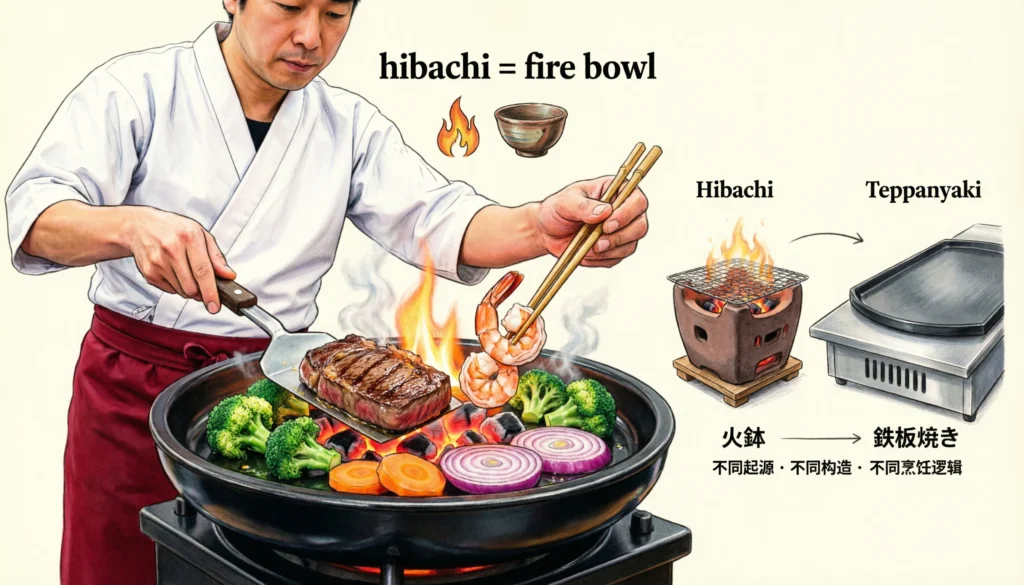
Hibachi (火鉢) is a Japanese word that literally means “fire bowl.” Traditionally, it refers to a small, portable heating device filled with burning charcoal, used in Japan for warmth or simple cooking.
火 (Hi) = Fire
鉢 (Hachi) = Bowl or pot
So, hibachi literally translates to “fire bowl.”
If you have ever visited a Japanese steakhouse or watched chefs cook dramatically on a hot grill while flipping shrimp and creating onion volcanoes, you have probably heard the word hibachi. In many countries especially the United States people associate hibachi with an entertaining restaurant cooking style.
But here’s the interesting part: the meaning of hibachi in Japanese is actually different from how it’s commonly used in Western restaurants.
Understanding the true meaning of hibachi helps you appreciate Japanese culture, cooking traditions, and language more deeply. Let’s explore what the word really means, where it came from, and how it is used today.
In modern Western usage, however, the term often refers to Japanese-style grilling or teppanyaki cooking, although this is technically a different cooking method.
Origin of the Word “Hibachi”
The word hibachi comes directly from traditional Japanese culture and household life.
Literal Translation
| Japanese Character | Meaning | Explanation |
|---|---|---|
| 火 (Hi) | Fire | Represents burning charcoal |
| 鉢 (Hachi) | Bowl | A container or pot shape |
| Hibachi | Fire bowl | A charcoal container used for heating |
Historically, hibachi were round or box-shaped containers made from materials like:
- Wood
- Ceramic
- Metal
- Porcelain
They were filled with charcoal and used as a portable heating source in Japanese homes during winter.
Unlike modern grills, hibachi were primarily used for warmth, though people sometimes used them to heat tea or cook small items.
What Hibachi Means in Modern Culture
Today, the meaning of hibachi can vary depending on where you are in the world.
In Japan
In Japan, hibachi still refers to the traditional charcoal heating device, not a restaurant cooking style.
Most Japanese people would not use the word hibachi to describe restaurant grilling.
In the United States and Western Countries
In many Western countries, hibachi refers to a type of restaurant cooking where food is grilled in front of customers.
This cooking style includes:
- Chefs cooking on a flat grill
- Dramatic knife skills
- Food tossing tricks
- Interactive dining experiences
However, the correct term for this cooking style is actually teppanyaki.
Hibachi vs Teppanyaki: What’s the Difference?
Many people use hibachi and teppanyaki interchangeably, but they are technically different.
| Feature | Hibachi | Teppanyaki |
|---|---|---|
| Meaning | Fire bowl | Iron plate grilling |
| Traditional Use | Heating device with charcoal | Cooking food on flat iron grill |
| Cooking Surface | Open charcoal grill | Flat steel griddle |
| Used In Restaurants | Rarely | Common in Japanese steakhouses |
| Origin | Japanese household item | Japanese restaurant cooking style |
Simple Way to Remember
- Hibachi = Charcoal bowl heater
- Teppanyaki = Restaurant grill cooking
Yet because Western restaurants popularized the word hibachi, it has become widely used to describe the cooking style.
Why Hibachi Became Popular in Restaurants
The modern hibachi-style restaurant experience became famous in the 1960s when Japanese steakhouses started expanding internationally.
One of the major reasons for its popularity was interactive dining.
Customers loved watching chefs perform entertaining tricks such as:
🔥 Creating onion volcanoes
🍤 Tossing shrimp into their hats
🔪 Fast knife chopping techniques
🍳 Flipping eggs in the air
These performances made hibachi-style dining both a meal and a show.
Real-World Usage of “Hibachi”
Today, the word hibachi can appear in several different contexts.
1. Traditional Japanese Meaning
Used to describe a charcoal heating container.
Example:
- “The antique shop displayed a beautiful Edo-period hibachi.”
Tone: Neutral / historical
2. Restaurant Cooking Style
Used in Western countries to describe Japanese grill dining.
Example:
- “Let’s go to a hibachi restaurant tonight!”
Tone: Friendly / casual
3. Small Portable Grill
Some people use the word to refer to small charcoal grills used for backyard cooking.
Example:
- “He cooked burgers on a hibachi grill during the picnic.”
Tone: Casual
Example Sentences Using “Hibachi”
| Sentence | Tone | Meaning |
|---|---|---|
| “We had dinner at a hibachi restaurant last night.” | Friendly | Refers to Japanese steakhouse cooking |
| “The chef performed amazing hibachi tricks.” | Excited | Refers to teppanyaki-style cooking |
| “The antique hibachi was used to heat homes in Japan.” | Informational | Traditional meaning |
| “He grilled vegetables on a small hibachi.” | Neutral | Small charcoal grill |
Why the Meaning Changed Outside Japan
Language often changes when words move across cultures.
The meaning of hibachi shifted mainly because of:
1. Restaurant Marketing
Japanese steakhouses in the U.S. used the term hibachi grill because it sounded authentic and exotic.
2. Simpler Branding
“Teppanyaki” can be difficult for English speakers to pronounce, while hibachi is easier and catchier.
3. Cultural Adaptation
Over time, customers began associating the word hibachi with the entire dining experience.
Today, the term has evolved into a hybrid meaning depending on the context.
Foods Commonly Served at Hibachi Restaurants
Even though they technically serve teppanyaki, many restaurants label their menu as hibachi.
Typical hibachi dishes include:
Proteins
- Steak
- Chicken
- Shrimp
- Salmon
- Scallops
Vegetables
- Zucchini
- Mushrooms
- Onions
- Carrots
- Bean sprouts
Side Dishes
- Fried rice
- Hibachi noodles
- Yum yum sauce
- Ginger sauce
Hibachi Cooking Style Characteristics
Even though it technically refers to teppanyaki, hibachi-style dining is known for several unique features.
1. Open Grill Cooking
Food is cooked directly in front of guests.
2. High Heat
The grill is extremely hot, allowing food to cook quickly.
3. Entertainment
Chefs perform tricks while cooking.
4. Communal Dining
Many guests sit around the same grill table.
Cultural Importance of Traditional Hibachi
While restaurant hibachi gets most of the attention today, traditional hibachi still holds cultural value in Japan.
Historically, hibachi were used for:
- Heating rooms
- Boiling tea kettles
- Cooking simple foods
- Drying clothes
- Lighting tobacco pipes
In antique markets, hibachi are often seen as decorative historical pieces.
Some collectors admire them for their:
- Detailed craftsmanship
- Traditional lacquer finishes
- Cultural heritage
Alternate Meanings of Hibachi
Although the main meaning is the fire bowl heater, the term can also refer to:
1. Small Charcoal Grill
Used for outdoor cooking.
2. Restaurant Dining Style
Common usage in North America.
3. Decorative Antique
Displayed in homes or museums.
Polite or Accurate Alternatives
If you want to be more technically accurate, you could use these terms instead.
| Term | When to Use |
|---|---|
| Teppanyaki | Restaurant flat-top grilling |
| Japanese grill | General cooking style |
| Charcoal grill | Backyard cooking |
| Traditional hibachi heater | Historical reference |
However, in everyday conversation, hibachi is widely understood, so using it casually is perfectly fine.
FAQs
- What does hibachi literally mean in Japanese?
Hibachi literally means “fire bowl.” It refers to a traditional charcoal container used for heating. - Is hibachi the same as teppanyaki?
No. Hibachi is a charcoal heating bowl, while teppanyaki is a flat iron grill cooking style used in restaurants. - Why do American restaurants call it hibachi?
Restaurants adopted the term because it was easier to pronounce and became popular in marketing Japanese-style grilling. - Is hibachi cooking actually Japanese?
Yes, but the restaurant version is inspired by teppanyaki, not the traditional hibachi heater. - What food is cooked on hibachi grills?
Common foods include:
- Steak
- Chicken
- Shrimp
- Fried rice
- Vegetables
- Are hibachi grills charcoal or gas?
Traditional hibachi grills use charcoal, though some modern versions may use gas or electric heat. - Do people still use hibachi in Japan?
Traditional hibachi are mostly antique or decorative items today, though some people still use them for cultural or heating purposes. - Is hibachi cooking healthy?
Hibachi can be relatively healthy because food is grilled with minimal oil and often includes vegetables and protein.
However, sauces and fried rice can add extra calories.
Conclusion
The word hibachi is a great example of how language evolves across cultures.
Originally, it referred to a simple charcoal heater used in Japanese homes. But as Japanese cuisine spread internationally, the term became associated with exciting restaurant cooking experiences where chefs prepare meals right in front of guests.
So the next time someone asks, “What does hibachi mean in Japanese?”, you can explain both meanings:
- The traditional fire bowl heater
- The modern restaurant-style grill experience
Both interpretations reflect how language, food, and culture travel and transform around the world.
Discover More Related Articles:
- PFP Mean in Text: Complete Guide for Social Media Users (2026)
- Shabbat Shalom Mean in English: Usage, and Significance in 2026

James Anderson is an experienced content writer and language researcher who focuses on explaining word meanings, definitions, slang terms, and modern expressions. He writes for WordNexy.com, where his articles are designed to provide accurate meanings, practical usage examples, and easy-to-understand explanations for readers worldwide.