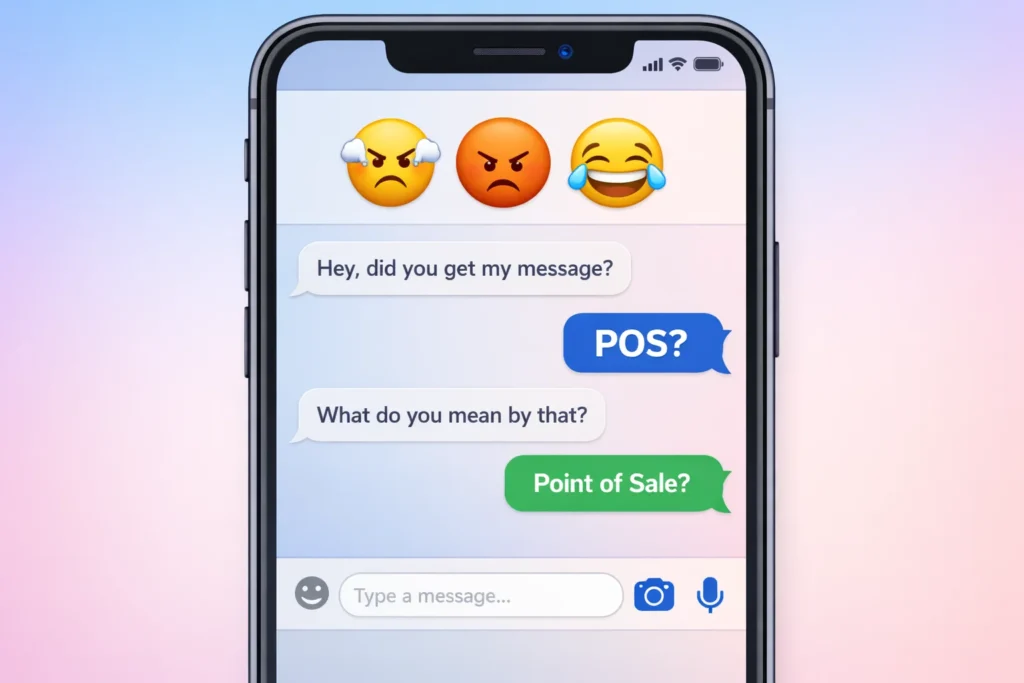
Definition:
POS in slang most commonly stands for “piece of sh*t”, a highly informal and often offensive term used to describe a person, object, or situation that is considered extremely bad, annoying, worthless, or unpleasant.
You’ve probably seen “POS” pop up in a text message, comment thread, or social media post and wondered whether it’s harmless shorthand or something more blunt. The truth? It depends on the context.
In modern slang, POS is one of those abbreviations that packs a lot of emotional weight into just three letters. It can be used jokingly among friends, but it can also come across as harsh or insulting if used carelessly.
In this in-depth guide, we’ll break down exactly what POS means in slang, where it came from, how people use it today, and when you should (and shouldn’t) use it. You’ll also find real-life examples, tone breakdowns, comparisons, and safer alternatives.
What Does POS Mean in Slang?
At its core, POS = “piece of sh*t.”
Key Characteristics:
- Type: Slang abbreviation
- Tone: Usually negative, sometimes sarcastic or humorous
- Usage: Informal conversations (texts, chats, online comments)
What It Implies:
- Something is low quality
- Someone is behaving badly or unfairly
- A situation is frustrating or disappointing
Origin and Popularity of POS
The phrase “piece of sh*t” has been part of English slang for decades, long before texting existed. As digital communication grew especially with SMS, chat rooms, and social media people began shortening phrases to type faster.
That’s how POS gained popularity.
Why POS Became Popular:
- Faster typing in texts and chats
- Avoiding censorship (filters often block full profanity)
- Widely understood across online communities
- Fits casual communication styles
Today, POS is commonly used across:
- Messaging apps (WhatsApp, Messenger)
- Social media platforms (Twitter/X, Instagram, TikTok)
- Online forums and gaming chats
How POS Is Used in Real Life
The meaning of POS stays consistent, but the tone can vary significantly depending on context.
1. Negative / Insulting Tone 😠
Used to strongly criticize a person or thing.
- “That guy lied to everyone. What a POS.”
- “This phone stopped working after a week—total POS.”
👉 In these cases, it’s clearly offensive or critical.
2. Frustrated Tone 😤
Used to express annoyance rather than direct insult.
- “My laptop froze again. This POS is useless.”
- “The app crashed mid-game. Absolute POS.”
👉 Here, it’s more about frustration than attacking someone.
3. Sarcastic or Playful Tone 😏
Used jokingly among friends (be careful this depends heavily on relationship).
- “You ate my fries again? You POS 😂”
- “You beat me again? Wow, you POS 😆”
👉 This tone only works in casual, friendly contexts.
Example Usage Table
| Situation | Example Sentence | Tone | Safe to Use? |
|---|---|---|---|
| Complaining | “This printer is a POS.” | Frustrated | ✔️ Yes |
| Insulting someone | “He’s such a POS for doing that.” | Negative | ⚠️ Risky |
| Joking with friends | “You didn’t invite me? You POS 😂” | Playful | ✔️ Contextual |
| Online rant | “Worst service ever. Total POS company.” | Critical | ⚠️ Depends |
Tone and Context: Why It Matters
The biggest mistake people make with slang like POS is ignoring context.
Ask Yourself Before Using POS:
- Who am I talking to?
- Is this a casual or professional setting?
- Could this be misunderstood as offensive?
Important Note:
Even if you mean it jokingly, POS can still sound harsh, especially in text where tone isn’t always clear.
Comparison with Similar Slang Terms
POS isn’t the only slang abbreviation used to express frustration or criticism. Here’s how it compares:
| Term | Meaning | Tone Level | Example |
|---|---|---|---|
| POS | Piece of sh*t | Very harsh | “This car is a POS.” |
| WTF | What the f*** | Shocked | “WTF just happened?” |
| SMH | Shaking my head | Mild | “SMH, that was dumb.” |
| Lame | Weak or boring | Light | “That excuse is lame.” |
| Trash | Very bad quality | Casual | “This movie is trash.” |
Alternate Meanings of POS
While POS usually means “piece of sh*t” in slang, it has other meanings depending on context.
Common Alternate Meanings:
- Point of Sale (business/retail systems)
- Positive (medical test results)
- Parent Over Shoulder (used in texting to warn others)
Example:
- “I’m at the POS system.” → Business context
- “Test came back POS.” → Medical context
👉 Always look at the context before assuming meaning.
When You Should Avoid Using POS
There are situations where using POS is a bad idea.
Avoid POS In:
- Professional emails or workplace chats
- Formal writing or academic content
- Speaking to someone you don’t know well
- Customer service interactions
Using POS in the wrong setting can:
- Damage your reputation
- Sound disrespectful
- Lead to misunderstandings
Polite and Professional Alternatives
If you want to express frustration without sounding offensive, try these:
Softer Alternatives:
- “This is really frustrating.”
- “Not working properly.”
- “Low quality.”
- “Disappointing experience.”
FAQs
1. What does POS stand for in texting?
POS usually means “piece of sh*t,” used to describe something or someone in a negative way.
2. Is POS always offensive?
Most of the time, yes. It’s generally considered offensive, though it may be used jokingly among close friends.
3. Can POS have a positive meaning?
Not in slang. However, in other contexts it can mean “point of sale” or “positive.”
4. Is it okay to use POS with friends?
It depends on your relationship. Some people use it playfully, but it can still be misunderstood.
5. What does POS mean in business?
In business, POS stands for “point of sale,” referring to payment or checkout systems.
6. Why do people use POS instead of the full phrase?
It’s quicker to type, avoids filters, and slightly softens the wording.
7. Is POS appropriate for social media?
It’s commonly used, but can come across as rude depending on context and audience.
8. What are safer alternatives to POS?
You can say “frustrating,” “low quality,” “not good,” or “disappointing.”1. What does POS stand for in texting?
POS usually means “piece of sh*t,” used to describe something or someone in a negative way.
Conclusion
So, what does POS mean in slang? In most cases, it’s shorthand for “piece of sh*t,” a strong and often offensive way to describe something negative. While it’s widely used in casual conversations and online spaces, its tone can shift dramatically from playful teasing to harsh criticism depending on context.
If you’re unsure whether to use POS, it’s usually better to play it safe. Clear communication beats clever slang every time.
Discover More Related Articles:
- A Spread Mean in Sports Betting: How to Read and Use the Spread in 2026
- Exhortation Mean in the Bible: Encouragement Through Scripture in 2026

Sarah Williams is the passionate author behind WordNexy.com, dedicated to creating content that informs, inspires, and sparks curiosity. With a love for words and storytelling, she transforms ideas into meaningful articles that educate, entertain, and leave a lasting impression on every reader.