Definition:
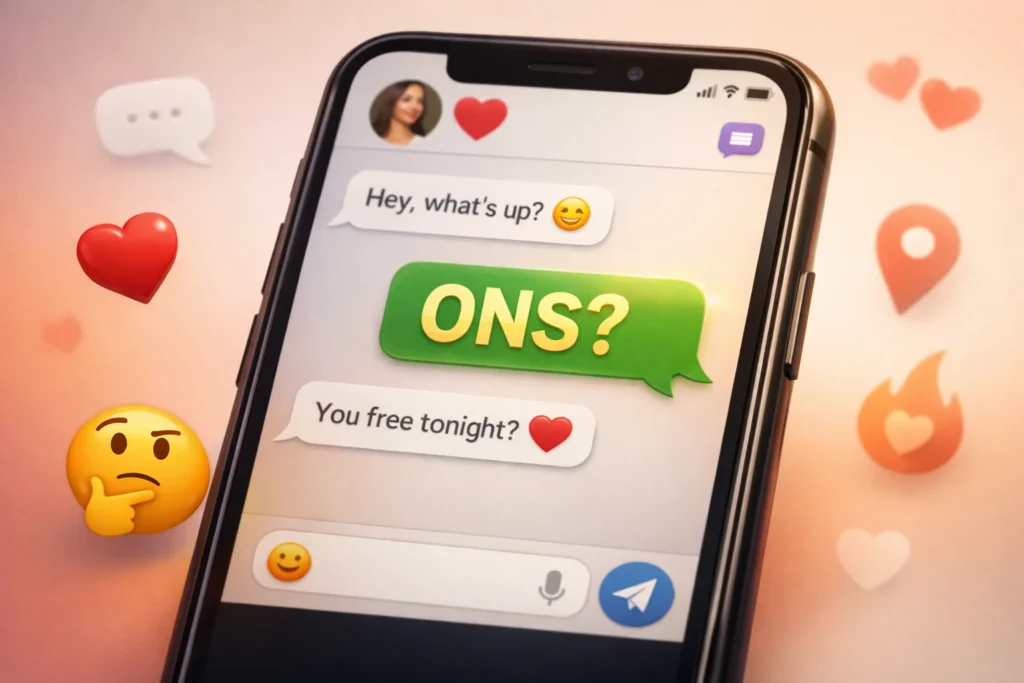
ONS in text typically stands for “One Night Stand.” It refers to a brief, casual encounter often romantic or sexual that happens once without expectations of a long-term relationship.
You’re scrolling through messages or chatting online when suddenly you see “ONS” pop up and now you’re wondering, what does that even mean? 🤔
In today’s fast-moving digital world, abbreviations and slang evolve quickly. Some are harmless, some are professional, and others… well, they depend heavily on context. ONS is one of those terms that can mean very different things depending on where and how it’s used.
In this guide, we’ll break down what ONS means in text, where it came from, how people use it in real conversations, and how to respond appropriately. Whether you’re texting friends, dating online, or browsing social media, this article will give you complete clarity.
What Does ONS Mean in Text?
Primary Meaning: One Night Stand
The most common meaning of ONS in texting and online chats is:
ONS = One Night Stand
This refers to:
- A casual, short-term romantic or sexual encounter
- Usually happens once
- No expectation of a relationship afterward
It’s often used in:
- Dating apps (like Tinder, Bumble)
- Casual conversations about relationships
- Social media posts or bios
Origin of ONS
The abbreviation ONS comes from the longer phrase “one night stand,” which has been used in English for decades.
Where Did It Start?
- The term “one night stand” originally referred to a single performance by a traveling performer
- Over time, it evolved to describe a brief, one-time personal encounter
- With the rise of texting and dating apps, it was shortened to ONS for convenience
Why It Became Popular
ONS gained popularity due to:
- Online dating culture
- The need for quick, shorthand communication
- Increased use of slang in digital conversations
Today, it’s widely recognized especially among younger audiences and active online users.
How ONS Is Used in Real-Life Text Conversations
The meaning of ONS depends heavily on context and tone. Let’s explore how people actually use it.
1. Casual or Direct Use
- “I’m not looking for anything serious, just ONS.”
- “He said he only wants ONS.”
👉 Tone: Direct, clear, sometimes blunt
2. Dating Profiles
- “No ONS please.”
- “Looking for more than ONS.”
👉 Tone: Boundary-setting or preference-based
3. Friendly Conversations
- “Was that just an ONS or something more?”
- “I don’t do ONS anymore.”
👉 Tone: Neutral, reflective
4. Dismissive or Negative Tone
- “Don’t treat me like an ONS.”
- “I’m not here for ONS 🙄”
👉 Tone: Firm, emotional, or defensive
Example Table: ONS in Text Messages
| Text Message Example | Meaning | Tone |
|---|---|---|
| “He said it was just an ONS.” | One-time casual encounter | Neutral |
| “No ONS, I want something real.” | Not interested in casual flings | Serious |
| “Are you into ONS or dating?” | Asking about intentions | Curious |
| “That felt more than just an ONS ❤️” | Emotional connection implied | Romantic |
| “I don’t do ONS anymore 😅” | Personal boundary | Light/Reflective |
Tone Matters: Understanding the Context
Because ONS can feel sensitive or personal, the tone really matters.
Friendly Tone 😊
- “Not really into ONS, I prefer something meaningful.”
Neutral Tone 😐
- “He mentioned ONS, so I wasn’t interested.”
Negative/Dismissive Tone 🙄
- “I’m not here for ONS, thanks.”
👉 Tip: Always consider the relationship and platform before using this term.
Alternate Meanings of ONS
Although “One Night Stand” is the most common meaning in text, ONS can also mean other things depending on the context:
1. Office for National Statistics
- Used in official or professional contexts
- Example: “According to ONS data, inflation is rising.”
2. “On Some…” (Slang)
- Used in informal speech
- Example: “He’s on some weird ONS behavior today.”
3. Online Network Services
- Rare, but used in tech discussions
👉 Key Tip: Always look at the context before assuming the meaning.
ONS vs Similar Text Abbreviations
Here’s how ONS compares to related terms:
| Abbreviation | Meaning | Usage Context |
|---|---|---|
| ONS | One Night Stand | Dating, casual chats |
| FWB | Friends With Benefits | Ongoing casual relationship |
| NSA | No Strings Attached | Casual, no commitment |
| Hookup | Casual encounter | Informal, broader meaning |
| Situationship | Undefined relationship | Modern dating slang |
Key Differences:
- ONS = One-time encounter
- FWB = Ongoing casual arrangement
- NSA = No emotional commitment
- Hookup = General term (can include ONS)
When Should You Use ONS?
Using ONS depends on the situation.
Appropriate Situations:
- Casual conversations about dating
- Discussing preferences on dating apps
- Talking with friends openly
Situations to Avoid:
- Professional emails or work chats ❌
- Formal communication ❌
- Sensitive conversations without clarity ❌
Polite or Professional Alternatives
If you want to sound more respectful or professional, consider these alternatives:
- “Casual relationship”
- “Short-term connection”
- “No-strings-attached interaction”
- “Not looking for anything serious”
👉 These options are less blunt and more appropriate in formal or respectful conversations.
Practical Tips for Using ONS in Text
- ✔ Always consider your audience
- ✔ Use it only in appropriate contexts
- ✔ Be clear about your intentions
- ✔ Avoid assumptions ask if unsure
- ✔ Respect others’ boundaries
FAQs:
1. What does ONS stand for in texting?
ONS usually stands for “One Night Stand,” meaning a one-time casual encounter.
2. Is ONS always about relationships?
Mostly yes, but in some contexts, it can mean something else like Office for National Statistics.
3. Is ONS offensive?
Not inherently, but it can feel blunt or inappropriate depending on context and tone.
4. What does “no ONS” mean?
It means someone is not interested in casual, one-time encounters.
5. Is ONS the same as hookup?
Not exactly. A hookup is broader, while ONS specifically means one-time only.
6. What is the difference between ONS and FWB?
- ONS = one-time
- FWB = ongoing casual relationship
7. Can ONS be used in professional settings?
No, it’s not appropriate for professional communication.
8. How do I respond if someone mentions ONS?
Be honest and respectful:
- “That’s not what I’m looking for.”
- “I prefer something more serious.”
Conclusion:
So, what does ONS mean in text?
At its core, ONS stands for “One Night Stand,” referring to a one-time casual encounter. While it’s widely used in dating and informal conversations, it’s important to remember that context is everything.
By using ONS appropriately, you can communicate clearly without confusion or awkward misunderstandings.
Discover More Related Articles:
- A Spread Mean in Sports Betting: How to Read and Use the Spread in 2026
- Exhortation Mean in the Bible: Encouragement Through Scripture in 2026

Amanda Lewis is a professional content writer and word-meaning researcher who specializes in explaining definitions, slang, abbreviations, and modern language terms. She writes for WordNexy.com, where she creates clear, accurate, and reader-friendly articles to help users understand word meanings and proper usage. Her work is especially useful for students, writers, and online readers seeking quick and reliable explanations.